Fragrance at home.
Know what you’re using.
The sheets. The clothes. The shower. The lotion. The air freshener. Let’s look at the fragrance you live with every day—and the changes you can actually make.
Why fragrance is one of my first priorities.
When I look at fragrance in a home, I look at the whole day. You sleep against washed sheets and a pillowcase. You dry off with a towel. You put on clothes washed with detergent, softener or scent beads.
Then come shampoo, conditioner, deodorant, lotion, makeup, perfume and maybe a plug-in or a car freshener. One product can look like a small decision. The routine can include a lot of separate scent sources.
That repeated contact is why I put fragrance high on the review list. I want to know what is running all day, what stays on skin or fabric, what is optional and which products the family wants to keep. A smell marketed as fresh does not tell you how clean the room or fabric is.
- Start where you sleep: detergent, bedding, softener, dryer sheets and bedroom scent products.
- Follow the bathroom routine: wash, shampoo, conditioner, deodorant, lotion, cosmetics and perfume.
- Check the background sources: plug-ins, candles, sprays, cleaning products and the car.
- Remove an optional scent step: then choose the next product to compare.
There are established concerns about fragrance allergy and irritation, and certain products can trigger symptoms in susceptible people. The American Lung Association describes these indoor-air concerns. Hormone and developmental research needs to be discussed by the specific substance, exposure and outcome.
The guides below go into those questions. We can take your household choices seriously and keep the research tied to the questions it actually examined.
If you are worried, I will hear you out. We can look at the real product, follow the information and decide what is worth changing. You can prefer fewer unnecessary fragrances while a research question is still being investigated.
Fragrance deserves more than a vague safe-or-toxic label. Start with the products you actually use, the evidence behind specific concerns and a plan you can afford to follow.
Updated October 27, 2026 · Chemical Wellness household education
Start with the products you actually use
If you can smell a product long after the job is done, that is a useful place to start asking questions. It does not tell you the dose of a particular ingredient or prove a health effect.
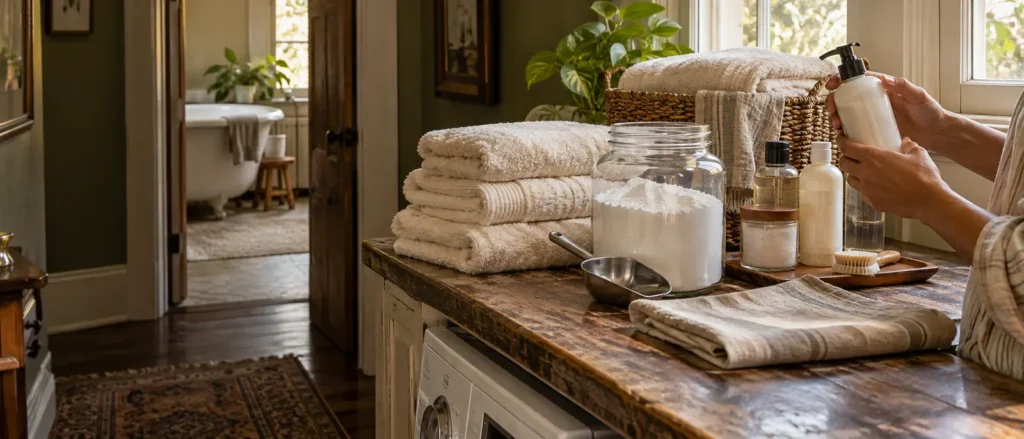
It does tell you which products are adding scent to your routine. Begin with detergent, softener, scent beads, dryer sheets, plug-ins, room sprays, perfume, body spray and leave-on skincare. Photograph the original containers and ingredient lists. Record who uses them, how often and in which rooms. A household inventory turns a broad concern into a manageable decision.
Why fragrance deserves a serious conversation
Fragrance is a mixture category, not one chemical with one health profile. Some ingredients have been studied for hormone activity, reproductive effects, allergy or respiratory effects. The strength of evidence differs by ingredient, exposure route, dose and life stage.
The National Institute of Environmental Health Sciences explains that endocrine-disrupting chemicals can mimic, block or interfere with hormone signaling. That is a reason to examine specific products and findings carefully. It is not proof that every scented item causes infertility, cancer or early puberty.
Strong household guidance should be specific enough that you can understand what a recommendation is based on.
Phthalates: read the label and understand its limits
Some phthalates have been used as solvents or fixatives in fragrance. The FDA notes that fragrance components may not all appear separately in a cosmetic ingredient declaration, so a label may not tell a shopper whether a particular phthalate is present.
A fragrance-free preference can reduce the need to investigate a proprietary scent mixture. However, different phthalates have different evidence, uses and exposure patterns. Findings about one compound should not be copied onto every member of the group. Product claims such as clean, natural or premium do not substitute for ingredient information.
Male reproductive development: use the actual measurement
Researchers have examined associations between prenatal phthalate exposure and reproductive-development measures, including anogenital distance. That measure is a distance between anatomical landmarks; it is not a direct measurement of penis length. A finding about anogenital distance does not establish that a household fragrance product makes a boy’s penis an inch shorter.
Families deserve the actual finding rather than an alarming conversion the study did not make. We can discuss reducing avoidable exposure during preconception and pregnancy while keeping the uncertainty, the measured outcome and the relevant life stage clear.
Early puberty: what the fragrance research shows
NIH researchers studied compounds that activate signaling involved in the start of puberty. Work involving engineered cells and zebrafish identified musk ambrette as a compound of interest. NIH explicitly says the findings support further study in people.
This is a meaningful research lead, but it does not establish that a child’s body spray caused early puberty or that every child now starts puberty six years earlier. Breast development, first menstruation and other milestones are different outcomes.
A useful article identifies which milestone, population and period a trend describes. Early or rapidly changing development also deserves a qualified assessment.
Fragrance-free and unscented are different shopping questions
Do not judge a product only by its front label or whether it has a strong smell in the store. Unscented products can include ingredients used to mask an odor. Fragrance-free products should still be checked against the ingredient list and the manufacturer’s explanation of the claim.
Botanical extracts and essential oils may be included for scent even when the branding emphasizes nature. If a person has a diagnosed contact allergy, their clinician’s ingredient-avoidance instructions are more specific than a general fragrance-free preference. Keep those instructions available when comparing products.
Laundry is a practical place to simplify
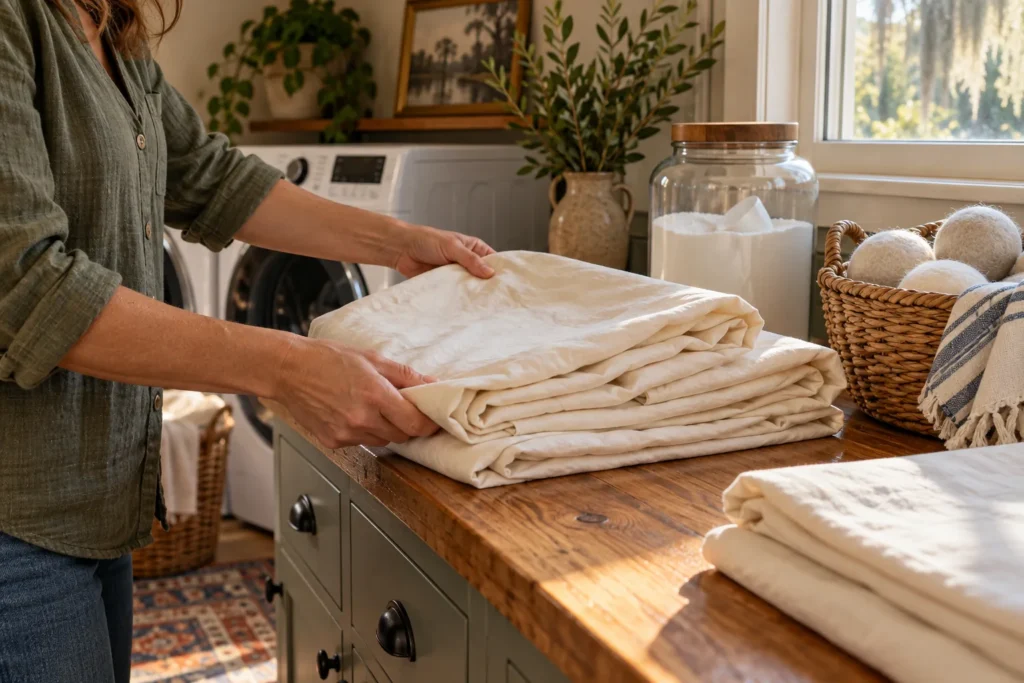
Laundry products can leave a scent on clothes, sheets and towels that people wear or sleep against for hours. Start by identifying which products clean and which mainly add scent or a particular feel. You may be able to remove an optional scent product before replacing the detergent itself.
Use the amount and wash instructions appropriate to the product and machine. Do not add incompatible chemicals or attempt aggressive stripping recipes without checking material and equipment instructions. For persistent fragrance, changing the routine gradually may be more practical than discarding every textile.
Room fragrance, ventilation and everyday comfort
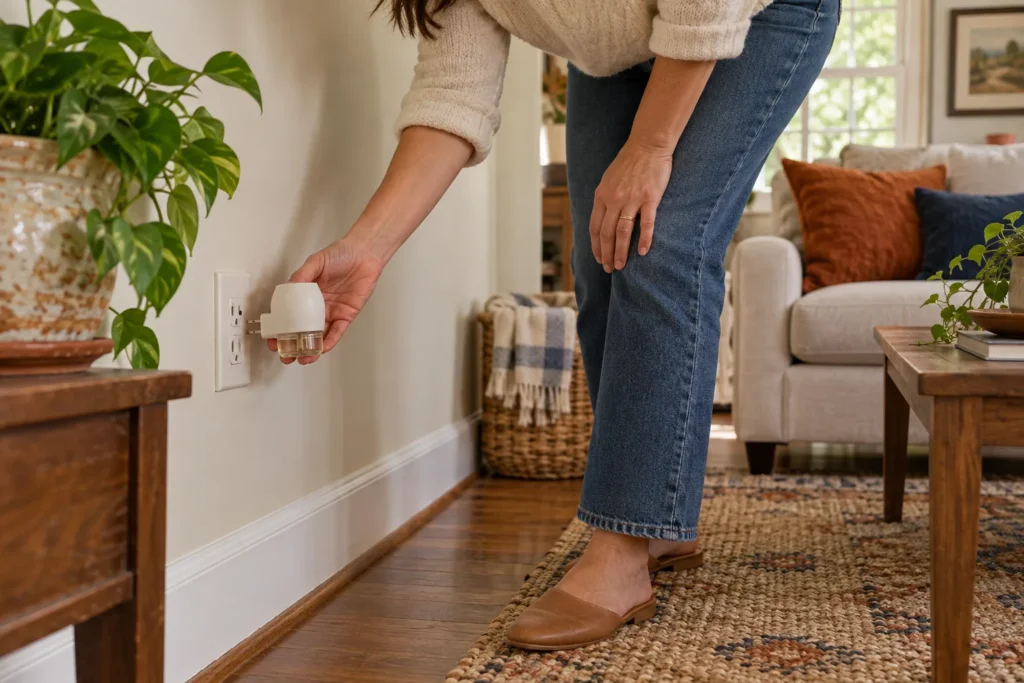
A plug-in, diffuser or candle is not a substitute for addressing a source of odor. Ask whether the smell comes from cooking, damp materials, a drain, stored waste or another issue that needs attention. Ventilation, routine cleaning and maintenance are different tasks from adding scent.
Candles and combustion also raise particle and fire questions; a pleasant smell does not measure clean air. Some people report headaches or respiratory symptoms around fragrance. A symptom-and-product diary can help organize a professional conversation, but a diary alone cannot establish the cause or rule out another condition.
Pregnancy, babies and visitors: make the request usable
Families can choose a lower-fragrance household routine before a baby arrives without turning preparation into a panic purchase. Review laundry, leave-on products, nursery cleaning and air fresheners first. Give relatives a short, polite request that states the preference: please avoid perfume and heavily scented laundry when visiting.
Do not promise that the rule prevents a particular disease. Keep household products in their original containers, away from children, and follow intended-use instructions. A simple routine everyone can follow is more useful than a long prohibited-ingredient list no caregiver understands.
A step-by-step review that respects your budget
Choose one room or routine, list the products and identify the function of each item. Mark optional scent products separately from cleaning, hygiene or maintenance tasks. Check the ingredient list, instructions, cost per use and any specific professional advice.
Replace one product when it is practical, record the change and avoid making several unrelated changes solely to create a dramatic story. Keep working products unless there is a clear reason to remove them. A household plan should distinguish an immediate practical step, a normal replacement decision and a question that still needs information.
Where a household consultation helps
Chemical Wellness can help organize the inventory, compare labels and plan a staged fragrance reduction across laundry, personal care and living spaces. We can also connect the choices with a pregnancy, nursery or whole-home preparation plan.
A walkthrough does not measure your internal exposure, diagnose a hormone condition or establish why a child developed a symptom. Those distinctions help keep the work useful. When a question requires clinical evaluation, environmental sampling or specialist advice, the written next steps should identify it rather than present a product replacement as a complete answer.
Start with a checklist and choose the next level of help
You can request the fragrance-free home checklist by text, use it to gather the products you want to discuss, and then decide whether a focused or whole-home package fits your priorities. Text FRAGRANCE and your city to 504.296.9696.
There is no need to send a diagnosis or private records to ask about the service. A consultation can cover the actual products and routines you want reviewed, the time available and what written priorities you will receive. A form is available if you prefer; a phone conversation can be arranged when needed.
Get the household checklist
Download the one-page fragrance-free home checklist (PDF). Use it to gather your products, then text us if you want help setting priorities.
Useful next steps
Fragrance questions, answered directly
Does all fragrance disrupt hormones?
No single conclusion applies to every mixture. Evaluate the specific ingredient, the type of evidence and the relevant exposure. A family can choose fragrance-free products without claiming that every scented item has a proven hormone effect.
Do phthalate studies measure penis length?
Some reproductive-development studies measure anogenital distance, which is a different anatomical measurement. Do not translate those findings into an unsupported number of inches of penis length lost. The measured outcome and study population matter.
How should I read claims about earlier puberty?
A trend needs a defined population, milestone and comparison period. Check what a study actually measured before applying the result to a family. Trends in breast development and age at first menstruation are not interchangeable. A child’s specific changes deserve individual assessment.
What does the musk ambrette study establish?
It identifies activity in laboratory models involving signaling relevant to puberty. It is a reason for further human research, not proof that a particular product caused early puberty in a child.
Are natural fragrances and essential oils automatically safer?
Natural origin is not a safety certification. Essential oils and plant extracts can still cause irritation or other problems depending on the ingredient, dose, route and person. Consider the actual use rather than relying on the marketing category.
Is unscented the same as fragrance-free?
Not necessarily. A product may use ingredients to mask an odor. Check the ingredient list and the manufacturer’s explanation, especially when you have a specific allergy or are trying to avoid added fragrance.
What should I change first?
Start with an inventory of optional scent products such as scent beads, room sprays and plug-ins. Consider your budget and the function of each product. A staged change can be easier to maintain than replacing the entire house.
Can I ask visitors to avoid perfume around my baby?
Yes. A clear household preference is reasonable to communicate politely. Explain what you want visitors to do without promising that the rule eliminates all exposure or guarantees a particular health outcome.
Will replacing fragrance fix thyroid disease or infertility?
A product change is not established treatment for those conditions. It may fit a household preference or address a particular exposure question, but clinical evaluation and individualized care remain separate tasks.
Do I need to throw away all my clothes and furniture?
Usually a household review starts with the actual routine, materials and concern. Do not assume every scented possession must be discarded. We can identify practical cleaning, maintenance or replacement priorities.
Can you review my laundry and personal-care products at home?
Yes, within an agreed household-consulting scope in Greater New Orleans. We can organize the products, compare available information and produce practical next steps. This is not laboratory exposure testing or a medical diagnosis.
How do I get the checklist or discuss a package?
Text FRAGRANCE and your city to 504.296.9696. You can ask about the checklist and service scope without sharing sensitive health details. The consultation form is the next option, with a call available by arrangement.
Sources behind the discussion
Go deeper on the products and research
Choose a practical routine or a specific evidence question.
- Fragrance-Free vs. Unscented: How to Read the Label — Less guessing at the shelf. A clearer way to compare the products you bring home.
- Fragrance-Free Laundry: Detergent, Bedding & Residual Scent — Clean clothes do not need a perfume trail. Build a simpler routine you can repeat.
- Fragrance-Free Routines During Pregnancy — A shorter product list, better questions and a household plan that leaves room for real life.
- Musk Ambrette & Early Puberty: What the Study Shows — Take the research seriously. Keep the conclusions tied to what was actually measured.
Explore hormones, daily routines and family preparation
Follow the specific question, then decide what practical help would make a difference in your day.
Make one useful change at a time.
Get the checklist, gather your products and decide what help makes sense for your household.