Indoor Air Quality Wellness
Indoor-air questions in New Orleans or the Westbank? Start with an educational review of your household routines, filter information and equipment. Text your city, room and main concern. Certified air testing, laboratory sampling and HVAC diagnosis are separate specialist services; this consultation helps clarify which next step fits.
Look Beyond the Thermostat
Indoor air is influenced by filtration, ventilation, humidity, dust, smoke, fragrances, cleaning products, furnishings, pets and occupant habits. We help identify likely sources and prioritize practical improvements.
HVAC Filtration
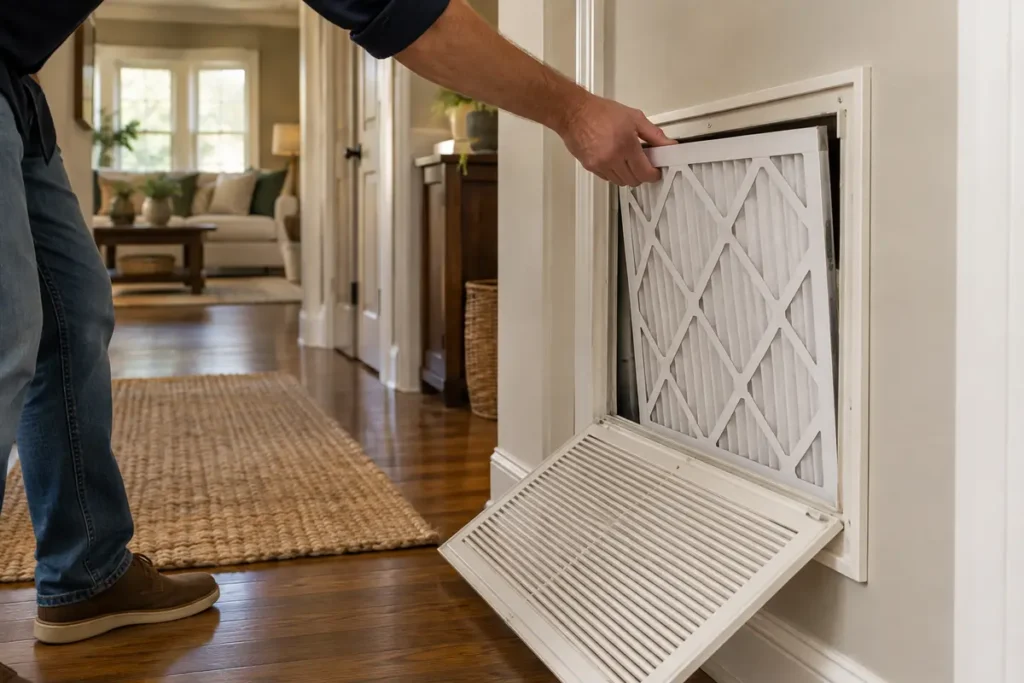
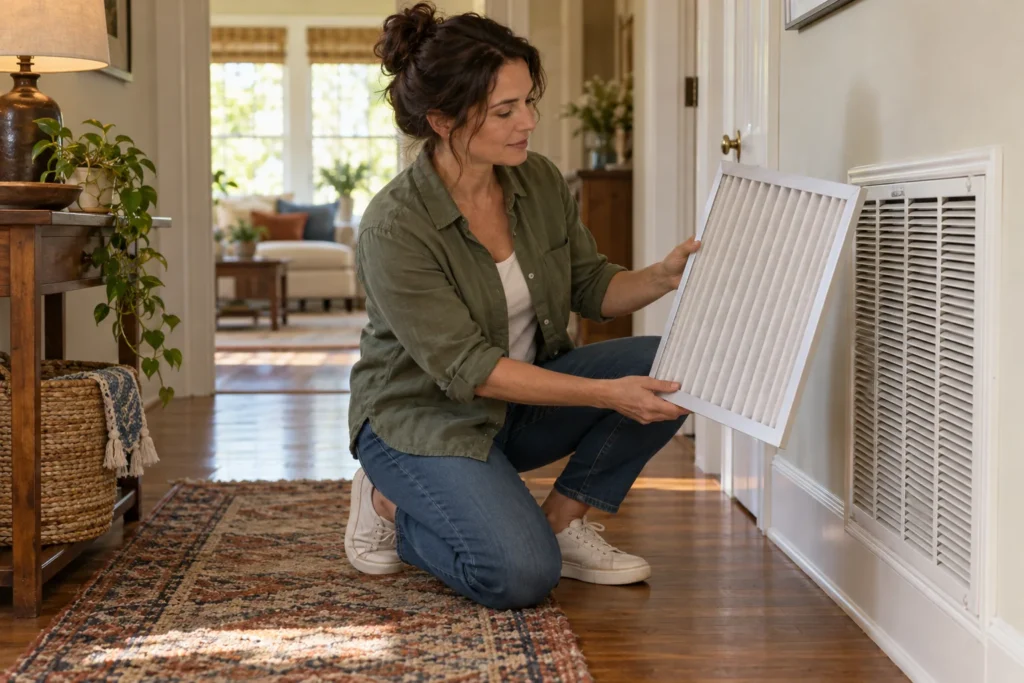
We can review current HVAC filter choices and discuss filtration improvements that remain compatible with the system’s airflow requirements.
Portable Air Purification
When appropriate, we can help size and place portable air purifiers, including AirDoctor-type solutions, based on room size and goals rather than simply putting one machine in a corner.
Whole-System Options
Where appropriate and within our installation capabilities, we can discuss equipment such as REME HALO and other air-cleaning approaches while clearly separating manufacturer claims from independently supported performance.
Planning a consultation in Greater New Orleans
Interested in indoor air quality wellness? Tell us your city, your main question, and whether you prefer an in-person or remote educational conversation. Based in Harvey, Chemical Wellness discusses availability for New Orleans, the Westbank, Metairie, Kenner, and nearby communities. Scope, travel, and pricing are confirmed before booking.
Start by identifying the source of the concern
Air questions often begin with an odor, visible dust, a recent renovation or a product used in the home. Describe when and where the concern occurs, what changed and which routine might be involved.
A smell does not identify every substance in the air, and a lack of odor does not establish that there is no issue. We can build a useful inventory of activities, products and equipment before deciding whether a purchase or a specialist is needed.
That is more practical than treating every air-quality question as a reason to buy the same purifier.
Connect source control, ventilation and filtration
EPA’s household guidance distinguishes reducing a source, managing ventilation and using air cleaning as different approaches. A filter cannot repair a water leak or make a heavily fragranced routine disappear. An open window may not be the right choice during poor outdoor air or difficult weather.
Start with the actual task and conditions rather than a rule that applies to every home all year. We can organize the questions and existing routines, while building or mechanical issues are directed to the professional who can assess and correct them.
Document the equipment you already own
Gather the model information for portable cleaners, HVAC filters, dehumidifiers and other relevant equipment. Record where each device is used, the normal setting and the replacement or cleaning instructions. A unit stored in a closet or operated only at its quietest setting may not be doing what the buyer expected.
The practical review includes noise, available floor space, cord placement, access and maintenance. You do not need to purchase a new device before asking whether the existing setup fits the room and the household’s ability to use it consistently.
Treat particles, gases and humidity as different questions
A product designed to capture particles is not automatically a solution for every gas or odor. A humidity reading is not a mold test. A consumer sensor may measure one or several indicators but cannot be assumed to identify every possible exposure.
We can help clarify which question the device is meant to answer and which claims need checking. If the concern involves combustion, a known hazard, significant moisture damage or a building-system problem, the next step may require a qualified professional rather than another general-purpose household gadget.
Use a routine log without inventing a diagnosis
A brief record can note the room, time, activity, product use and the observation you want to discuss. That may help distinguish a cooking event from an all-day concern or show that a question started after a particular purchase.
It does not prove that an exposure caused a symptom. If someone has symptoms, their clinician’s assessment belongs alongside the household information. We can organize products and routines without interpreting a log as a medical test or promising that replacing a cleaner will resolve an illness.
Make everyday source choices visible
Smoking, candles, room fragrance, cleaning sprays and cooking practices are examples of routines a household can inventory. Ask which products are essential to the task and which mainly add scent or another optional effect.
Follow product and equipment instructions, and do not mix cleaning chemicals in an attempt to solve an odor. A staged plan might simplify an optional scent routine, document filter care or identify a maintenance question. The plan should explain the specific action instead of relying on an unspecific instruction to detox the air.
Know when the problem exceeds a household walkthrough
A visual review cannot clear a property for mold, lead, asbestos or every airborne contaminant. It also cannot certify that a mechanical ventilation system is operating correctly. If the facts point toward a building, combustion or contamination concern, define the qualified assessment that is needed.
Renters should document relevant conditions and obtain the appropriate permission before alterations. We can help keep the product inventory and practical questions organized while avoiding a false assurance that a nontechnical visit has tested or repaired the underlying issue.
Choose a practical plan for Greater New Orleans
Louisiana households balance heat, humidity, weather, cooking and daily occupancy. A useful plan considers what you can keep doing, not simply which device looks impressive in a product listing. We can review room use, product routines, equipment information and maintenance within an agreed package.
Testing, building investigation, HVAC repairs and remediation are separate services requiring the appropriate scope. Text 504.296.9696 with your city and the specific question. The first step can be a discussion of what information is available and what kind of help fits.
Useful source information
Related practical help
- Air cleaner and HVAC-filter equipment questions
- Fragrance and scent review
- Smoke-residue household planning
- Whole-home assessment
Questions before you book
Do you provide certified indoor-air testing?
This service is household education and practical review, not a certification or laboratory assessment. If a question needs sampling or mechanical evaluation, we help distinguish that next step from ordinary product review.
Will a purifier remove every odor or gas?
Do not assume that. Particle removal, gas reduction and odor management involve different claims and conditions. Check what the exact unit is designed to address and the maintenance it requires.
Should I open windows every day?
Consider outdoor conditions, weather, the building and any relevant professional advice. A simple daily rule may not fit every situation. Ventilation is one part of a broader indoor-air plan.
Can we review candles and fragrance products?
Yes. We can inventory the actual items, how they are used and whether they serve an essential task. A lower-fragrance routine can be discussed without claiming that smell measures every exposure.
What does a consumer air sensor prove?
It provides readings for the indicators it is designed to measure under its stated limitations. It is not a general certificate that the air is safe or a test for every possible substance.
Can you help with HVAC-filter questions?
We can organize the filter size, model information, instructions and questions for your HVAC professional. System compatibility and mechanical performance need the appropriate technical assessment.
Does a humidity reading diagnose mold?
No. Moisture conditions and a mold assessment are different questions. A suspected leak or damaged material may need a qualified investigation rather than a conclusion from one consumer-device reading.
Can I keep the purifier I already own?
Possibly. We can examine the available product information, room use and maintenance before considering a replacement. Buying another unit is not automatically the most useful first action.
Will changing air products treat my symptoms?
A household change is not a diagnosis or guaranteed treatment. You can document observations and discuss them with your clinician while separately reviewing practical sources and equipment.
Can this review happen in a workplace?
Yes, within an agreed educational scope. Building access, management responsibilities, staff needs and any technical assessment should be discussed before planning changes to a shared workplace.
Are HVAC repairs or remediation included?
No. Those tasks need their own qualified provider and written scope. A household consultation should not be presented as a substitute for licensed or specialist work.
What should my first text include?
Send your city, the room or routine involved, any relevant recent change and the equipment you already own. Avoid sending sensitive records simply to ask about a consultation.
Tell us what you need help with.
Text 504.296.9696 with your city and a little about your goals. Prefer a form? That works too.
Need a phone conversation instead? Call 504.296.9696.