Workplace and Employee Wellness Applications
Workplaces influence what people breathe, touch, drink, eat, and use for hours each day. Chemical Wellness helps businesses review practical environmental and product choices without turning wellness into a vague slogan.
Workplace Areas We Review
- Break rooms, food storage, cookware, and hydration
- Cleaning, laundry, fragrance, and maintenance products
- Indoor air, HVAC filters, ventilation, and smoke exposure
- Drinking water, filtration, and refill systems
- Personal-care and shared-space product considerations
- Employee education, workshops, and healthier routines
Built for Real Operations
Recommendations should fit the building, budget, staff, customers, and existing maintenance systems. We focus on prioritized changes that can actually be implemented, measured, and maintained.
Frequently Asked Questions
Do you provide employee medical advice?
No. We provide general education and environmental/product guidance, not diagnosis or medical treatment.
Can you teach a group?
Yes. We can design a practical workshop for employees, leaders, churches, schools, or community groups.
Can you review a facility?
Yes. We can organize a review of products, air, water, food areas, and routines.
Discuss workplace wellness support.
Make workplace wellness practical, voluntary, and specific
Start by deciding what the workplace actually wants to improve. Useful educational topics can include ingredient labels, break-room food choices, shared cleaning products, fragrance awareness, drinking-water equipment, and the maintenance questions behind a proposed purchase. A clear scope helps avoid an unfocused program that asks employees to change everything at once.
For a small office or business, identify who controls purchasing, who maintains equipment, and who needs to approve changes to a shared space. A workshop and a product review are different projects. Both should have a clear audience, useful next steps, and a way for staff to ask questions without disclosing private health information.
A break-room review can consider minimally processed food options, practical storage, ingredient transparency, and the way employees actually use the space. A product-literacy session can teach people to compare labels and instructions without making unsupported claims that a particular product will prevent or treat disease.
New Orleans, Westbank, Metairie, and Kenner businesses can inquire about educational sessions by arrangement. Our work is not an occupational-health evaluation, OSHA compliance service, environmental clearance, or medical program. HVAC, plumbing, contamination, workplace exposures, and clinical concerns may require appropriately licensed specialists.

Choose the support that fits
Based in Harvey and helping Greater New Orleans households and organizations by arrangement. Explore service areas and appointment options.
Focus on what the workplace actually controls
Workplace wellness becomes more useful when it connects to shared spaces and everyday decisions. Start with the break room, drinking-water arrangement, cleaning supplies, fragrance expectations or an educational session. Identify who controls each purchase and who maintains the equipment.
This application shows where practical wellness guidance can fit. It does not replace an employer’s occupational safety duties, a required assessment or professional work on a building system. A clear boundary keeps a small improvement project from being mistaken for a compliance program.
Choose a decision owner and a workable scope
A manager may approve a purchase while another person handles supplies and a landlord controls ventilation. Map those responsibilities before the conversation. Choose one room or routine and describe the problem in observable terms: cartridges are not being replaced, the shared refrigerator is difficult to manage, or employees do not know whom to contact about strong scents.
Agree on the decision being made, the information needed and who can authorize the change. That is a stronger starting point than a general promise to make everyone healthier.
Make the shared kitchen easier to use
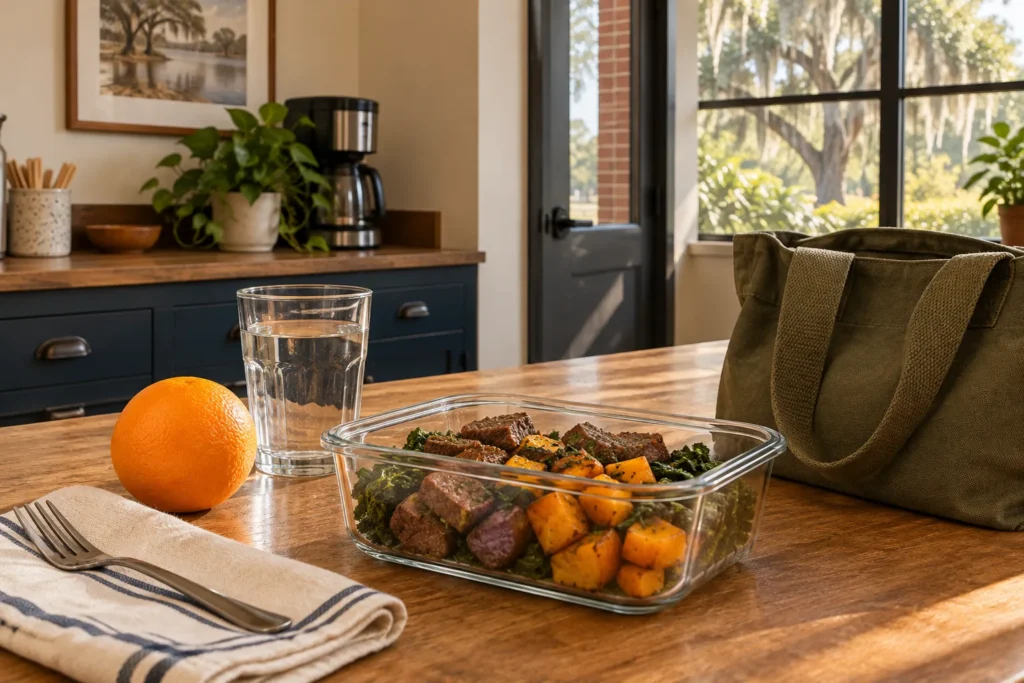
A break room should support normal workday needs. Review refrigerator space, food storage, drinking-water access, cleaning instructions and who is responsible for routine upkeep. For food education, keep the discussion practical and voluntary: reading a label, planning a lunch or comparing simple meal options.
Employees have different preferences and medical needs. A workplace should not require a particular diet or use a group discussion to judge individual lunches. The useful result is clearer choices and a space people can reasonably maintain.
Discuss fragrance without collecting private health histories
A shared-space conversation can focus on products and expectations without asking people to disclose diagnoses. Consider cleaning schedules, scent dispensers, personal fragrance and the route for raising a concern privately with the employer. Keep any formal accommodation process with the appropriate workplace contacts.
We can help organize product information and educational discussion. We do not decide employment accommodations, assess a person’s medical condition or promise that a fragrance policy will prevent every reaction in a shared building.
Review equipment with the people maintaining it
A filter or purifier needs an appropriate application, suitable placement and a maintenance plan. Gather the actual model, manufacturer instructions, replacement part details and the person responsible for ordering supplies. Installation or building-system changes may need a landlord or qualified contractor.
The review can help management compare questions before purchasing. It is not a measurement of air quality, proof that water is safe, an engineering specification or permission to exceed the limits of existing HVAC equipment.
Build workshops around a practical decision
A focused session can address label reading, shared-kitchen routines, fragrance discussions or a manageable household checklist employees can use outside work. Choose one subject, a realistic session length and the questions you want people to leave able to ask.
Do not fill the agenda with unrelated disease claims. Use product examples to explain a decision rather than promote a required brand. Group size, location, materials and any follow-up support should be agreed before the event is booked.
Keep procurement and communication connected
If management selects a different product, update the ordering record and explain its intended task, directions and storage. A change can fail simply because staff continue using the previous routine or mix up similar containers. Keep manufacturer labels available and leave required training with the responsible employer or provider.
For a repeat order, record the actual version rather than only a brand name. Product formulas and availability can change, so someone needs to own the next review as well as the first purchase.
Evaluate the project using observable results
After a change, ask whether the maintenance task was completed, the instructions are available and the new routine is being followed. Those observations are more meaningful than claiming a product switch reduced illness or improved productivity without evidence.
Record questions that need a contractor, occupational professional or management decision. To discuss a New Orleans-area workplace project, text the location, type of setting, decision owner and the shared-space topic. We can then discuss a focused review or education package.
Related practical help
- Workplace wellness service
- Small-business and workplace settings
- Workshops and group education
- Air-equipment planning questions
Questions before you book
Is this an occupational safety inspection?
No. Educational and practical product guidance does not replace required occupational assessments, employer duties or work by qualified safety and building professionals.
Can a small office book a review?
Yes. Explain the setting, shared-space concern and who can approve changes. A small, defined project can be discussed before planning a broader program.
Can you work with our facilities person?
Yes. Equipment information and practical questions are more useful when the person responsible for maintenance and any landlord restrictions are included.
Will employees need to share medical records?
They should not provide medical records for a general group session. Private employment or accommodation matters belong with the appropriate workplace channels.
Can you teach label reading?
A workshop can focus on practical label questions and product purposes. Confirm the audience, agenda, materials and session scope before booking.
Do you provide workplace water testing?
Do not assume testing is included. Any testing need should be defined separately and handled through an appropriate qualified provider and sampling process.
Can you guarantee healthier staff?
No. A workplace product or routine review cannot guarantee health outcomes, attendance changes or productivity improvements. The project should have realistic, observable goals.
Can we discuss fragrance expectations?
Yes. We can organize shared-product information and communication questions while leaving formal policy, legal duties and individual accommodations with the employer.
Does the employer need to buy new equipment?
Not necessarily. Checking existing instructions, maintenance responsibilities and actual needs may come before comparing any replacement or additional device.
Can this include a shared kitchen?
Yes. Storage, supplies, water access, meal-planning education and responsibility for upkeep can form a focused shared-space discussion.
Are workshops the same as a private review?
No. A workshop teaches an agreed group topic. A private review works through specific products, responsibilities and decisions for the setting.
What should a manager send first?
Text 504.296.9696 with the workplace city, setting, main concern and decision owner. Avoid employee medical information in the initial inquiry.
Tell us what you need help with.
Text 504.296.9696 with your city and a little about your goals. Prefer a form? That works too.
Need a phone conversation instead? Call 504.296.9696.