Workplaces & Small Businesses: Healthier Environments for Employee Wellness
Employee health, productivity, and retention are core business concerns. Yet many workplaces overlook one critical factor: the chemical environment. From air quality and cleaning products to office furnishings and break room food access, the everyday chemical exposures employees experience at work significantly impact their wellbeing, focus, and long-term health. At Chemical Wellness, we help businesses in the New Orleans, Harvey, Westbank, and surrounding areas create healthier workplace environments that employees notice and appreciate.
Why Chemical Wellness Matters in the Workplace
Employees spend 30-40% of their waking hours at work. The chemicals they’re exposed to during that time—in the air they breathe, on surfaces they touch, in products used to clean and maintain the space—contribute cumulatively to their health status.
Poor indoor air quality, chemical-laden cleaning products, off-gassing from new furniture, and artificial fragrances all contribute to “sick building syndrome,” reduced productivity, and increased absenteeism.
Small business owners and HR managers increasingly recognize that investing in chemical wellness is an investment in employee retention, productivity, and company culture. When employees feel their employer cares about their health and wellbeing, loyalty and engagement increase. Moreover, chemical wellness improvements often overlap with sustainability and cost-reduction goals—many healthier choices are also more economical.
Our approach works for businesses of all sizes. Whether you’re a small professional office, a retail operation, a manufacturing facility with specific chemical management needs, or a service-based business in the New Orleans area, we help you understand your chemical exposures and implement practical, cost-effective improvements.
Key Workplace Chemical Wellness Areas
Indoor Air Quality & Ventilation
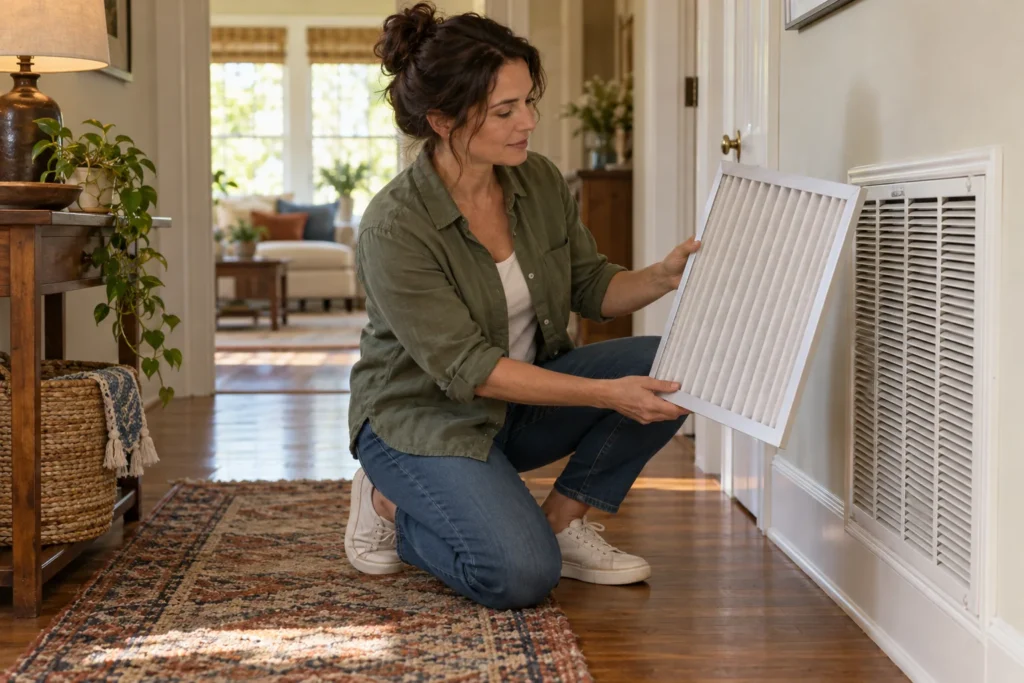
Office air quality directly impacts employee health and cognitive function. We assess ventilation systems, identify sources of poor air quality (from equipment to cleaning chemicals to outdoor pollutants), and recommend practical improvements from air filtration to ventilation optimization. For businesses in Louisiana dealing with humidity and mold concerns, we have specialized expertise.

Cleaning & Maintenance Product Safety
Workplace cleaning products should be evaluated for their actual task, directions, available ingredient information and suitability for the setting. We can help organize that comparison and identify questions for the cleaning provider or facilities decision maker.
Fragrance preferences, asthma, allergies and other individual concerns should be handled through appropriate workplace and clinical channels. We do not assume every commercial product is toxic, that a replacement will cost less or that employees will experience an immediate health improvement. The practical goal is a clear, effective supply and use plan.
Office Furnishings & Off-Gassing
New office furniture, carpets, and paint release volatile organic compounds (VOCs) into the air. For companies undergoing renovations or updates, we recommend low-VOC options and discuss off-gassing timelines and mitigation strategies that minimize disruption to employee health.
Break Room & Workplace Nutrition
The food available in break rooms and cafeterias shapes employee nutrition. We help businesses create cultures of clean eating by evaluating vending machine options, partnering with local healthy food providers in the New Orleans area, and educating employees about food quality.
Water Quality & Hydration
Office water systems vary widely in quality. We assess current water quality, recommend appropriate filtration for break rooms and bathrooms, and educate employees about hydration with clean water—particularly important in Louisiana’s hot, humid climate.
Workplace Culture & Education
Lasting change requires employee understanding and buy-in. We develop educational workshops, lunch-and-learn sessions, and written resources that help employees understand why chemical wellness matters and how they can support workplace initiatives.
Our Workplace Services
We offer comprehensive workplace assessments examining air quality, cleaning practices, office furnishings, break room options, and water quality. Based on findings, we create prioritized action plans that balance health impact with budget and implementation timeline.
Our educational workshops can be customized for employee groups, management, or facility staff. Topics range from understanding product labels and ingredients to supporting personal wellness habits that extend beyond work hours.
We also work with workplace wellness programs, occupational health providers, and facilities management companies to integrate chemical wellness into broader employee health initiatives. Many larger organizations partner with chemical wellness specialists to enhance their wellness program credibility and impact.

Workplace Chemical Wellness Across Industries
Different work environments have different chemical wellness needs. Healthcare facilities need specialized infection control approaches that balance safety with chemical exposure. Schools and childcare centers have particular concerns about student exposure. Industrial workplaces manage occupational chemical exposures. Manufacturing businesses address chemical processing and worker safety. Explore our complete industries overview to see applications relevant to your business type.
The Business Case for Workplace Chemical Wellness
Beyond the obvious health benefits, workplace chemical wellness delivers measurable business value. Studies show that improved indoor environments correlate with reduced sick leave, improved focus and productivity, and stronger employee satisfaction and retention. In a tight labor market, showing employees you care about their wellbeing is a competitive advantage.
Some workplace product and maintenance decisions can connect with sustainability or purchasing goals, but the result depends on the actual products, equipment and routine. Compare costs, upkeep, performance and any relevant documentation rather than promise savings from a general category change.
Water filtration, ventilation and break-room projects have different purposes and responsibilities. A consultation can organize these decisions and track completed tasks; it does not establish reduced healthcare costs, weight changes or improved productivity. Those outcomes should not be claimed without appropriate evidence.
Frequently Asked Questions About Workplace Chemical Wellness
Is implementing chemical wellness changes disruptive to operations?
Not if done strategically. We work with your existing schedules and budgets to phase changes in ways that minimize disruption. Many improvements happen during regular maintenance cycles or renovation projects. We prioritize based on your business needs.
How much does workplace chemical wellness cost?
Costs vary widely depending on the scope of assessment and changes. Initial assessments start at accessible price points. Many improvements actually reduce costs compared to conventional products and practices. We help you understand both costs and long-term savings in our recommendations.
Will employees notice the changes?
Often immediately. Improved air quality, elimination of artificial fragrances, and better break room food choices are changes employees feel. This positive feedback supports ongoing commitment to chemical wellness. We recommend communicating improvements to help employees understand the investment in their health.
How does this relate to occupational safety and OSHA compliance?
Chemical wellness is complementary to occupational safety. While OSHA addresses hazardous chemicals and exposure limits, chemical wellness also considers exposures below regulatory thresholds and everyday products that may not fall under regulatory purview. Both matter for comprehensive employee health.
Can small businesses afford this?
Absolutely. We work with organizations of all sizes. Small businesses often have advantages in implementing change quickly and building strong communication with staff. Many improvements are low-cost or cost-neutral. We prioritize based on your budget.
How do I present this to leadership or management?
We help with both the health education and the business case. Our consultations can include management presentations using both employee health data and business case studies showing productivity gains and cost savings from other organizations.
Ready to explore workplace chemical wellness for your business? Book a consultation to discuss your specific workplace, employee base, and objectives. Whether you’re in Harvey, Westbank, the greater New Orleans area, or Southeast Louisiana more broadly, we’re here to help you create a healthier workplace that employees notice and appreciate.
Visit our Knowledge Center for articles about workplace health, indoor air quality, and creating cultures of wellness.
Tell us what you need help with.
Text 504.296.9696 with your city and a little about your goals. Prefer a form? That works too.
Need a phone conversation instead? Call 504.296.9696.