Know what’s around you.
Choose what comes next.
Food, fragrance, water, air and the family routines nobody hands you a manual for. Start with a familiar question. Leave with something useful to do.
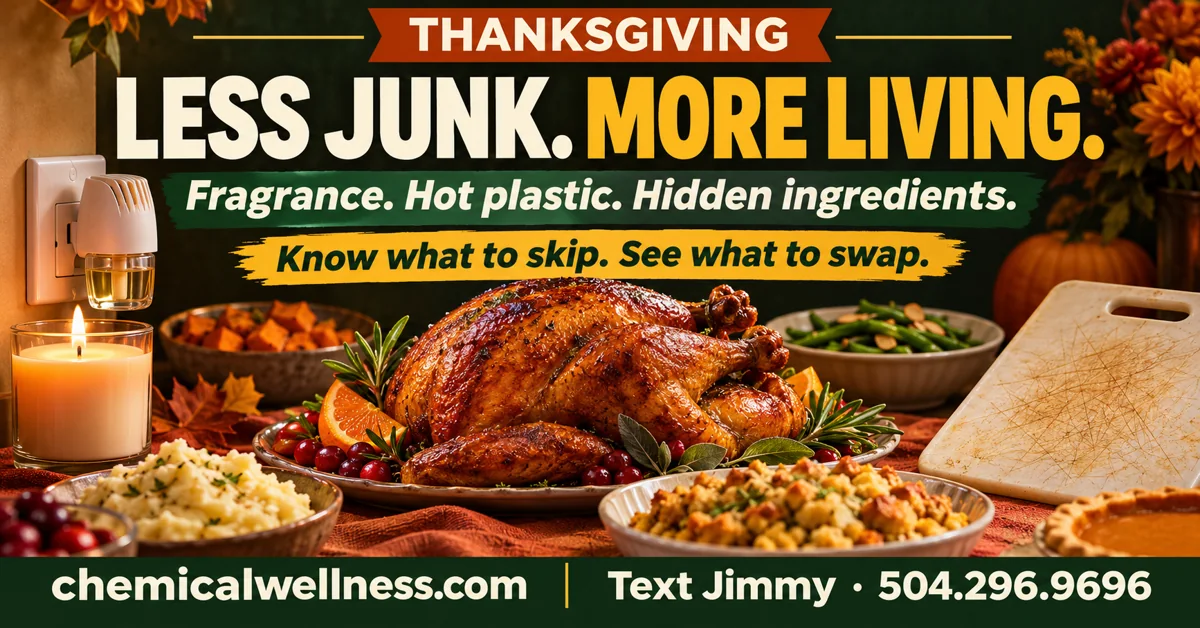
Keep the holiday. Skip the unnecessary junk.
Start with fragrance. Get practical swaps for the kitchen, the plate and the people around your table.
Read the Thanksgiving guide →Less searching.
More understanding.

Food & grocery shopping
Read the label, plan the stores and make simple meals easier.
Explore this topic
Pregnancy, birth & baby
Prepare the home, supplies and questions for your family’s next chapter.
Explore this topic
Family visits & boundaries
Food at gatherings, smoke-free spaces and visitor conversations.
Explore this topic

Eyes & screen habits
Vision questions and a gentler break from a screen-filled day.
Explore this topic
Hormones & health questions
Context for testosterone, fertility, thyroid and other concerns.
Explore this topic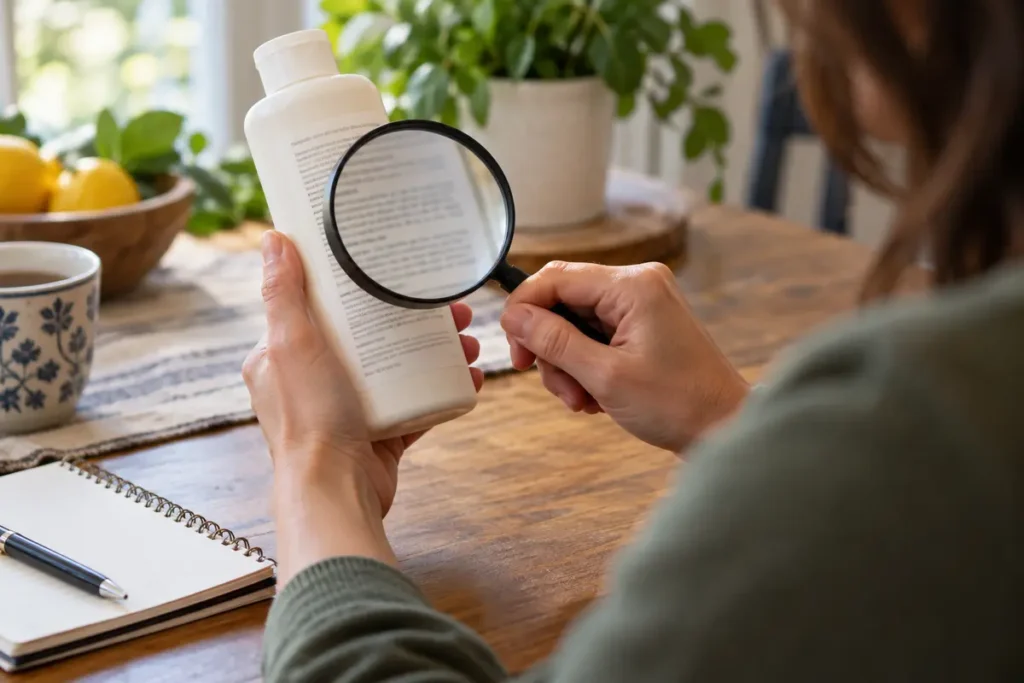
Ingredients & toiletries
Look beyond the front label on the products you use every day.
Explore this topicNo matching topic yet. Try a shorter word, or text Jimmy your question .
My guides, all in one place.
Home, groceries, baby preparation, postpartum and the full collection. Each listing explains its own price, contents and access.

Toxin-Free Home Guide
Start with everyday household products and the purchases you repeat.
View guide on Stan →Digital guide · Check current price, contents and access on Stan.
Toxin-Free Grocery List
Bring a practical reference along when comparing the food you buy.
View guide on Stan →Digital guide · Check current price, contents and access on Stan.Why I keep asking these questions.
“It’s not about living longer, it’s about living the life you have left!”Jimmy · Chemical Wellness
My family-exposure writing comes back to a simple point: people can love your children and still bring habits into the room that you want to change. Clear requests about smoke, scent, shared food and visits make that conversation easier. A boundary works best when people know what you are asking them to do.
Read. Compare. Put it into practice.
Use the library to make the next decision clearer
The Knowledge Center is organized around practical choices rather than an expectation that you research every product before asking for help. Start with the guide that matches the decision in front of you: a label, a shopping plan, a room or a piece of equipment.
Read the relevant explanation, note what information is missing and choose the next action. If the question depends on your household, a consultation can apply the method to the actual products and routines involved.
Start with labels when the package is confusing
The ingredient-label guide explains how to keep the product’s purpose, complete information and actual use in the same conversation. A front-label promise and an unfamiliar ingredient name do not tell the whole story. The fragrance hub goes deeper into disclosure questions, research context and hormone-exposure claims.
These are related subjects, but they are not interchangeable. Use the broad label guide for a comparison method and the dedicated fragrance guide when the question concerns scent sources or interpretation of that evidence.

Connect food guides with shopping and storage
The pantry and farmers-market articles help turn preferences into a usable household plan. The broader grocery-shopping guide connects meals, quantities, sourcing and a realistic route. A whole-food or animal-based preference can be discussed alongside individual tolerances and clinical requirements.
The guides do not prescribe a therapeutic diet for every reader. A practical next action may be checking current stock, choosing a simpler meal or identifying the item worth a separate store visit, rather than collecting a longer list of specialty products.
Use home guides before buying equipment
The room-by-room guide helps organize a practical project. Water and indoor-air guides explain why the actual concern, product claim, instructions and maintenance matter before a purchase. A device is not automatically a solution to a building defect or every possible contaminant.
Gather the relevant report, model or label and identify which question needs an appropriately qualified provider. This can prevent a household plan from becoming a sequence of expensive purchases made before the original problem has been clearly described.
Keep family preparation connected to qualified care
Pregnancy, baby and oral-care articles can help organize supplies, helper responsibilities and questions for professional appointments. A household guide does not examine a person, assess an infant’s feeding or decide a maternity intervention. Use the material to prepare a clearer discussion with the appropriate clinician or dentist.
Practical changes can support the instructions you receive, while individual treatment decisions remain with the professionals responsible for care. The useful distinction is between organizing daily life and making a clinical recommendation for a particular person.
Read health guides for context, not a promised cure
The Health Guides hub brings together thyroid, Graves’ disease, eye, kidney, liver, cancer-support and detox-claim questions. It separates practical household support from claims that a diet, cleanse or product change reverses disease. An account of personal improvement is not a clinical trial or a reason to stop treatment.
The guides can help identify what to ask and what ordinary tasks family members can support. Bring diagnosis, laboratory interpretation, medication and individualized nutrition questions to the appropriate qualified professionals.
Move from reading to a manageable project
After reading, write down the product, decision and information gap. That is enough to begin a focused inquiry. You do not need to finish every guide or replace a cabinet of products first.
The service directory explains practical help, Applications starts with your situation, and Industries starts with the type of household or organization. Text your city and the question you want to work through, or use the consultation form. We can discuss an appropriate scope instead of sending you back into an endless research loop.
Related practical help
- Fragrance, ingredients and hormone exposure
- Health Guides hub
- Whole-food grocery-shopping guides
- Practical service options
- Workshops and meetups
Questions about these guides
Where should I begin?
Choose the guide matching the next decision you need to make. A product label, grocery problem or equipment purchase is a more useful starting point than reading everything at once.
Are these guides medical advice for my diagnosis?
No. They provide general education and practical context. Diagnosis, treatment, medication and individual clinical nutrition decisions require appropriately qualified professionals.
Where is the fragrance research guide?
Use the dedicated Fragrance, Ingredients and Hormone Exposure link below. It separates disclosure questions and practical changes from claims the evidence does not establish.
Can animal-based food preferences fit the guides?
Yes. Preferences can guide practical shopping and meals, while allergies, tolerances and any qualified clinical instructions still matter.
Will a guide prove which product caused symptoms?
No. A general article or ingredient list cannot establish individual causation. Discuss symptoms with a qualified professional and keep the actual product information available.
Can I request hands-on help after reading?
Yes. Explain the guide, your city and the decision involved. The relevant service can be discussed with a clear scope and appointment arrangement.
Do I need to read everything before contacting you?
No. A short description of the household problem is enough to start discussing the most useful next step.
Are the health guides promising disease reversal?
No. They distinguish practical support and research questions from unsupported cure claims, and do not replace individualized medical care.
Can I bring my clinician’s instructions?
Relevant written guidance can help frame practical shopping or organization work. Keep private records out of a general initial inquiry and clinical interpretation with the clinician.
Are workshops the same as these articles?
A workshop is an arranged group session with an agreed topic and format. The articles are available for general reading and preparation.
How do I know which equipment guide matters?
Begin with the actual water or air question and existing model information. The guide can help organize what to verify before purchasing or seeking qualified technical help.
What is the best way to ask a follow-up?
Text 504.296.9696 with your city, guide topic and practical decision. A consultation form is available if you prefer to organize the request there.
Read something that made you look twice?
Tell me your city and what has been on your mind. You do not need to know ingredient names, pick a diet or have the whole house figured out.
A text starts the conversation. Scope, price and scheduling are confirmed before any paid work.
Focused neurological support
MS food, home and lifestyle guide · Brain tumor food, home and caregiver guide