Brain Tumor: Holistic Nutrition, Home & Caregiver Support
Whole-person support. Clear questions. Practical changes you can actually carry out.
Urgent symptoms come first. Sudden weakness, trouble speaking, a first seizure or severe confusion needs urgent assessment. Call 911 for a possible emergency. This form is not an emergency service.
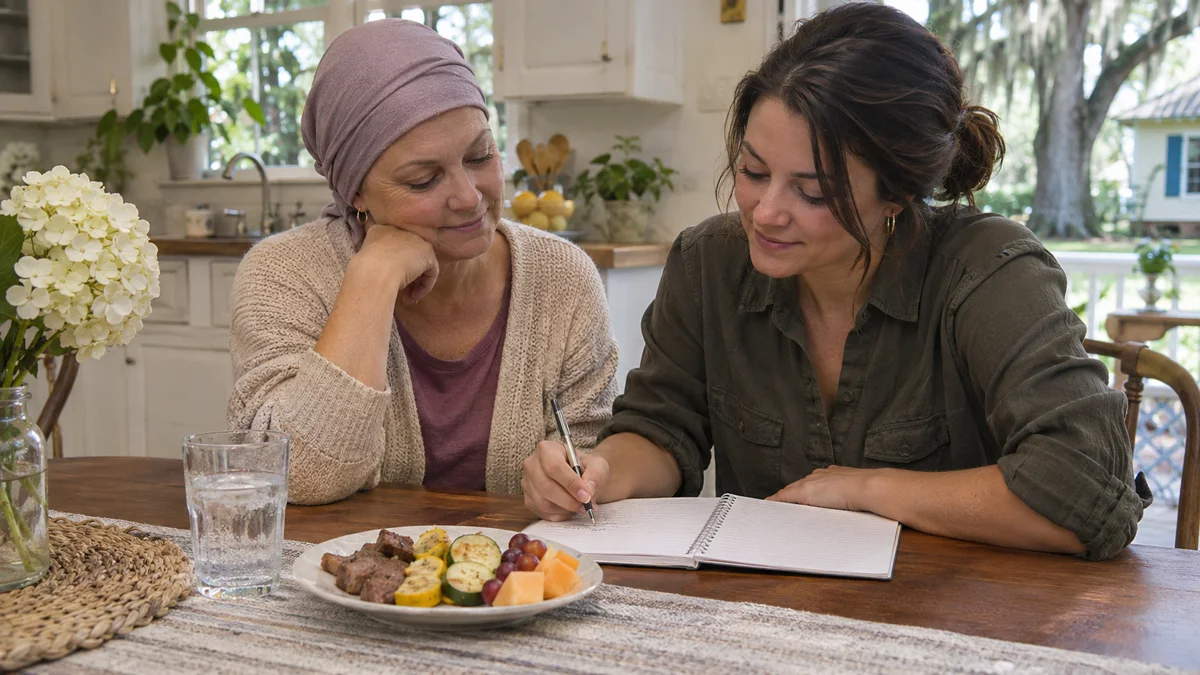
A serious diagnosis should not leave daily life unsupported
When a brain tumor enters the picture, shopping, meals, rest and household responsibilities do not disappear. Families can feel pulled between urgent decisions and the wish to do everything possible naturally. This page focuses on useful holistic support: making food accessible, reducing avoidable household irritants, organizing questions and sharing practical work. It is for people with a diagnosis, people awaiting assessment and caregivers helping with permission. A brain tumor is not automatically cancer, and different tumor types need different decisions.
Start with the diagnosis actually given
Record the name you were told, whether it is confirmed or suspected, and whether the tumor began in the brain or spread from somewhere else. Keep grade, location and treatment plans in your own clinical records if available. A questionnaire cannot interpret a scan, determine whether a mass is benign or malignant, or identify the best treatment. Knowing what remains uncertain is useful. The form allows “not sure” rather than forcing you to invent details or upload sensitive scans to get household help.
Whole-person support with honest expectations
Holistic support can address comfort, routines, nourishment, sleep, the environment and the burden on caregivers. That is worthwhile even when it does not change a tumor. No food, herb, cleanse or supplement has been proved to cure cancer simply because someone calls it natural. Brain tumors also include noncancerous conditions that can still be serious. Our coaching does not promise shrinkage, replace specialist assessment or recommend abandoning treatment. A clear support plan respects your values while keeping these distinctions visible.
Food that helps someone get through the day
Start with what the person can safely eat and tolerate. Record appetite, recent unintentional weight changes, nausea, chewing difficulty, swallowing instructions and existing food-safety guidance. A practical plan may be several easier eating opportunities rather than a demanding new menu. Do not force a tired person to prove commitment by finishing a particular meal. A helper can shop, portion cooked foods and keep the kitchen ready. New swallowing difficulty, dehydration concerns or rapid unintended weight loss need the clinical team’s attention.
Animal-based meals without an automatic cancer diet
If meat, eggs or fish fit the person’s preferences and current instructions, they can anchor ordinary meals. Use properly handled, cooked food and suitable textures. Other tolerated foods can make meals workable; this is not a competition to exclude the most ingredients. Special food-safety instructions may matter during treatment or immune suppression. The questionnaire asks about those instructions before discussing shopping. It does not recommend raw milk, raw sprouts, undercooked meat or an unreviewed supplement regimen as tumor support.
Ketogenic, carnivore and fasting claims
People may encounter claims that starving sugar, eating only beef or fasting will starve a tumor. Record the exact claim and whether it is a research question or a change already underway. Experimental dietary approaches are not interchangeable with established tumor care, and eating less can be harmful when intake is already difficult. A self-reported improvement cannot establish that a tumor shrank. We can help collect questions and carry out an agreed grocery plan; a form will not assign a fast, carbohydrate target or cancer diet.
The home environment: fewer irritants, useful records
Ask about smoking, room sprays, laundry scents, combustion appliances, moisture and the spaces where the person rests. A cleaner routine should make daily life easier, not create a frightening list of everything to throw away. Pause optional added scents if they are bothersome and choose appropriate cleaning. Maintain working carbon-monoxide alarms. Fix the source of repeated dampness. Keep observations specific: a room, date, product or maintenance issue. These observations do not establish that a household product caused a tumor.
Occupational history, radiation and family questions
The cause of many brain tumors is unknown. Certain genetic conditions and particular exposures can matter, but personal risk needs individual interpretation. Ask what was actually encountered at work, whether there was a documented incident, and what records exist. Note previous radiation treatment and relevant family diagnoses for the clinical team. A family member’s job or a nearby golf course is a reason to ask a precise exposure question, not proof of a hidden cause. Avoid buying broad testing packages before deciding what a test would answer.
Movement, comfort, sleep and seizure precautions
Ask the care team what activity is suitable and what restrictions apply to balance, fatigue or seizure risk. Keep walking routes clear, make frequently used items accessible and arrange help with cooking or bathing when necessary. Gentle relaxation or a short, comfortable routine can support daily comfort without being labeled tumor treatment. A person with seizures may need specific advice about driving, swimming, heights and operating equipment. This form cannot clear those activities or decide whether seizure medication is still needed.
Caregiver coordination, supplements and urgent changes
A useful plan names who buys groceries, who prepares food, who checks supplies and who coordinates transport. Record supplements, essential oils and products already used so questions can be reviewed for interactions and tolerance. Do not interpret feeling worse after a cleanse as proof it is working. A first seizure, sudden severe headache, new weakness, difficulty speaking, loss of consciousness or severe confusion needs urgent assessment; call 911 for a possible emergency. Do not let a questionnaire delay care or stop steroids or seizure medicines abruptly.
What happens after the questionnaire?
Your answers generate a written practical checklist rather than a mystery score. It records what is already known, daily barriers, the sources worth documenting, and a defined next task. If you request paid help, Jimmy receives an organized brief with your requested format, spending ceiling and availability. The result does not confirm a booking or purchase. You can save it and decide whether you want help carrying it out.
How does working with Jimmy fit real life?
Start with the task that keeps slipping: food shopping, a kitchen inventory, fragrance-free laundry, a water-filter comparison, or coordinating a helper. Work can be local around Harvey, the Westbank and Greater New Orleans, or remote where appropriate. A written scope separates service time from groceries, equipment, laboratory work and licensed inspections. Whole-home packages start at $995; additional agreed time is $160 per hour. A condition label never automatically selects the most expensive package.
A practical first-week checklist
Day one: write down the confirmed situation and the question that matters most. Day two: identify two meals the person can eat comfortably and who can prepare them. Day three: list products used on skin, clothing, bedding and in shared air. Day four: collect one useful document, such as a product label, water report or maintenance record. Day five: choose one manageable change. At the end of the week, review comfort, effort, cost and unanswered questions. Improvements in daily routines are useful observations, not proof of disease reversal.
Your questions, answered
Can holistic care shrink a brain tumor?
This service makes no tumor-shrinkage promise. Practical nourishment, comfort and household support can be valuable, but they are different from proving that an approach treats a tumor.
Are all brain tumors cancer?
No. Some are noncancerous, but location and other features can still make them serious. Use the diagnosis actually given, and ask the clinical team to explain what remains uncertain.
Can this intake diagnose my headaches?
No. Many things can cause headaches. A first seizure, sudden severe headache or sudden neurological change needs timely assessment rather than a household-support questionnaire.
What if no biopsy result is available?
Choose awaiting assessment or not sure. The form should preserve uncertainty and organize your questions; it does not guess a tumor type from symptoms.
Will you prescribe carnivore, keto or fasting?
No. The form records interest and current intake, including restrictions already tried. It does not assign a cancer diet, fasting schedule or carbohydrate target.
What if eating is becoming difficult?
Record the specific barrier and existing food or swallowing instructions. Share new problems with the care team. Household support can arrange shopping and preparation around those instructions.
Can family complete the questionnaire?
Yes, with the person’s permission or appropriate legal authority. A parent or legal guardian must handle a child’s individual request. General planning can stay non-identifying.
Does the form identify environmental causes?
It documents sources and timing. It cannot establish causation from a home address, a product list, a relative’s occupation or a symptom pattern.
Should I start a heavy-metal detox?
A generic cleanse is not assigned. A credible exposure question should lead to substance-specific professional assessment, rather than an unreviewed chelation or detox regimen.
Will my answers go to an outside AI service?
This questionnaire uses the site’s structured rules to organize a support checklist. It does not need to send your medical story to a public chatbot to produce that result.
What will Jimmy receive?
The submitted brief records your answers, practical priorities, selected support request and contact preference. It does not state that a diagnosis, procedure, booking or payment has been approved.
Can I get local or remote help?
Ask about home and grocery support around Harvey, the Westbank and Greater New Orleans, or remote planning where suitable. Scope, availability and price are confirmed before paid work begins.
Sources and useful next reads
Complementary approaches: evidence and limits · NINDS: MS · NCI: brain tumors
Explore health guides · Fragrance and household routines · Grocery guides · Packages and scope
Build your practical checklist