Oral & Dental Wellness
Your mouth deserves a routine you understand. Let’s look at the brushing, food, drinks and products—and the questions worth bringing to your dentist.
Start with the routine before adding another bottle.
It is easy to keep adding things: a stronger toothpaste, a different mouthwash, another whitening product. I would rather start with what the routine is trying to accomplish. What are you using? How often? Is anything burning, irritating or difficult to keep doing? Is there a dental concern that needs an appointment?
We can organize toothbrushes, brush heads, floss or interdental tools, toothpaste, tongue-cleaning tools and mouth rinses. We can also look at drinks and snacking patterns that are easy to overlook when most of the attention is on the toothpaste. Honey, juice and other products with a healthy image still belong in that conversation.
For your dentist, keep a list of the products and questions you want answered. For the household, keep the routine and shopping list understandable. My role is to help with that practical organization and product comparison. Pain, bleeding, persistent bad breath and other ongoing problems deserve proper dental assessment.
A Whole-Mouth Routine
Oral wellness is more than picking a toothpaste. We look at brushing habits, toothbrushes, floss and interdental cleaning, tongue cleaning, mouth rinses, hydration, dry-mouth habits, diet patterns and the products used every day.
Ingredient & Product Reviews
We can compare toothpaste, floss, rinses and children’s oral-care products and explain why we may prefer one option over another based on your goals and preferences.
Family & Children’s Oral Habits
Parents can receive help creating simple routines that are easier to repeat consistently and age-appropriate questions to bring to pediatric dental visits.
Education, Not Dentistry
We do not diagnose cavities, gum disease, infections or dental conditions. Pain, bleeding, swelling, trauma or suspected disease should be evaluated by a licensed dentist or physician.

Planning a consultation in Greater New Orleans
Interested in oral & dental wellness? Tell us your city, your main question, and whether you prefer an in-person or remote educational conversation. Based in Harvey, Chemical Wellness discusses availability for New Orleans, the Westbank, Metairie, Kenner, and nearby communities. Scope, travel, and pricing are confirmed before booking.
Make the daily routine easier to follow
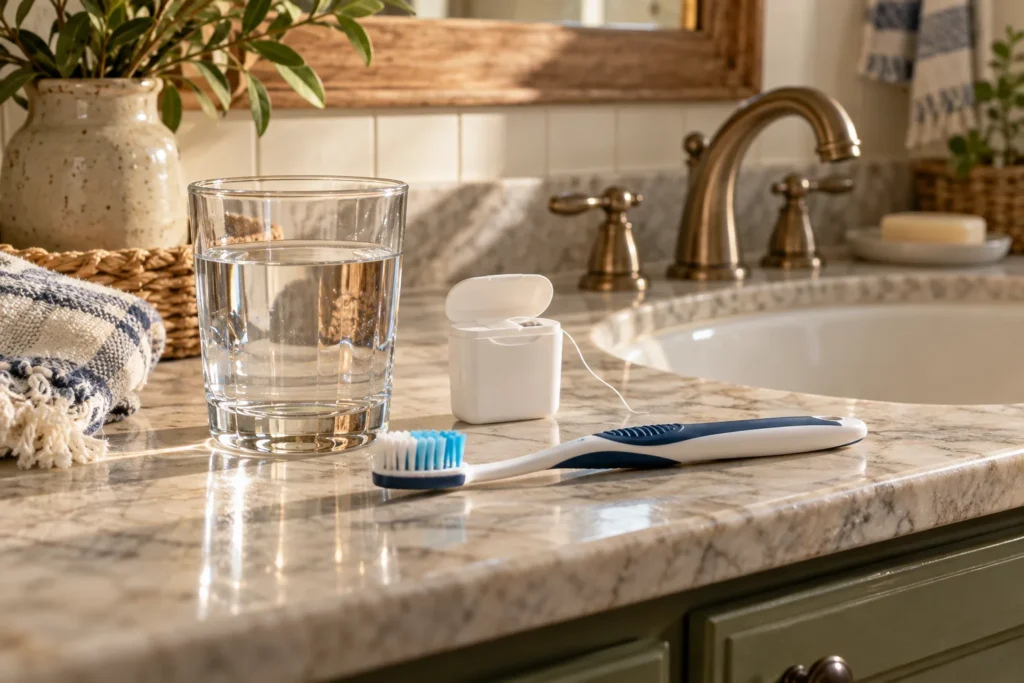
Oral wellness support begins with what happens at home between dental appointments. Describe when brushing and cleaning between teeth usually occur, where supplies are kept and what makes the routine difficult. A crowded shelf of specialty products may be less useful than a small set of appropriate tools used consistently.
This service helps organize habits, product questions and follow-through. Your dentist remains responsible for examining the mouth, assessing risk and recommending individualized prevention or treatment.
Keep the basics separate from optional products
The American Dental Association recommends brushing twice daily for two minutes and daily cleaning between teeth. The relevant technique and tools can be tailored by your dental professional. A rinse, supplement or specialty device should not be assumed to replace those core tasks.
Begin by identifying the purpose of each item already in the bathroom. If you are unsure why a product was recommended, record the question rather than adding another product that appears to promise the same result.
Describe the practical barrier honestly
Some people struggle with time, grip, access, discomfort, sensory preferences or an unpredictable work schedule. Explain the specific difficulty instead of calling the entire routine a failure. We can help organize practical questions for the dental team and make supplies easier to find.
A problem involving pain, bleeding or another symptom should not be solved by simply forcing a new habit. The household task is to support appropriate instructions and follow-up, not interpret symptoms or diagnose why a task is uncomfortable.
Bring product choices into the dental conversation
Keep the complete label for toothpaste, rinses and other products you want to discuss. Note the exact version and what you are trying to achieve. Active ingredients, intended purpose, age suitability and directions deserve attention alongside flavors or other preferences.
If you prefer a particular ingredient approach, bring that preference into an evidence-based discussion with your dentist. A natural label or a fluoride-free claim does not by itself establish that the product offers equivalent prevention or meets your individual dental needs.
Organize supplies around confirmed instructions
Once you understand the routine your dental professional recommends, give the necessary tools an accessible, appropriate place. Keep personal tools identifiable and follow manufacturer care and replacement instructions. Do not make the system so elaborate that using it takes longer than the task itself.
A small travel kit may be useful for an irregular schedule, while another household may need clearer caregiver responsibilities. Practical organization should make the established routine easier to repeat without introducing a new clinical recommendation.
Consider the pattern of drinks and snacks
For a dental visit, it can be useful to describe what you drink and how often you snack, rather than only listing foods you consider healthy. Keep the conversation connected to your actual routine and the advice of your dental professional.
We can help organize meal and shopping questions around confirmed guidance. This service does not prescribe a dental treatment diet or claim that one food pattern will reverse cavities, repair enamel defects or replace necessary dental care.
Prepare better questions for appointments
A short list can identify the product, difficulty and decision involved: which tool is appropriate, whether a rinse has a purpose, how to handle a child refusing brushing or what to do when a recommended item is hard to find.
Bring the actual instructions if you need help following them at home. Keep clinical answers with the plan so the household does not rely on a vague memory. If recommendations change, update the practical routine instead of continuing an outdated list.
Choose the right level of support
The main service connects daily habits, organization and appointment questions. The product-review service focuses on comparing actual labels and tools. Children and family oral wellness focuses on supervision, caregiver coordination and age-appropriate routine questions. Choose the part that fits your current difficulty rather than book several overlapping reviews.
A consultation format, included time and any hands-on work should be agreed before booking. Dental examination, treatment and urgent assessment are separate professional services.
Act on symptoms through the appropriate provider
Pain, swelling, trauma, suspected infection or unexplained changes need dental or medical assessment rather than a wellness shopping session. Do not delay care while searching for a different toothpaste or waiting for a household consultation.
For routine practical support, text your city and whether the issue is supplies, consistency, product labels or following instructions from your dentist. A general description is enough to begin. We can then discuss a focused project with a clear practical outcome.
Useful source information
Related practical help
Questions before you book
Is this a dental examination?
No. This service supports routines and information organization. Examination, diagnosis, risk assessment, prevention planning and treatment belong with a licensed dental professional.
Can you diagnose cavities or gum disease?
No. Suspected disease, symptoms and changes in the mouth need an appropriate dental assessment rather than interpretation through a household review.
Can you help me follow my dentist’s advice?
Yes. Bring the instructions and describe the practical difficulty. We can organize supplies, reminders and questions without changing the clinical plan.
Do I need to buy new products?
Not necessarily. Start with the purpose and suitability of what you already own. Additional products should address a clear task or qualified recommendation.
Can we discuss fluoride preferences?
Yes. ADA recommends fluoride toothpaste for cavity prevention. Bring concerns and product preferences to your dentist for individualized advice rather than assuming an alternative is equivalent.
Can a rinse replace brushing?
Do not assume that an optional product replaces basic cleaning. Ask your dental professional what role, if any, a rinse should have in your routine.
Can this include children?
Yes. The dedicated family service organizes caregiver responsibilities and questions for the child’s dentist, with appropriate supervision and age-specific guidance.
What if brushing is painful?
Pain deserves dental assessment. Do not use an organization session to diagnose the cause or simply push through symptoms without appropriate advice.
Can you review travel routines?
Yes. Supplies, storage and a workable schedule can be discussed around the care instructions you already have and the practical limits of the trip.
Will a diet reverse dental problems?
This service does not promise reversal or replace treatment. Discuss food patterns and individual prevention needs with your dental professional.
Can support be remote?
A remote planning or label session can be discussed. Clinical examination and treatment still require an appropriate dental provider.
How do I start?
Text 504.296.9696 with your city and the routine or product question. Do not wait for this service when symptoms need prompt professional care.
Tell us what you need help with.
Text 504.296.9696 with your city and a little about your goals. Prefer a form? That works too.
Need a phone conversation instead? Call 504.296.9696.