
Fragrance & Scent Exposure Review
Let’s follow the scent through your actual day: bedding, laundry, bathing, personal care, room products and the car. Then we can choose what to change first.
Bring me the routine, not just the perfume bottle.
Perfume is the obvious item. The less obvious part is the detergent on the sheets, the softener on the shirt, the towel after the shower and the lotion that stays on your skin. I want to see how those products fit together.
We can include makeup, hair products, deodorant, cleaning products, plug-ins and anything added to make the house or car smell a certain way.
For each item, we ask: what does it do, how often is it used, where does it go, who shares the space and is the added scent something you actually want? That gives us a practical order. An optional plug-in can be a different decision from a product someone needs for a specific purpose.
The review ends with a keep list, a compare list and a replacement plan. We can coordinate buying and organizing the selected items as part of an agreed package. The point is to make the next wash, shower and shopping trip easier to handle.
Where Fragrance Hides
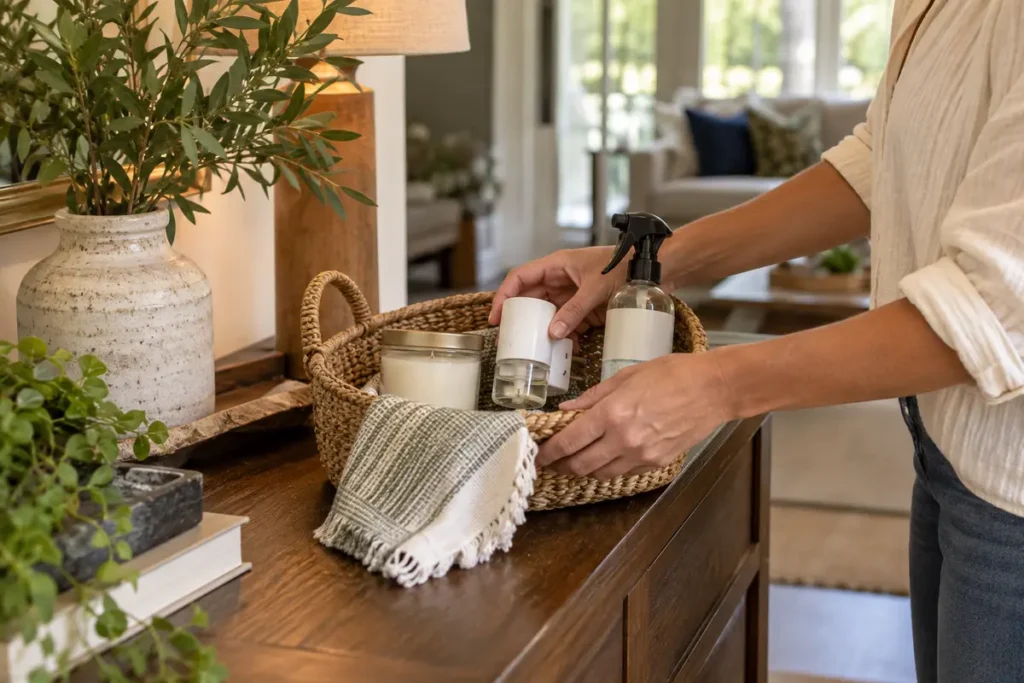
Fragrance can come from candles, incense, plug-ins, room sprays, laundry products, cleaners, soaps, shampoos, lotions, deodorants, perfumes and other household or personal-care products.
Prioritize Frequent and Ongoing Sources
A product used briefly once a month is different from a scent source running in a room all day. We help clients prioritize based on frequency, location, how the product is used and their personal goals.
Replace Without Making the Home Miserable
The goal is not to make your environment feel sterile. We can compare unscented, fragrance-free and lower-fragrance alternatives and help build new routines that still feel clean and comfortable.
Think Beyond the Product Label
Marketing terms are not always enough. We review ingredient information, product purpose and exposure context rather than relying on one buzzword.
This service can be included in a Complete Chemical Wellness Assessment or booked as part of our Healthy Home & Environmental Wellness service.
Map the sources before choosing replacements
A fragrance review begins with a room-by-room inventory, not a demand to buy a different brand. List products that add scent directly, such as plug-ins and sprays, and those where scent accompanies another task, such as detergent, lotion or surface cleaner.
Note how often they are used, where they are used and who controls the purchase. That creates a practical picture of the household. It cannot measure individual exposure or establish that a particular product caused a health condition.
Separate scent preference from a medical question
Someone may want less fragrance because of comfort, personal preference or a concern they are already discussing with a clinician. Those are different starting points. We can help organize product information and practical changes without diagnosing a reaction or assuming every symptom has the same cause.
If a product appears linked to symptoms, discuss that concern with an appropriate healthcare professional. The review can supply a clearer inventory for that conversation rather than turn a shopping choice into an unsupported medical conclusion.
Read fragrance wording carefully
For cosmetics, FDA explains that fragrance ingredients may be listed collectively as fragrance. That means the public label may not identify every component of a scent mixture. It does not prove that an undisclosed mixture contains a particular ingredient or caused a specific effect.
Ask the manufacturer focused questions about the actual version you own and keep its response with the product record. Avoid filling a disclosure gap with an assumption. The household decision can still be to choose a fragrance-free alternative while acknowledging what is unknown.
Compare the task as well as the scent claim
A replacement needs to perform the intended job. A hand soap, laundry product, disinfectant and room deodorizer are not interchangeable merely because they all mention freshness. Compare directions, intended surfaces, required use conditions and storage.
If a cleaning task requires a specific effective product or process, preserve that requirement while considering alternatives. Lower scent is not a substitute for correct use. A useful review helps you distinguish necessary function from optional fragrance rather than treating every product as the same type of exposure.
Prioritize continuous and frequently repeated sources
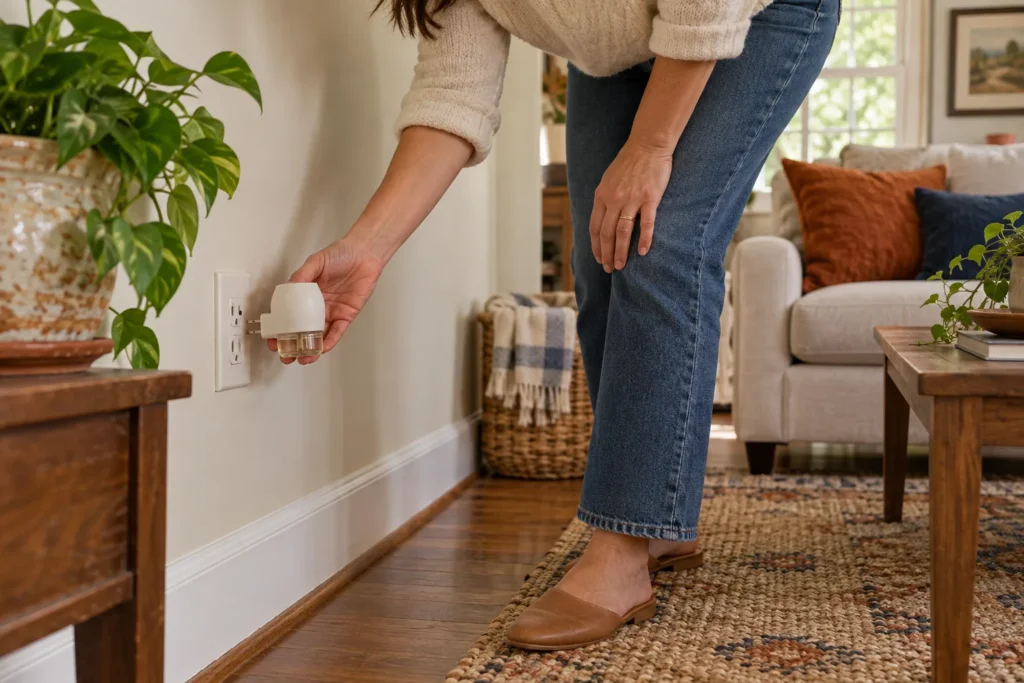
Start with the products used most often or left running for long periods in occupied rooms. A constantly operating scent dispenser may be easier to change than an occasional-use product that serves an important task. Laundry and bedding can also deserve attention because their scents may follow people between rooms.
This is a practical prioritization method, not a calculation of a safe dose. The order should consider your preferences, who uses the space and what alternatives can be maintained without disrupting essential household routines.
Include natural scents in the inventory
Essential oils, incense and scented botanical products also belong on the list if your goal is to understand sources of fragrance. Natural origin does not answer every question about suitability, ingredients or intended use. A product can smell pleasant and still be unnecessary for the task you are trying to perform.
Avoid replacing every conventional scent with a more complicated mixture merely because the label uses a different vocabulary. Compare the actual purpose, directions and available information before deciding whether another product is needed at all.
Make shared-household requests specific
If you want visitors or caregivers to follow a fragrance preference, explain which products or routines are involved and provide a practical option where possible. A short note about laundry, perfume or room sprays can be easier to follow than a general request to avoid chemicals.
Invite questions without turning the conversation into blame. In workplaces or rented settings, some decisions belong to management, a landlord or a formal accommodation process. We can organize the product questions while those responsibilities remain with the appropriate people.
Choose a staged replacement plan
Group the inventory into optional scent sources, necessary products to compare and questions requiring more information. Record the replacement, its task and a realistic refill source. Check the complete label when buying again because formulas, versions and availability can change.
You do not have to finish the entire household in one purchase. A staged plan can follow what is running low while focusing attention on the sources most relevant to your goals. Keep the plan understandable for whoever actually handles ordering and use.
Connect the service with the evidence guide
The fragrance knowledge hub discusses ingredient research, endocrine questions and the limits of interpreting studies. This service page focuses on what we can do with your actual inventory: organize sources, compare labels and plan workable changes.
Neither page can determine the cause of infertility, thyroid disease or a child’s development from a product list. To discuss a review, text your city and the room or category you want to start with. We can agree on scope before asking you to gather more information.
Useful source information
Related practical help
- Fragrance, ingredients and hormone-exposure guide
- Broader healthy-home review
- Cleaning and laundry guidance
Questions before you book
Does fragrance-free mean the same as unscented?
Do not rely on either phrase alone to answer every ingredient question. Compare the label, product purpose and manufacturer information for the actual version.
Will the review diagnose a fragrance allergy?
No. Diagnosis and individual treatment advice require an appropriate clinician. We can help organize product information and practical questions for that discussion.
Can you check laundry products first?
Yes. A focused laundry inventory can include detergent, boosters, softeners, dryer products and the routines that move scent onto clothing and bedding.
Do essential oils count as fragrance?
Include them when mapping scent sources. Botanical origin does not automatically establish that a product is suitable for every person, room or use.
Can you prove a product contains phthalates?
A general fragrance label is not proof of a particular ingredient. Specific composition questions require reliable product information or an appropriate testing process.
Will changing scents fix hormone problems?
The service cannot promise that. Medical symptoms and endocrine conditions need qualified assessment; a household preference can still guide practical product selection.
Can we review nursery and visitor products?
Yes. We can organize household preferences and caregiver questions while keeping infant health concerns and product-safety decisions with the appropriate qualified sources.
Do I need to discard everything scented?
No blanket disposal rule is required. We can prioritize optional sources, frequent-use products and sensible replacement timing within the agreed project.
Can this be done remotely?
A remote label and inventory review can be discussed. Useful photos need the complete product panels and directions, not only the brand on the front.
Can you help write a workplace scent request?
We can organize clear practical wording and product questions. Employer policy, individual accommodations and legal responsibilities remain with the workplace.
Is this the same as the fragrance knowledge hub?
No. The hub provides research context. This service applies an agreed review process to the products, rooms and decisions in your household.
How do I book a fragrance review?
Text 504.296.9696 with your city, main scent sources and the room or routine involved. Keep private medical records out of the initial inquiry.
Tell us what you need help with.
Text 504.296.9696 with your city and a little about your goals. Prefer a form? That works too.
Need a phone conversation instead? Call 504.296.9696.
Understand fragrance before choosing replacements
Read the fragrance, ingredients and hormone-exposure guide for research context, label questions and a practical household checklist.
Turn these questions into a practical checklist.
No approach to choose first. Answer plain questions about your situation, meals and household, then receive focused next steps and an optional support request.