
Air Purifiers, HVAC Filters & Air Quality Equipment
Choosing a purifier or reviewing an HVAC filter? Send your room dimensions, current device or filter model and the question you want answered. We help organize equipment comparisons and maintenance questions before you buy. HVAC compatibility, testing and specialist installation need the appropriate qualified provider.
Better HVAC Filtration
We can review filter size, fit, replacement schedule and the level of filtration your HVAC system can reasonably support. A high-efficiency filter only helps when it fits properly and does not create an inappropriate restriction for the system.
Portable Air Purifiers
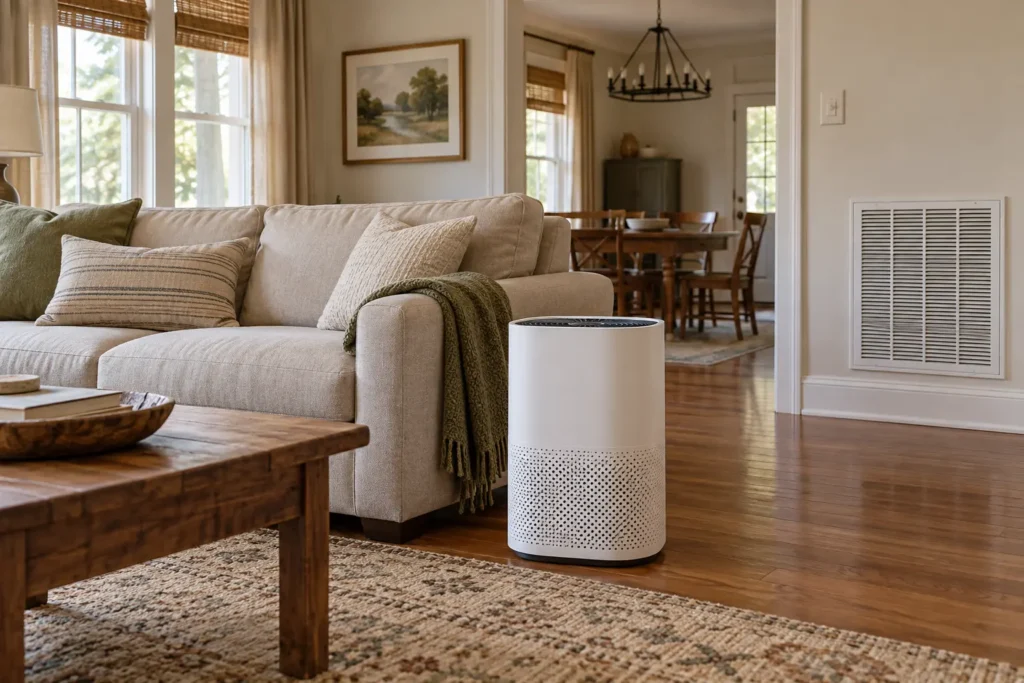
Portable purifiers can be useful in bedrooms, living areas, offices and other high-use spaces. Chemical Wellness can help select and supply units such as AirDoctor based on room size, placement and the type of filtration you want.
REME HALO & In-Duct Options
Where compatible and appropriate, Chemical Wellness can help with REME HALO and other in-duct air-quality upgrades as part of a broader HVAC and indoor-air review.
Equipment Is Only Part of the Plan
Source reduction, ventilation, smoke, fragrances, humidity, dust and cleaning habits can all influence indoor air. We look at the whole environment before assuming another device is the answer.
Installation & Maintenance
We can help with equipment installation within our service scope and create a practical filter and maintenance schedule so the system continues to perform as intended.
Back to Indoor Air Quality Wellness or request an air-quality consultation.
Start with the room and the reason for the device
Before comparing air purifiers, describe where the equipment will be used and the practical concern you are trying to address. A bedroom, open living area and small office do not present identical placement or operating needs.
Gather room dimensions, usual occupancy, existing equipment and the manufacturer’s information for any device already owned. This equipment-focused service helps organize selection and maintenance questions. A broader indoor-air review considers sources and routines as well; buying a device should not be the automatic answer to every concern.
Distinguish filtration from fixing a source
EPA describes filtration as a supplement to source control and ventilation. Air-cleaning equipment cannot remove every pollutant or repair an underlying building problem. Keep leaks, damp materials, unsafe combustion equipment and other source concerns on the appropriate professional repair path.
A purifier purchase can otherwise create false reassurance while the original issue continues. We can help organize equipment information alongside the household plan, without presenting a portable device as a building inspection, a remediation service or evidence that the air is safe.
Compare the specific performance claim
A general claim about clean air is less useful than knowing what a device is designed to address and under what conditions. For particle filtration, EPA advises considering clean air delivery rate, or CADR, in relation to the room.
Read the actual model’s specifications and the conditions attached to coverage claims. Separate particle claims from gas or odor claims. One feature does not establish performance for every concern. Keep the specification sheet available so the comparison is based on the device you would actually buy, not only a product-family advertisement.
Check how the device fits daily life
A portable cleaner must be placed and operated according to its instructions. Consider furniture, access to an appropriate power supply, walking space, pets and the ability to keep air paths clear. Noise and controls matter because a device that is routinely switched off may not be used as intended.
Ask how performance claims relate to operating speed rather than assuming the quietest setting and the strongest advertised result are the same. Placement guidance is not electrical work or permission to ignore a manufacturer’s clearance requirements.
Treat the HVAC filter as part of a system
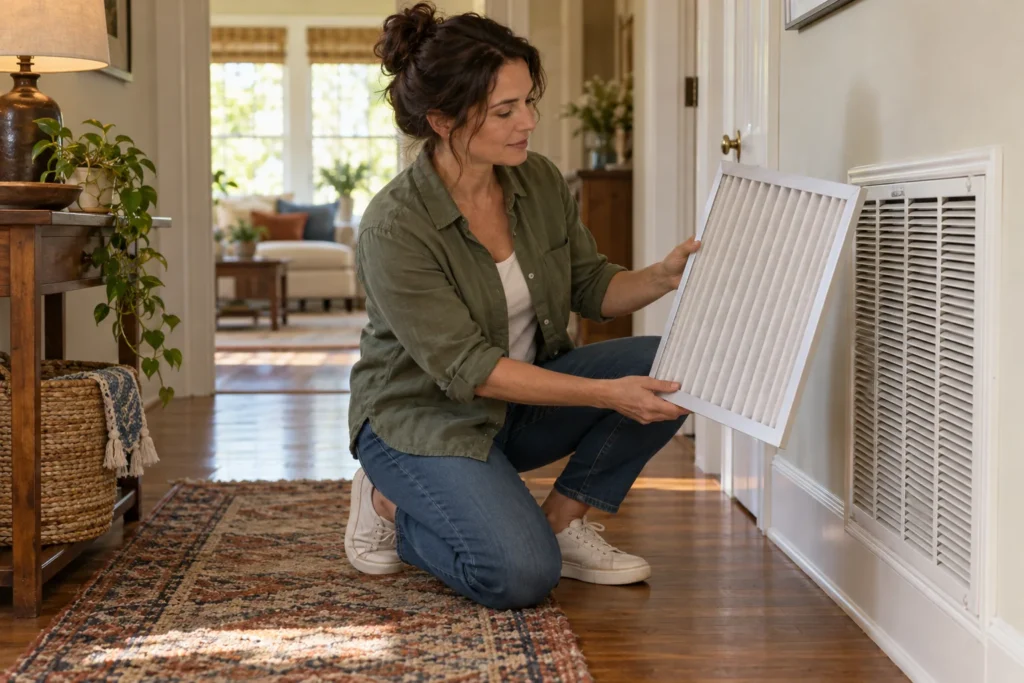
An HVAC filter choice needs to fit the equipment, dimensions and system requirements. Do not assume the most restrictive filter available is suitable for every unit. Consult the equipment documentation or an appropriate HVAC professional when compatibility is unclear.
Record the actual size and model information before shopping. The practical review can help keep these details organized and identify questions for the contractor. It does not redesign airflow, diagnose system defects or replace professional advice about the limits of the installed system.
Look beyond the first purchase price
Compare replacement filters, availability, expected service needs, energy use information and warranty conditions. A low initial price may not be a useful value if supplies are difficult to find or the household cannot manage the upkeep. Record the correct replacement part and where it can be ordered.
Check whether a quoted package includes the device, delivery, setup, instruction or follow-up; do not assume all are bundled. The review should make the ongoing responsibility visible before money is committed to a system.
Make maintenance a named responsibility
Choose who will check instructions, track use and arrange replacement parts. Keep the manual, purchase record and maintenance notes in one accessible place. Follow the manufacturer’s schedule and any conditions that affect it rather than relying on a generic date for all devices.
A reminder is useful only if someone acts on it. For a shared workplace or rented home, identify which tasks belong to management or the landlord and which are yours. That avoids buying a device whose upkeep falls between several people.
Keep monitoring claims in perspective
If you already use a consumer air monitor, bring the exact model and explain what it displays. A reading is meaningful only in the context of what the sensor measures and its limitations. A low reading on one display is not proof that every possible indoor pollutant has been assessed.
We can organize questions about the device and its instructions. Where testing, a formal exposure assessment or a building investigation is needed, use an appropriately qualified provider rather than treating a retail monitor as a complete answer.
Choose a practical next step before buying
The result of a consultation may be a clearer equipment comparison, an organized maintenance record or a list of questions for an HVAC professional. It does not have to be a shopping list. If equipment is appropriate, confirm the exact model, performance claim, replacement needs and agreed service scope first.
Text your city, room type, approximate room size and whether you already own a device. We can discuss the support you need while keeping inspection, testing and specialized installation separate and clearly identified.
Useful source information
Related practical help
Questions before you book
Is the largest purifier always the best choice?
No. Compare the actual room, performance specifications, operating settings, placement and maintenance. A larger advertised coverage number alone does not settle the decision.
Can a purifier solve a moisture problem?
It does not repair leaks or remove the need to address damp materials and building conditions. Those concerns need an appropriate investigation and repair response.
What does CADR help compare?
CADR describes a portable cleaner’s delivery of filtered air for tested particle categories. Check the model information and room suitability rather than treating it as a universal pollutant score.
Can you choose an HVAC filter remotely?
We can organize the model and compatibility questions. Unclear system requirements should be checked with the manufacturer or qualified HVAC professional before changing the filter type.
Does a HEPA claim cover gases too?
Do not assume so. Particle filtration and gas-reduction claims are different. Review the complete device specifications and the particular concern you want to address.
Can I use a device that generates ozone?
EPA advises avoiding air cleaners that intentionally produce ozone. Ask about the actual technology rather than relying on broad terms such as purification.
Are replacement filters included?
Only if the agreed scope states that they are. Confirm equipment, supplies, setup and any follow-up responsibilities before approving a purchase or service.
Can you maintain a reminder list?
A maintenance plan can record the correct parts, instructions and responsible person. The actual schedule should follow the equipment’s guidance and use conditions.
Will a consumer sensor prove my air is safe?
No. A sensor measures particular things within its capabilities. It does not assess every possible pollutant or replace a formal investigation when one is needed.
Can this cover a small business?
Yes, by arrangement. Include the facilities decision maker, room information and any landlord or system restrictions so the discussion fits the actual setting.
Is this a testing or remediation service?
This page describes equipment guidance and practical planning. Formal testing, building repairs and specialized remediation require an appropriately scoped and qualified provider.
What should I text first?
Text 504.296.9696 with your city, room type, approximate dimensions and the device or decision involved. Avoid sending unrelated private medical information.
Tell us what you need help with.
Text 504.296.9696 with your city and a little about your goals. Prefer a form? That works too.
Need a phone conversation instead? Call 504.296.9696.