
Fragrance-Free Laundry: Detergent, Bedding & Residual Scent
Clean clothes do not need a perfume trail. Build a simpler routine you can repeat.
Updated October 27, 2026 · Chemical Wellness household education
You change the detergent, wash the sheets and still notice the old scent. Before buying another bottle, look at the whole laundry route: what goes into the wash, what is already on the fabric, what is in the machine and what gets added afterward.
A fragrance-free laundry routine is a short, consistent process. The goal is to clean the actual load according to its care instructions while reducing unnecessary added fragrance. There is no honest promise that one wash will remove every residual smell from every fabric.
Trace the route from hamper to linen closet
Put the products used for one normal load on a counter: detergent, stain treatment, softener, scent beads, dryer sheets and any finishing spray. Include products used by other household members or a laundry service. The smell on the finished sheet may not come from the main detergent at all. Photograph the exact labels before deciding what to change.
Then look at storage. A clean towel placed beside strongly scented products can be a different problem from a towel leaving the washer with a musty odor. Write down where you first notice the smell. That observation gives the review a location and a task instead of turning every odor into a reason to buy more supplies.
Choose detergent for the machine and the load
Find an appropriate fragrance-free detergent with directions that fit your machine and the textiles being washed. Verify the exact variety. Different formulas from the same brand can look similar, and a retailer may substitute a scented version when filling an order.
Use the amount specified for the conditions on the label; more product is not automatically a better wash.
EPA’s Safer Choice product search can help identify eligible products with its additional fragrance-free designation. Check the listing rather than assuming that all products with a general environmental claim are fragrance-free. For the basic label distinction, use our fragrance-free versus unscented guide.
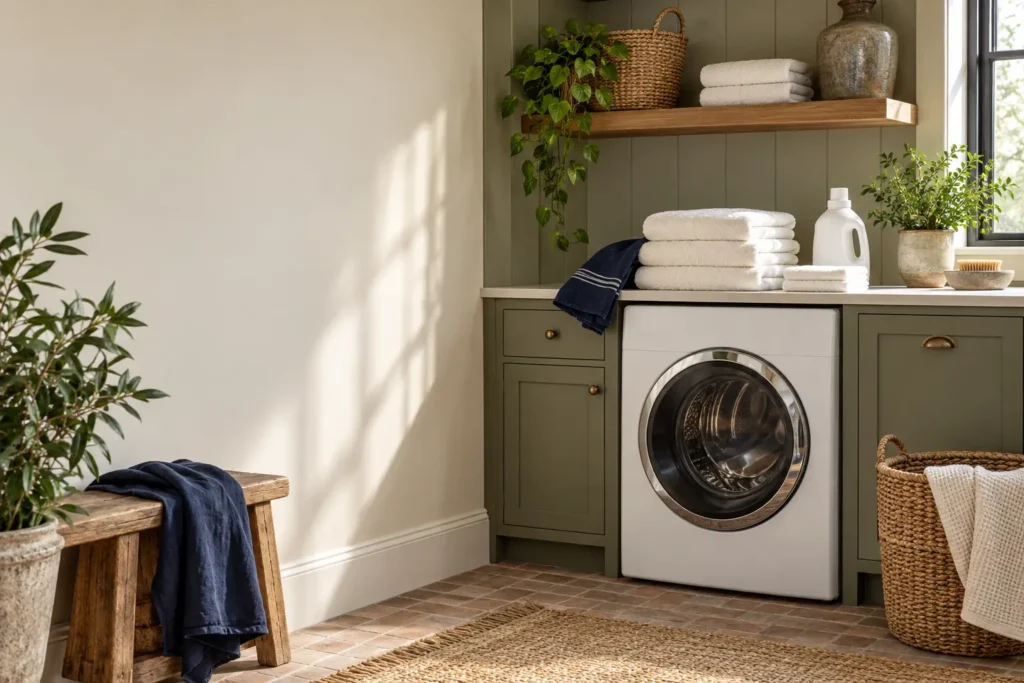
Remove optional scent steps before adding new ones
If reducing added fragrance is the aim, set aside optional scent beads, fragranced softeners, dryer sheets and finishing sprays while you establish the new routine. Check whether a particular garment has special care requirements and follow those instructions. Do not replace one scent product with essential oils and assume the fragrance question has disappeared.
A shorter routine is easier to explain to a partner, caregiver or cleaner: which product, which amount and which cycle for this load. Keep those directions with the original package. An attractive decanted bottle without instructions is less useful than a plain labeled container everyone can identify correctly.
Check the washer’s maintenance instructions
Read the machine manual for cleaning the dispenser, accessible seals, filters and any maintenance cycle. Do not invent a stronger cleaning mixture because the washer smells. Use only products and procedures compatible with the appliance, and handle water or access panels as the manufacturer directs.
If the machine has a repair issue, a household product review is not a substitute for the appropriate technician.
Keep cleaning products separate. CDC warns against mixing bleach or disinfectants with other cleaners; see its bleach safety guidance. Fragrance removal is not a reason to combine bleach, vinegar, ammonia or miscellaneous online cleaning recipes. Follow the individual labels and the appliance instructions.
Make bedding the first manageable test load
Select a small set of washable bedding with clear care labels. Record the detergent, dose, cycle and drying method, then judge the finished items once they are fully dry. Avoid an expensive replacement purchase based on how a damp load smells immediately after washing. Make sure the fabric is suitable for every step you use.
A separate test load also makes it easier to identify practical problems such as incomplete drying, overloaded washing or a stubborn scent on one particular item. Do not keep escalating temperature, chemicals or cycle length beyond the textile or machine instructions. There is a point where a care question needs the manufacturer or a textile professional.
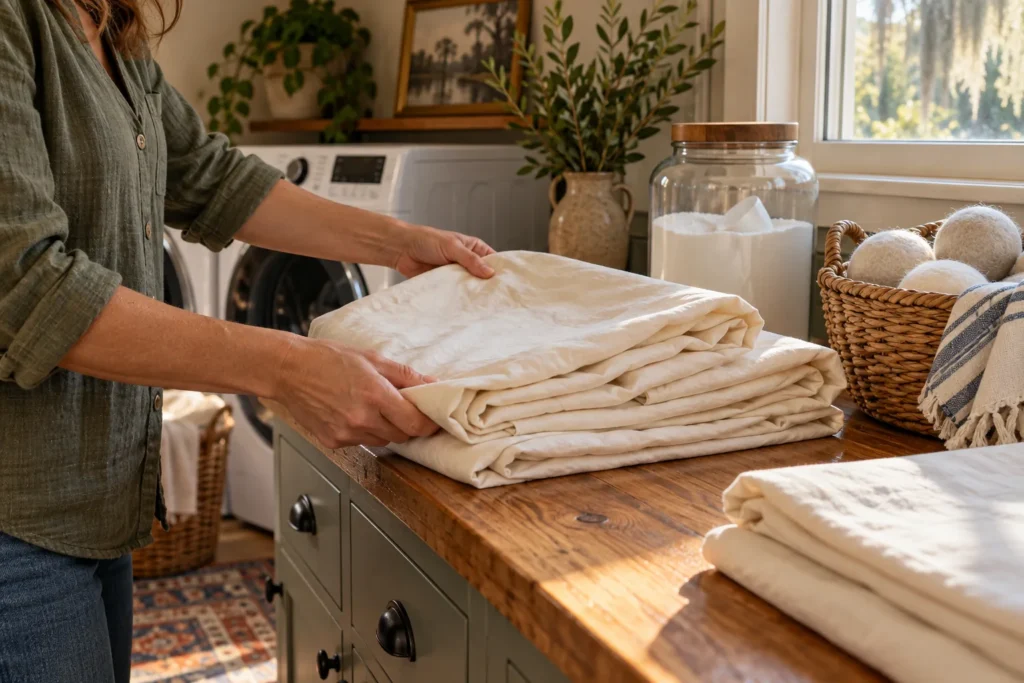
Treat residual fragrance as an item-specific question
Fabric type, prior products and care limits vary. A used quilt, a new towel and a machine-washable cotton sheet are not interchangeable projects. Ask what has already been tried and whether the item can tolerate another ordinary wash. Keep the plan proportionate to the item’s value and the household’s needs.
No smell test can certify that a textile is free of every substance. Likewise, a remaining odor does not establish a particular chemical concentration or medical risk. Keep the conclusion narrow: the item still has a noticeable scent, the household does not want that scent, and the next care step must be compatible with the item.
Dry and store the load as deliberately as you wash it
Follow the care label, complete drying and check the dryer’s normal lint-maintenance instructions. Put the finished items in a clean, dry storage space rather than back with open scent products. Avoid adding a spray to make a poorly dried or stored load smell better. If odor keeps returning, investigate the actual moisture or maintenance issue.
In a humid Greater New Orleans home, the practical question is whether your chosen washing, drying and storage routine works in that room. Ask for help with persistent leaks, dampness or equipment faults instead of treating fragrance as the fix. Laundry planning can sit alongside a wider indoor-air review when the household needs both.
Set realistic rules for shared laundry
At a laundromat or shared building, you may not control the products used in earlier loads. Ask about the service’s actual procedures before assuming a fragrance-free detergent option means every part of the process is fragrance-free. Agree on what can be requested and what cannot be guaranteed.
For a paid laundry service, send a short written instruction: the approved detergent or product rule, no optional scent additives, the relevant care requirements and a request to flag substitutions. Keep expectations clear. A service can explain its process, but a vague promise of clean or fresh is not the same as a documented fragrance preference.
Keep cleaning and medical questions separate
If a person develops skin or breathing symptoms, obtain appropriate clinical advice and follow any existing care plan. Changing the wash does not identify an allergy or replace treatment. Keep the product names and timing available for that conversation. Do not repeatedly expose someone to a suspected trigger as a household experiment.
If a clinician or infection-control professional has given laundry instructions for a specific situation, those instructions still matter. Reducing optional fragrance does not mean abandoning necessary cleaning or disinfection. Ask how to meet both requirements rather than choosing between a personal preference and an important care instruction.

Leave the household with one usable routine
The finished plan should fit on a short note: product and backup, dose source, normal load categories, care-label reminders, machine maintenance reference and storage location. Add a shopping photo of the exact detergent so a replacement order is less likely to bring back the old scented version.
Chemical Wellness can help review laundry products and connect the plan to toiletries, bedrooms and other household priorities in Harvey and Greater New Orleans. Text LAUNDRY with your city and the issue you want organized. See packages and scope options before booking; product purchases and additional work are agreed separately.
Related guides and practical household help
- Fragrance, ingredients and hormone-exposure hub
- Fragrance-Free vs. Unscented: How to Read the Label
- Fragrance-Free Routines During Pregnancy
- Musk Ambrette & Early Puberty: What the Study Shows
- Cleaning and laundry review
Questions about this guide
Will one wash remove all old detergent scent?
There is no reliable one-wash promise for every fabric and previous product. Follow care instructions, record what was tried and avoid aggressive methods that could damage the item.
Should I use extra detergent to remove fragrance?
Use the dose specified for the product and washing conditions. Adding more than directed is not a dependable solution and makes the routine harder to evaluate.
Does unscented detergent meet a fragrance-free goal?
Check the actual formula and claim. Unscented and fragrance-free are not interchangeable terms; a current product listing is more useful than the front label alone.
Can essential oils replace scent beads?
They introduce another scent rather than establish a fragrance-free process. Do not add materials to a washer or dryer unless the equipment and product directions allow them.
Can I mix cleaning ingredients to speed up the reset?
Do not mix bleach or disinfectants with other cleaners. Follow product labels and the machine manual rather than combining online recipes for a stronger wash.
Should I clean the washer first?
Review its maintenance instructions and current condition. Use the manufacturer’s approved process and ask the appropriate technician about faults, leaks or inaccessible maintenance tasks.
Does a fragrance-free wash diagnose a skin problem?
No. It is a household product change. A clinician can assess symptoms and help determine whether allergy, irritation or another issue needs attention.
Can I keep using stain treatment?
Choose a product appropriate to the textile and task, check its fragrance information and follow its directions. Review the whole process instead of focusing only on detergent.
What about a shared washing machine?
Ask what control is realistically available. A shared facility may not be able to guarantee a completely fragrance-free process even when you supply a preferred detergent.
Can you guarantee that a dry-cleaning service is fragrance-free?
No. Ask the actual provider about its products, processes and substitutions. A household consultation can help formulate the questions but cannot certify another company’s operation.
Do I need to replace all my bedding?
Start with the item’s condition and care instructions. A practical review considers ordinary care, acceptable results and budget before recommending any replacement purchases.
How do I get help with the laundry routine?
Text LAUNDRY to 504.296.9696 with your city and a short description. We can discuss product organization and a defined household review before you book.
Sources and further reading
Make the next household decision easier.
Tell us your city and the product or routine you want help organizing. We can discuss a defined review before you book.