
Children & Family Oral Wellness
Create a simpler family oral-care routine that is easy to understand, realistic to follow and appropriate for each age and stage.
Build the Habit Early
We help parents organize age-appropriate brushing routines, toothbrush replacement, supervision habits and simple systems that make daily oral care easier to remember.
Food & Oral Habits
Frequent snacking, sugary drinks and eating patterns can affect the oral environment. We can review family routines and help identify practical questions or changes to discuss with your dental team.
Children’s Oral-Care Products
We can compare toothpaste, flossing tools, brushes and rinses based on ingredients, intended use, age appropriateness and recommendations from your dentist.
Make It Repeatable
From bathroom organization to travel kits and replacement schedules, the goal is to make the healthy routine easier than forgetting it.
Explore the full Oral & Dental Wellness service or book a family oral wellness session.
Chemical Wellness does not diagnose or treat dental disease. Pain, swelling, bleeding, trauma, suspected cavities or other dental concerns should be evaluated by a licensed dental professional.
Their cup. Their spoon. Their toothbrush.
Use separate utensils and cups for a baby or young child. Do not clean a pacifier in your own mouth or taste the child’s food with the same spoon you return to their mouth. Saliva can transfer cavity-associated bacteria. That does not mean a cavity is caught from one shared bite: decay is a process involving bacteria, sugars, teeth, saliva and protective care.
Ask relatives and caregivers to use a serving utensil, take their own sample and keep toothbrushes separate. Keep the conversation practical rather than blaming one person for a child’s dental health. Children need age-appropriate brushing, dental visits and individual advice when there is pain, damage or a concern about decay.
“Please give them their own spoon and cup. If you need to taste or cool the food, use a separate utensil. We’re keeping that routine the same with everyone.”
American Dental Association: saliva sharing and early tooth decay · visitor and cold-sore boundaries.
Make the routine understandable to every caregiver
A family oral-care plan needs to work when a parent is busy, a grandparent helps or the schedule changes. Start with the instructions from the child’s dental professional and identify who helps carry them out.
Keep supplies and the practical routine clear enough that the next caregiver does not have to guess. This service supports that organization and follow-through. It does not examine teeth, diagnose enamel changes or choose treatment for a child based on a description or photograph.
Plan the adult role before adding rewards
A young child may enjoy choosing a brush or using a simple timer, but an appealing activity does not replace appropriate adult help and supervision. Ask the child’s dentist what assistance and technique are suitable for their age and abilities.
We can help fit those instructions into the household schedule. Begin with the practical barrier: rushed mornings, hard-to-find supplies, inconsistent handoffs or a routine that changes every night. A simpler system may help more than another themed product.
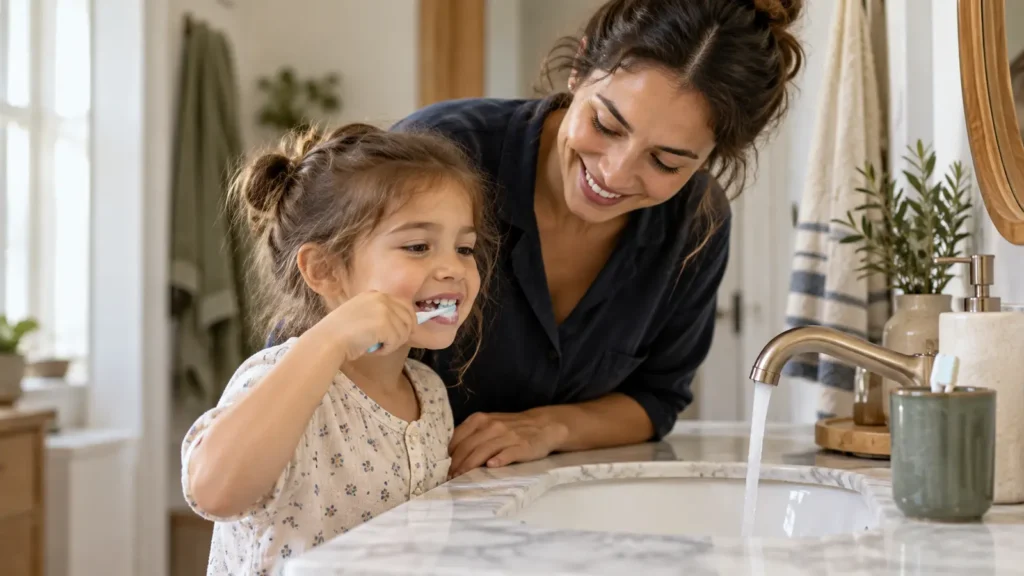
Keep age-specific product instructions visible
Children’s oral products can differ in directions and intended age. Keep the complete label and the dentist’s recommendations available rather than assuming every child in the household needs the same product or amount. If a caregiver is uncertain, have the question clarified by the appropriate professional before changing the routine.
A household reference can record which item belongs to which child and where confirmed instructions are kept. Product selection should not be based solely on a cartoon, flavor or broad natural claim.
Describe difficulties without forcing a diagnosis
A child may resist a task for several reasons, and a product review cannot determine the cause. Explain the actual difficulty to the child’s dentist or appropriate clinician, especially when pain, gagging, sensory concerns or other symptoms are involved.
We can help organize the question and the practical setting around confirmed guidance. Do not assume reluctance is simply bad behavior or that a different toothpaste will solve every problem. The goal is a routine the adults can support appropriately, with qualified help when needed.
Connect school days and shared care
If the child moves between homes or caregivers, keep the necessary instructions and suitable personal supplies organized. Clarify what belongs in each location and who checks replacements. Do not share private information with everyone involved in transportation simply because they help with the schedule.
A short practical note can keep the routine consistent without creating a complicated record. For travel or overnight stays, discuss the actual arrangements in advance so oral care is not forgotten or improvised from products intended for someone else.
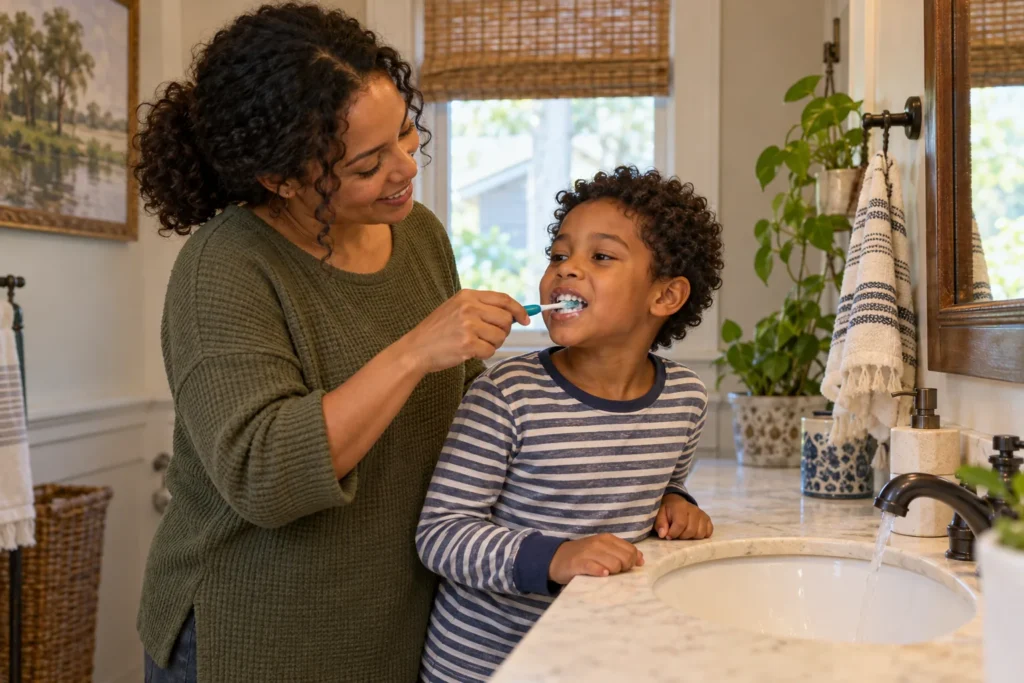
Bring food and drink patterns to the dental visit
Describe what the child drinks, how often snacks happen and any relevant feeding instructions. A useful conversation is about the actual pattern, not whether a food is marketed as healthy. We can organize family shopping and meal questions around the advice you receive.
Clinical prevention, nutrition needs and treatment remain with the appropriate professionals. This service does not promise that a particular diet will reverse cavities or enamel defects, and a whole-food preference is not a reason to delay an assessment of a dental concern.
Keep the bathroom system simple
Give each child’s suitable supplies an identifiable place and keep adult products or items needing restricted access appropriately stored. Follow product care instructions and keep the area manageable for the caregiver.
A small routine card can help when several people share tasks, but it should reflect confirmed advice rather than a new set of clinical directions. The best practical system is one that can be followed on a normal busy evening. It need not make the bathroom look like a display or require buying unnecessary equipment.
Use appointments to clarify the next stage
As children grow, ask the dental professional which responsibilities can change and which still need adult help. Keep questions about tools, toothpaste, swallowing, flossing and individual risk with that professional. Note the answer and update the household reference after the visit.
An old routine should not remain in place simply because it was once appropriate. We can help organize the practical update so caregivers understand the change, while the clinician assesses readiness and any dental needs.
Start with one routine you want to improve
A family session can focus on one child’s routine, caregiver coordination or product information. If you want a broader household plan, explain how oral care connects to shopping, storage or the daily schedule. Text your city and the practical issue, without sending a child’s private medical records in the initial inquiry.
We can discuss an appropriate scope and preparation. Pain, swelling, injury, suspected decay or other symptoms should go to the relevant dental or medical provider rather than wait for this educational service.
Useful source information
Related practical help
Questions before you book
Is this pediatric dental care?
No. We support household routines and information organization. Examination, diagnosis, prevention recommendations and treatment belong with an appropriately qualified dental professional.
Can you assess enamel pits or tooth discoloration?
No. Changes in teeth need dental assessment. A household visit or photo cannot establish the cause or appropriate treatment.
Can grandparents join a planning session?
Yes, with appropriate consent and a clear role. Shared instructions can help caregivers follow the established routine without sharing unrelated private information.
Will you choose a toothpaste amount?
The child’s dentist and age-appropriate product instructions should guide that decision. We can organize confirmed instructions so caregivers do not have to guess.
Can we discuss fluoride concerns?
Yes. Bring them to the child’s dentist for individualized advice. A preference or alternative label should not be treated as proof of equivalent prevention.
Can a reward chart help?
A simple cue or routine aid can be discussed, but it does not replace appropriate adult help, professional advice or assessment when a child has symptoms.
What if my child refuses brushing?
Describe the difficulty to the dental professional, particularly if pain or another concern is involved. We can help organize practical follow-through around the guidance received.
Can different children use different products?
Yes. Keep the individual instructions and supplies clear. Do not assume a product is suitable for every child merely because it is sold as a family item.
Can we plan for two homes or overnight visits?
Yes. Suitable personal supplies, caregiver responsibilities and confirmed instructions can be organized for the actual care arrangement.
Will food changes repair cavities?
This service does not promise reversal or replace dental treatment. Discuss the child’s food pattern, prevention needs and any existing disease with their dental professional.
Should symptoms wait for a wellness appointment?
No. Pain, swelling, injury, suspected infection or other concerning changes need appropriate professional attention rather than waiting for routine household guidance.
How do I request help?
Text 504.296.9696 with your city and the routine or caregiver issue. Keep a child’s private records out of the initial message.
Tell us what you need help with.
Text 504.296.9696 with your city and a little about your goals. Prefer a form? That works too.
Need a phone conversation instead? Call 504.296.9696.