
Oral Care Products & Ingredient Review
Bring the toothpaste, the mouthwash and the toothbrush you actually use. We can compare the ingredients, purpose and routine without losing sight of your dental needs.
Your mouth is a living system. Every rinse should have a reason.
A strong flavor or a burning sensation is not a measure of how well a rinse is helping you. Ask what the product is intended to do, which ingredient does that job, how long it is meant to be used and whether it suits your age and circumstances.
A cosmetic breath freshener and a prescribed treatment are different decisions.
The oral microbiome is worth taking seriously. A 2020 study of chlorhexidine rinse found changes in salivary bacterial composition and related measures after short-term use in healthy participants. That is a specific finding about chlorhexidine under the study conditions.
It does not establish the same outcome for every mouthwash or erase a reason your dentist may prescribe a particular rinse.
If a product leaves your mouth uncomfortable, tell your dentist and ask about the ingredients, alcohol content, frequency and alternatives. The ADA mouthrinse guide describes therapeutic uses, limitations and age precautions. Do not swallow rinse; follow the actual label and professional instructions.
Fluoride questions deserve a clear comparison.
I am willing to discuss fluoride-free options and why someone prefers them. I also want the tradeoff stated honestly: fluoride has an established role in preventing tooth decay and supporting remineralization. NIDCR explains the tooth-decay process and fluoride’s role.
A discussion about drinking-water exposure is not identical to choosing a topical toothpaste. Ask your dentist how an alternative fits your individual cavity risk and prevention plan.
Look at the toothbrush, too.
Handle material is only one part of the choice. Fit, soft bristles, condition and the ability to clean effectively matter. A bamboo handle is not proof that a brush suits every mouth. Use the ADA toothbrush guidance and keep the comparison grounded in the tool’s actual use.
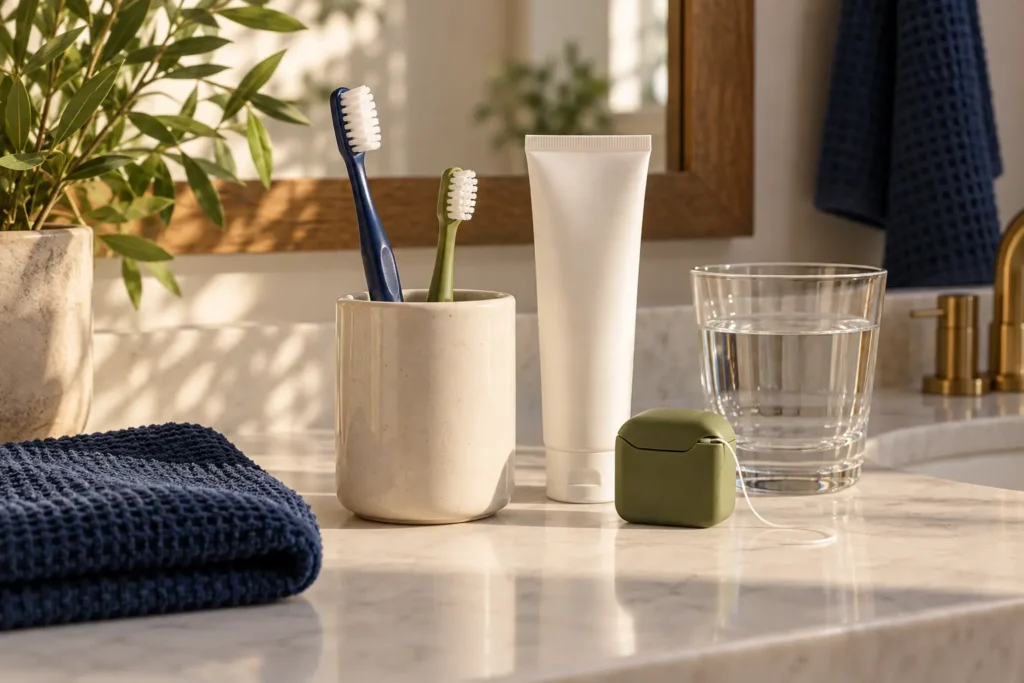
Toothpaste
We can help review ingredient lists, abrasives, sweeteners, flavors, foaming agents and active ingredients while keeping individual dental needs and professional recommendations in context.
Floss & Interdental Products
Compare floss materials, coatings, picks, brushes and other options based on ease of use, comfort and consistency.
Mouth Rinses
Review the purpose of a mouth rinse, ingredient list, alcohol content, flavoring and whether it actually adds value to your routine.
Toothbrushes & Tools
We can help simplify manual vs. electric toothbrush choices, replacement timing, tongue-cleaning tools and other daily hygiene products.
Family Product Swaps
When appropriate, we can help source replacements for adults and children so the household has a simpler, repeatable oral-care system.
Back to Oral & Dental Wellness or book an oral wellness session.
Chemical Wellness provides education and product guidance. Diagnosis, treatment and individualized dental recommendations remain with licensed dental professionals.
Choose the task before comparing the package
Oral-care products serve different purposes. Before comparing toothpaste, floss, rinses or a powered tool, identify the task and any recommendation already given by your dental professional. A product advertised for fresh breath is not automatically a substitute for another product intended for cavity prevention or a specific clinical need.
Bring the actual label and instructions. This service helps make the comparison clear so you can ask better questions, rather than treating every product on the same shelf as interchangeable.
Review the exact toothpaste formulation
Keep the ingredient panel, active-ingredient information where present, directions and age guidance for the actual version you use. Flavors, sweeteners, foaming ingredients and other preferences can be considered alongside the intended dental purpose. A brand may sell several formulations, so a general name is not enough.
We can organize these differences without diagnosing a reaction or selecting treatment. If your dentist recommended a particular active ingredient or product, clarify any proposed substitution with that professional before changing the plan.
Keep evidence and preference in the same conversation
You may prefer less flavor, fewer optional ingredients or a particular material. Those preferences can be discussed without treating a marketing term as proof of equivalent performance. Ask what the product is intended to do and what reliable evidence supports that purpose.
Your dentist can explain how an option fits your risk and needs. The review should make that discussion easier, not replace it with a blanket rule that every natural product is better or that every unfamiliar ingredient should be avoided.
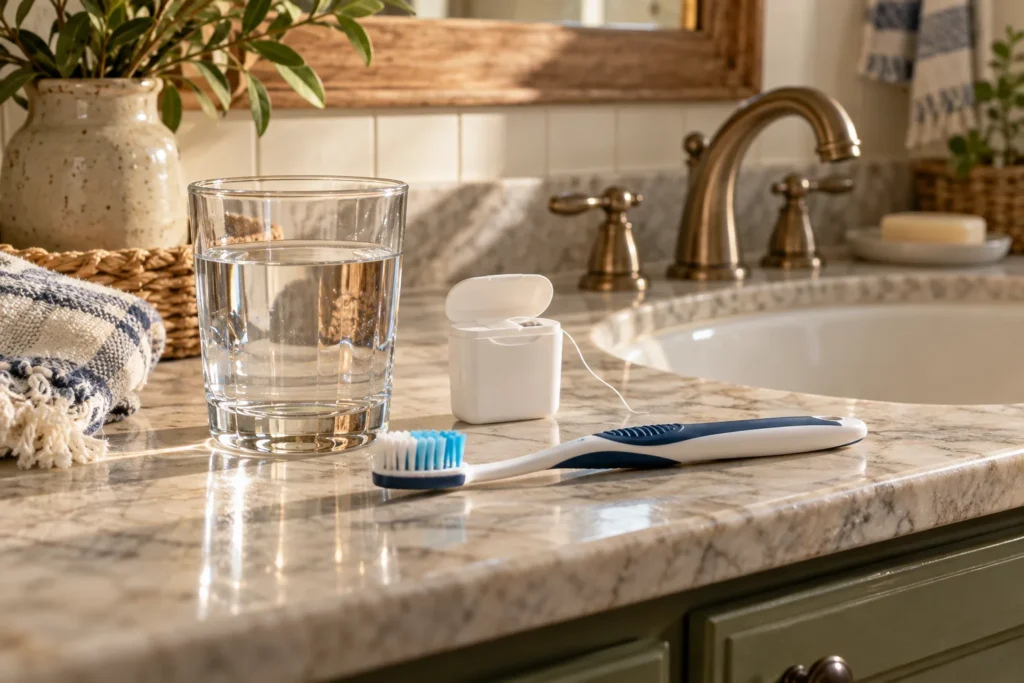
Compare interdental tools for practical use
Floss, holders, brushes and other devices differ in handling and intended use. Explain the task you find difficult and any advice already provided by the dental team. We can organize the options and the questions you want answered, including care instructions and replacement supplies.
The suitable tool and technique may depend on your mouth and dental work, which this educational service does not examine. A device should be selected for an appropriate task rather than because its packaging looks more advanced than the tool you already own.
Ask whether a rinse has a specific role
A mouth rinse can add cost and another step to a crowded routine. Identify the intended purpose, label directions and any clinical recommendation before deciding it is necessary. Compare the actual formulation, including alcohol content or flavor preferences where relevant, without assuming a rinse replaces brushing or cleaning between teeth.
Age suitability and the ability to use a product as directed matter, particularly for children. Questions about treating symptoms or selecting a therapeutic rinse belong with the dental professional responsible for your care.

Make toothbrush comparisons concrete
Manual and powered brushes involve practical differences in handling, charging or batteries, replacement heads, controls and cost. Bring the model information and explain what is difficult about the current tool. A simple comparison can identify the questions to take to your dentist and the ongoing supplies each option requires.
Manufacturer instructions should guide care and replacement details. We do not need to declare one device best for every person to make the purchase decision clearer and more manageable for your household.
Check children’s products individually
A children’s label or appealing flavor does not answer every question about age, amount, supervision or intended use. Keep the directions and discuss the child’s needs with their dentist. A family may need different products or routines for different ages.
We can help organize those instructions and a purchasing list so caregivers do not choose a different version by accident. We do not prescribe a pediatric product or dose, and a household preference should not replace qualified guidance about a child’s dental risk.
Record the chosen version and its purpose
After the appropriate professional questions are resolved, keep a short list of selected products, actual versions and relevant directions. Add a reasonable alternative only when it has been appropriately considered. That can help another household member shop without repeating the same uncertainty.
Recheck the label when packaging or formulation changes. A useful purchasing record is simple enough to use in a store and detailed enough to distinguish similar products; it should not require buying a large collection of optional tools.
Leave with clearer information, not a sales requirement
The outcome may be an organized comparison and a few specific questions for your dentist. You do not need to purchase a new product to make the review worthwhile. If your main difficulty is the family routine rather than the label, discuss the related support instead.
Text your city, the product category and the decision you want to make. We can agree on a focused review, while symptoms, examination and treatment remain with your licensed dental provider.
Related practical help
- Oral wellness and daily routines
- Family and children’s oral-care support
- Ingredient and product education
Questions before you book
Can you compare products I already use?
Yes. Bring complete labels and instructions for the actual versions, along with the purpose of each product and any advice from your dentist.
Will you prescribe a toothpaste?
No. Individual dental prevention and treatment recommendations belong with your dentist. We organize product information and practical comparison questions.
Can I discuss a fluoride-free preference?
Yes. Keep that preference in the conversation with your dentist and ask about evidence and individual risk. The label alone does not establish equivalent cavity prevention.
Are natural products automatically safer?
No automatic conclusion follows from that word. Consider the actual ingredients, directions, evidence, intended use and individual professional advice.
Can a mouthwash replace other cleaning?
Do not assume it can. Clarify the intended role with your dental professional rather than using a marketing claim to remove core tasks from the routine.
Can you review floss materials and coatings?
Yes. We can organize available product information and practical handling questions while leaving suitability for your mouth and technique advice with your dental team.
Do electric brushes always work better for everyone?
A useful comparison considers handling, intended use, instructions and individual advice. We do not need to make a universal claim to help organize the choice.
Can you diagnose a reaction to toothpaste?
No. Symptoms or suspected reactions need appropriate clinical advice. Keep the complete product information available for the professional assessing the concern.
Can the same product be used by every child?
Do not assume so. Age guidance, directions, supervision and the child’s dental recommendations need to be considered individually.
Do I have to buy a recommended brand?
The review should explain purpose and information. A particular purchase is not required simply to make an educational comparison useful.
Can this be done remotely?
A remote label comparison can be discussed if the images are complete and readable. It does not replace an examination or clinical consultation.
What should I send first?
Text 504.296.9696 with your city and product category. We can clarify scope before you gather detailed labels or send unrelated personal information.
Tell us what you need help with.
Text 504.296.9696 with your city and a little about your goals. Prefer a form? That works too.
Need a phone conversation instead? Call 504.296.9696.