
How to Choose a Water Filter Based on Your Actual Needs
Practical questions, useful comparisons and a next step you can follow.
Updated October 26, 2026 · Chemical Wellness household education
Choosing a water filter is easier when you start with the water problem instead of the product. Different systems are designed for different contaminants, flow rates and household needs.
Start With Your Water Source
Municipal water and private well water can have very different testing information and treatment needs. Review available water-quality reports or testing results before choosing equipment whenever possible.
Decide Which Water You Want to Treat
An under-sink system can focus on drinking and cooking water, while a whole-house system treats water entering the building. Shower filtration may address a different goal again.
Match the Technology to the Goal
Carbon, reverse osmosis, sediment filtration and other technologies do different jobs. No single filter automatically addresses every possible concern.
Plan for Maintenance
Filter replacement, membrane service, flow rate and installation access matter just as much as the initial purchase. A system that is not maintained cannot perform as intended.
See our Water Quality & Filtration service or Water Filter Installation page for hands-on help.
Write the question in one sentence
Before comparing products, finish a sentence such as: I want help choosing a drinking-water filter for this outlet because of this specific question. Avoid starting with a claim that a product removes toxins without identifying what that means.
The question could concern taste, an identified substance, a report you want to understand or maintaining equipment already installed. Each leads to a different comparison. Keep a distinction between what you know and what you suspect. That simple separation helps prevent an expensive purchase from becoming a substitute for the information you actually need.
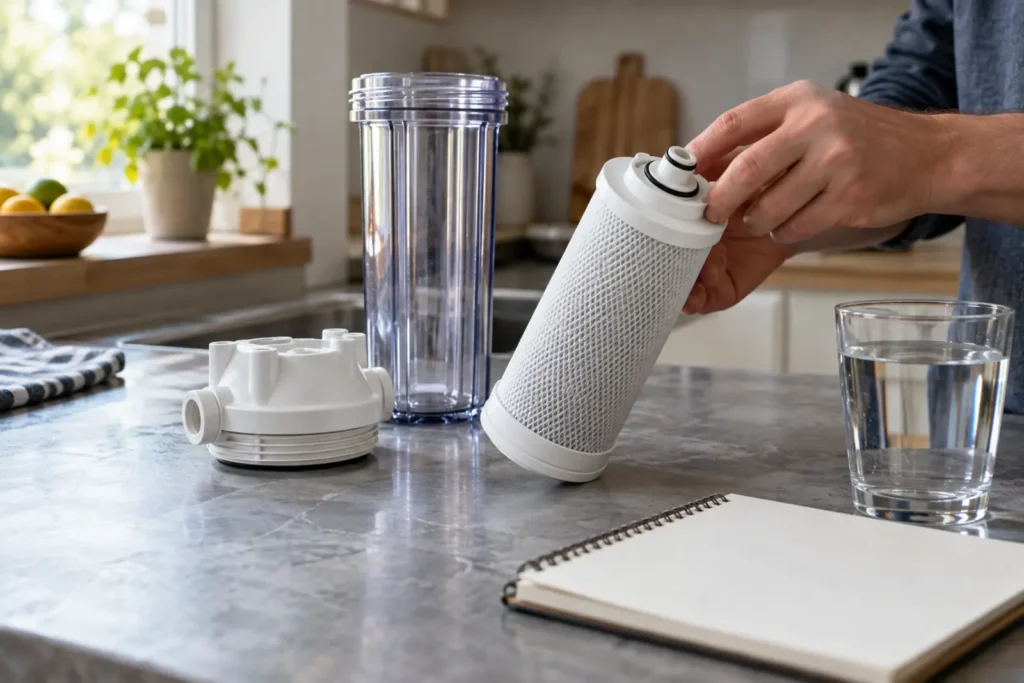
Gather the information that belongs to the property
Identify whether the supply is public or private and obtain the relevant available report or instructions. Note the outlet you intend to use and any building-specific issue that needs clarification. A public report, a sample from a particular tap and a product performance listing describe different things.
Do not treat them as interchangeable. If you have a test result, keep the sampling context and the exact question available for the appropriate qualified interpretation. A shopping decision is stronger when the product is being compared with the actual task rather than a vague concern.
Make a comparison sheet for two real models
Write the exact model numbers, intended uses, relevant reduction claims, certification listings, purchase prices and replacement-cartridge information. Comparing two actual products is more useful than a general debate about pitchers, countertop units or under-sink systems. Record where each claim can be checked, not just which advertisement made it.
A listing may apply to a particular configuration or replacement component. Keep unanswered items visible so they can be resolved before purchase. You can also include an existing unit as one of the options instead of assume every comparison must end with a new device.
Check the specific performance claim
Use the exact product listing to see which reduction claims are supported. A certification logo does not mean a model addresses every substance or every possible water condition. NSF’s consumer guidance is a useful starting point for understanding contaminant-specific claims and finding relevant product information.
Keep the operating conditions and replacement instructions with your comparison. Do not translate a product listing into a claim about the measured condition of your own tap. When the household question requires additional sampling, obtaining the right information may come before selecting equipment.
Calculate the ongoing task, not just the purchase price
For each option, list replacement supplies, availability, maintenance steps and the practical time required to keep it working according to its instructions. An inexpensive unit can become difficult to maintain if compatible parts are hard to obtain.
A more elaborate system can introduce requirements the household does not want to manage. Compare the total ownership process you can realistically follow. If a seller offers automatic deliveries, check the actual subscription terms separately from the equipment claim. Convenience in ordering does not determine whether a cartridge is appropriate for the actual use.
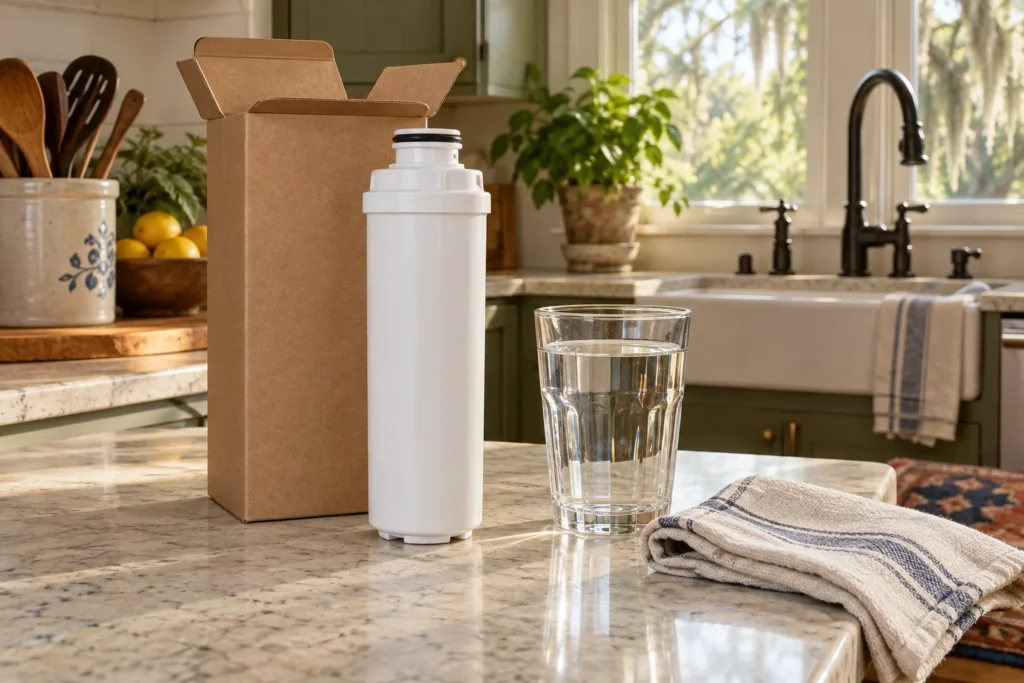
Check fit and installation before ordering
Measure the available space using the product’s requirements and consider access for future maintenance. Identify any work involving fixtures, plumbing, electrical connections or drainage, and use the appropriate qualified provider. Renters should obtain the necessary permission before alterations.
A photograph is helpful for discussing space but does not establish that every connection is suitable. Ask who is responsible for the installation, what work is included and what documentation will be left afterward. The practical fit of a system can matter as much as an impressive set of advertised features.
Make the maintenance record easy to find
Record the model, approved replacement component, installation date and where to locate the original instructions. Decide who will check the equipment and how another household member will know what to do. If the system is disconnected, moved or unused, consult the manufacturer before returning it to service.
A simple shared note is often more useful than several reminders no one understands. Keep the record connected to the actual product rather than a generic internet schedule. When the household changes equipment, update the record instead of leaving an old cartridge name on the shopping list.
Keep a decision and a follow-up question
Your comparison should end with a clear reason for the next step: keep the current system and maintain it, obtain more information, choose a defined product or request a qualified installation quote. Write down what would change that decision.
If your question involves an active utility advisory, follow the relevant instructions rather than assume routine equipment overrides the notice. Chemical Wellness can help organize the comparison and practical household scope. Text your city, supply type and the decision you are facing; you do not need to send medical records to ask about product-planning support.
Useful source information
Related practical help
Questions about this guide
What information should I collect first?
Identify the water source, outlet, actual concern and available report or equipment information. Start with the question rather than a particular brand or a claim that one device removes everything.
Does a certification logo answer every question?
No. Check the exact model, listing and specific performance claim, along with the relevant operating conditions. Keep the listing with your decision record.
Should I compare whole-house and point-of-use systems directly?
First identify the use you want to address. Different system formats involve different installation, maintenance and practical tasks, so a single purchase-price comparison may be misleading.
Can I include the filter already installed?
Yes. Determine its model, suitable replacement components and current maintenance information before assuming it should be discarded. Keeping an appropriate system maintained can be a valid next step.
Do higher prices guarantee broader performance?
Do not use price as a substitute for the exact claim and listing. Compare the actual task, compatible components, maintenance and available supporting information for the specific models.
What should a renter check?
Identify the alterations involved and obtain the necessary property-owner permission. Use the appropriate qualified provider for technical work rather than assume an available product can be connected anywhere.
Can a photograph establish installation compatibility?
A photograph can support a discussion of space and access, but it does not settle every connection or technical requirement. Product instructions and appropriate professional assessment still matter.
Why keep the old package or model number?
The exact information helps identify compatible replacements, instructions and claims. A cartridge chosen only by appearance may not be an appropriate substitute.
Does a filter replace a public advisory?
Do not assume that. Follow the actual notice and the responsible authority’s instructions. Routine equipment should not be treated as permission to ignore an active advisory.
Can a household review replace water sampling?
No. A product comparison and a laboratory question are different tasks. Define the substance, sampling context and qualified interpretation separately when testing is needed.
What should the written comparison contain?
Record the question, outlet, models, verified claims, costs, maintenance requirements, unanswered points and next action. Another adult should be able to understand why the choice was made.
Can Chemical Wellness help with the comparison?
Yes, within an agreed practical review. Text your city and the decision you want to make. Equipment purchases, installation and specialist testing are separate unless explicitly included.
Turn the questions into a practical plan.
Tell us your city and the food or household task you want help with. We can discuss the right scope before you book.