
Building a Practical Daily Oral Wellness Routine
Practical questions, useful comparisons and a next step you can follow.
Updated October 26, 2026 · Chemical Wellness household education
Oral wellness is more than choosing a toothpaste. A practical routine looks at the whole mouth and the habits that happen every day.
Brush Consistently
Use a toothbrush that is comfortable enough to use thoroughly and replace it when the bristles are worn. Technique and consistency matter more than chasing complicated gadgets.
Clean Between the Teeth
Floss or another appropriate interdental-cleaning method helps reach areas a toothbrush cannot. The best method is one you can use correctly and consistently.
Do Not Ignore the Tongue and Soft Tissues
Tongue cleaning and general oral hygiene can be part of a whole-mouth routine, especially when clients are evaluating breath, coating or daily hygiene habits.
Consider Food, Hydration and Dry Mouth
Eating patterns, frequent snacking, hydration and dry-mouth symptoms can influence the oral environment. Persistent dry mouth, pain, bleeding or other symptoms should be discussed with a dentist or healthcare professional.
Review Oral-Care Products
Toothpaste, mouth rinses, floss and children’s oral-care products can be compared based on ingredients, intended use and the individual’s dental needs.
Our Oral & Dental Wellness service helps families organize routines and product choices while keeping diagnosis and treatment with licensed dental professionals.
Build the routine around a reliable time and place
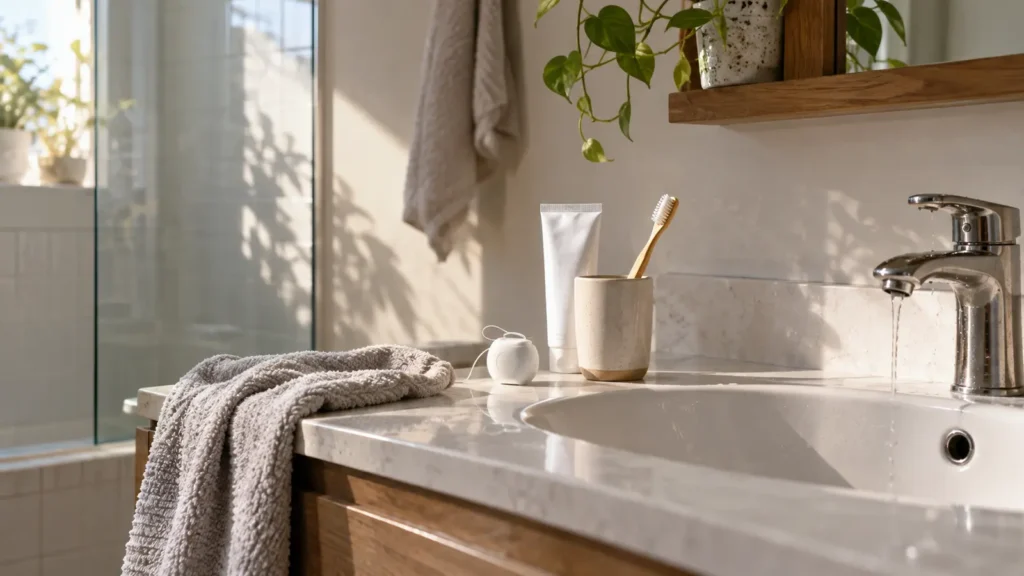
A daily oral-care routine should be easy enough to repeat when the household is busy. Choose where supplies are kept, when the usual tasks happen and who needs help using the products appropriately.
A small, accessible set of suitable supplies is often more useful than a crowded shelf of products bought for different promises. Keep any individual instructions from your dental professional available. The household task is to make those instructions workable, not to invent a separate treatment plan from a collection of wellness claims.
Keep the basics distinct from optional extras
The American Dental Association recommends brushing twice daily for two minutes and cleaning between teeth daily. Product choice and individual technique questions can be discussed with your dental professional. A rinse, supplement or specialty tool should not be assumed to replace the basic routine or professional assessment.
Start by identifying which task each item serves and whether it is actually being used as directed. That makes it easier to see where the routine is difficult and which question deserves attention before buying another product.
Choose equipment you can actually use
Manual and powered brushes, floss and other interdental tools involve practical differences in handling, access, cleaning and cost. A product is not helpful merely because its packaging sounds advanced. Ask your dental professional which approach fits your mouth, dexterity and any appliances or individual needs.
Record the model and replacement information if needed. We can help organize the purchasing and household process without prescribing a clinical method or claim that one tool is universally best for every person. Ease of use matters to a routine that will be maintained.
Read toothpaste and rinse information carefully
Identify the actual product, intended age or use, instructions and the ingredient question you want answered. Different products may be marketed for different concerns, and front-label words do not establish that they are interchangeable.
If you have a specific preference or have been advised to avoid an ingredient, discuss the practical alternatives with your dental professional. Keep the clinical recommendation separate from a general internet claim. A household label review can organize the available information and make the shopping criteria clearer without diagnosing sensitivity, decay or another oral condition.
Make storage and replacement understandable
Keep each person’s supplies identifiable, follow product-care instructions and make needed replacement information easy to find. A family should not have to guess which brush head, charger or item belongs to whom.
If you travel, use a practical way to keep the routine available rather than depend on buying another complete set at each destination. A simple inventory can also prevent duplicate purchases while an essential replacement is missing. Organization should support appropriate care and original instructions, not create an attractive display that makes access or identification harder.
Help children through an age-appropriate routine
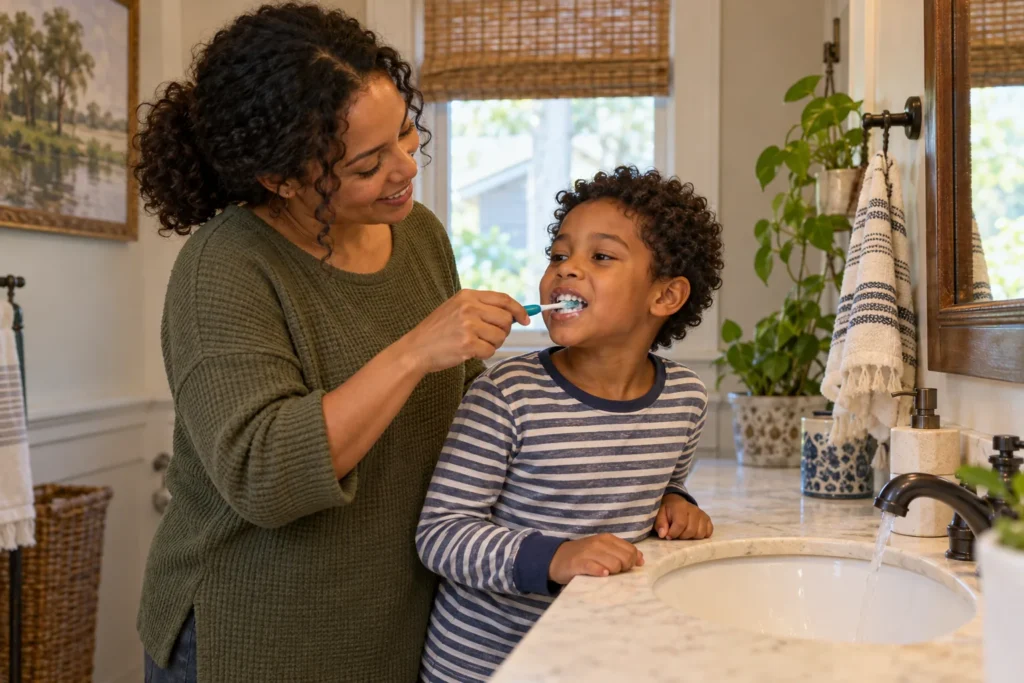
Children may need adult help and age-specific product guidance. Use instructions from the child’s dental professional instead of assume an adult product, amount or technique should simply be copied. Keep products out of unsupervised reach where appropriate and avoid turning oral care into a judgment about the child’s body or food choices.
A household plan can identify who helps, when supplies are checked and how caregivers communicate. It should not ask a child to decide which clinical treatment to accept or treat a general wellness preference as pediatric dental advice.
Keep symptoms on the professional question list
Pain, persistent bleeding, swelling or another concerning change should be assessed by the appropriate dental or medical professional. A household product change is not a test that rules out a problem. You can record the timing, the exact product and any relevant instruction to make the appointment conversation clearer.
Avoid repeatedly adding products in the hope that a symptom will disappear without assessment. Chemical Wellness can help organize labels and routines, but an educational discussion does not determine the cause of a symptom or replace examination and individualized care.
Use a short household checklist
A useful note can list the agreed daily tasks, the person responsible for helping a child, product instructions to retain and supplies to replace. Keep it short enough to use on an ordinary morning or evening.
If one part is consistently skipped, ask whether the timing, access or tool is the barrier rather than assume a more complicated product is needed. We can discuss oral-product organization alongside personal care or family household support.
Text your city and the practical task you want help with; clinical questions stay with the qualified professional who can assess them.
Useful source information
Related practical help
Questions about this guide
Can a household review replace a dental examination?
No. The practical work concerns labels, supplies and routines. Diagnosis, treatment and individual clinical instructions require an appropriate dental professional.
What does a basic routine include?
ADA guidance includes brushing twice daily for two minutes and cleaning between teeth daily. Ask your dental professional how to adapt products and technique to individual needs.
Do extra products replace brushing?
Do not assume a rinse, supplement or specialty product replaces the agreed basic routine. Identify the intended task and follow the relevant professional and product instructions.
Can you help compare oral-care ingredient lists?
Yes. We can organize the product, instructions and the question you want answered, while leaving diagnosis and individual clinical recommendations with the qualified professional.
Should everyone in the family use the same product?
Not automatically. Age, individual needs and professional instructions may differ. Keep each person’s product information and caregiver responsibilities clear.
How can I make supplies easier to maintain?
Keep the exact product or model information, replacement needs and care instructions accessible. A short inventory can prevent duplicated purchases and confusion between household members.
Can children use an adult’s routine unchanged?
Ask the child’s dental professional for age-appropriate guidance. The household plan can support supervision and organization without assuming the same product or method fits every age.
What if a product seems to cause irritation?
Keep the exact information and seek appropriate professional advice. A product observation can help a conversation, but a household review does not diagnose the cause.
Will nutrition advice replace dental treatment?
No. Food and shopping routines can be discussed alongside dental care, but they should not be presented as a guaranteed substitute for examination or indicated treatment.
Can travel supplies be part of the plan?
Yes. We can organize a practical kit and replacement list around the routine and instructions you already follow instead of buying unrelated products at each stop.
Are brushes and products included in consulting?
They are separate unless the written scope expressly includes them. Confirm the practical task, service time and any purchases before booking.
How do I request oral-product organization help?
Text your city and the label or household-routine question to 504.296.9696. You do not need to send private dental records simply to ask about scope.
Turn the questions into a practical plan.
Tell us your city and the food or household task you want help with. We can discuss the right scope before you book.