Ingredient & Product Education
You are allowed to question an ingredient, a claim or a product you have used for years. Let’s turn that question into something you can understand and act on.
Bring the concern. We will look at the actual product.
You may have seen a study, heard a worrying claim or noticed that a product does not agree with you. I will take the question seriously. We start with the exact item and what you want to know, then look at the ingredient, the way it is used and the information behind the claim.
For food, that may mean comparing ingredients and sourcing. For makeup or toiletries, it may mean fragrance, active ingredients or a manufacturer question. For laundry, it may mean how the products move through the whole household routine. Toothbrushes, toilet paper, wipes and other small items count when they are part of the decision.
We can act on a personal preference while being honest about what supports it. I will tell you what we can verify, what I personally prefer and what still needs a better answer. Then we can choose a practical next step for the household.
What Is It?
We help break down ingredients and materials in plain English, including what they are, why they are used and where exposure commonly occurs.
What Does the Evidence Say?
We distinguish well-established concerns from limited, mixed or uncertain evidence. Dose, route of exposure and frequency matter, and a long chemical name is not automatically a sign of danger.
Why Choose an Alternative?
Sometimes a replacement is about reducing fragrance, simplifying ingredients, avoiding a known sensitivity, improving food quality or matching a personal preference—not claiming that the original product causes disease.
Build Your Own Skills
The long-term goal is for you to become more confident comparing products without needing someone else to approve every purchase.
Planning a consultation in Greater New Orleans
Interested in ingredient & product education? Tell us your city, your main question, and whether you prefer an in-person or remote educational conversation. Based in Harvey, Chemical Wellness discusses availability for New Orleans, the Westbank, Metairie, Kenner, and nearby communities. Scope, travel, and pricing are confirmed before booking.
Turn an ingredient concern into a clear question
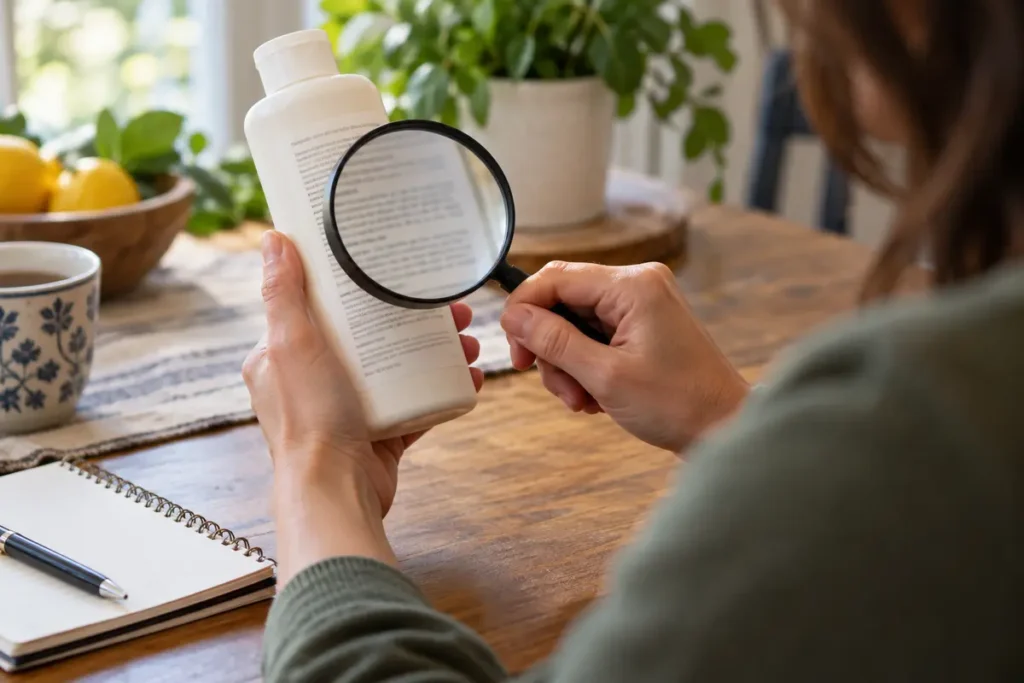
Product education is most useful when it begins with the actual decision you need to make. You may be comparing two soaps, trying to understand a food label or deciding whether a cleaner fits a particular task. Bring the exact product and explain how it is used.
A long unfamiliar word is not a complete risk assessment, and a reassuring front label does not answer every question either. We help organize the information so you can make a more informed comparison.
Identify the kind of product first
Food, cosmetics, household cleaners, supplements and products making medical claims do not all use the same labeling framework. Start by identifying the intended use and the information panel that applies. A cosmetic ingredient list should not be read as though it were a supplement dosing instruction.
This practical distinction prevents a comparison from mixing unrelated claims. Where a regulatory or technical question matters to the decision, use the appropriate primary source and keep the specific question attached to the product rather than generalizing across an entire category.
Capture the complete label
Photograph the front, ingredient information, directions, warning panel and the identifying version or flavor where relevant. A cropped social-media image may leave out the very detail needed to understand the product. Keep the date of the information and the original packaging if available.
Products can be reformulated, and a similarly named item may differ. A focused review does not need every product you own. Start with a small group used frequently or with one purchase you are already planning.
Distinguish composition, use and outcome claims
An ingredient statement tells you something different from a direction for use or a promise about results. Keep those three kinds of information separate. Ask what the product contains, what task it is intended to perform and what evidence supports the advertised benefit.
A label review cannot determine a personal health outcome from a list of ingredients alone. It can expose a missing answer, a comparison that is not like-for-like or a question that should be taken to a manufacturer or appropriately qualified professional.
Compare alternatives for the same task
A useful comparison keeps the intended job consistent. If you are choosing a surface product, consider the surfaces, required performance, instructions and how the household uses it. If you are choosing a food, compare the actual serving, ingredients and place in your meals.
Do not replace a necessary function with something that merely sounds cleaner. The best practical option also needs to be affordable, available and manageable when the original supply runs out. A recommendation that cannot be maintained is unlikely to solve the everyday problem.

Use manufacturer questions to close information gaps
When the public label is incomplete for your question, ask the manufacturer something specific about the exact product. Record the response and when it was received. Do not treat silence as proof that a particular ingredient is present or absent.
Some questions require testing or specialized expertise rather than another email. We can help frame the request and organize the answer, while being clear about what remains unknown. That is more useful than filling a disclosure gap with a confident claim that the available evidence does not support.
Keep health concerns on the right path
If a product appears linked with symptoms, bring the concern to an appropriate healthcare professional. A shopping or ingredient session cannot diagnose an allergy, endocrine condition or cause of illness. Product details can still make that conversation more useful.
Keep the label, describe the actual use and avoid changing a clinical plan on the basis of a marketing comparison. This service can support informed household choices while medical interpretation, treatment and individualized suitability decisions stay with the professionals responsible for care.
Make a simple purchasing record
Record the selected product, why it meets the intended task, the relevant instructions and a reasonable alternative if it is unavailable. Keep important ingredient or material information with that note. The record can be as simple as a short shopping list with links to the actual versions.
It should help the person buying supplies avoid repeating the same research or choosing a different formulation by accident. Review the information when the product changes rather than assuming a familiar package has stayed identical.
Choose a focused review rather than an endless product hunt
A session can cover a defined group of labels, a planned purchase or a category such as toiletries, fragrance, cookware or supplements. Agree on the scope and what you want to leave with before booking. Some questions will lead to a specialized service page or an appropriate referral.
To start, text your city, the product category and the decision you are trying to make. We can discuss the right level of support without requiring a particular brand purchase or collecting an unnecessary medical history.
Useful source information
Related practical help
- Personal-care product review
- Fragrance review service
- Supplement ingredient and label review
- Ingredient-label reading guide
Questions before you book
Can you review products I already own?
Yes. The exact labels, directions and intended use are a useful starting point. You do not need to buy replacements before the review.
Does an unfamiliar ingredient mean danger?
No. The name alone does not establish risk in a particular use. The product, available evidence and context of use matter to the question.
Can I compare natural and conventional products?
Yes. Compare their actual purpose, information and instructions. A natural claim by itself does not answer every question about suitability or performance.
Can you review food and household labels together?
A combined scope can be discussed, while keeping the different product categories and their information separate so unrelated claims are not confused.
Will you tell me a product caused my illness?
No. A label review cannot diagnose the cause of illness. Bring symptoms and individual medical questions to an appropriate healthcare professional.
Are screenshots enough for a remote session?
They can help if complete and readable. Include all relevant panels and the exact version rather than a cropped front-label advertisement.
Can you contact a manufacturer?
We can help organize a specific question and information gap. Any communication or further research work should be included in the agreed scope.
Do you certify products as safe?
No. This educational service is not laboratory testing, certification or a guarantee that a product is suitable for every person.
Can we focus on fragrance?
Yes. The dedicated fragrance service and knowledge guide cover inventory, disclosure questions and research context in more detail.
Can you review supplements?
The dedicated supplement-label service organizes ingredient and serving information. Need, dose, interactions and treatment decisions remain with a qualified clinician or pharmacist.
Will you require a particular brand?
A useful review compares the task and available information. You do not need to buy a branded product simply to make the consultation worthwhile.
What should I text to begin?
Text 504.296.9696 with your city, product category and the decision you need help with. We can first agree on a manageable review scope.
Tell us what you need help with.
Text 504.296.9696 with your city and a little about your goals. Prefer a form? That works too.
Need a phone conversation instead? Call 504.296.9696.
Read the related practical guide
Fragrance-Free vs. Unscented: How to Read the Label — useful questions to prepare before arranging a household review.