
Family Wellness
Bring food, water, air, household products, oral habits, organization and education together into one practical family plan.
One Household, Many Needs
Families often have different ages, routines, preferences and priorities. We build a plan that can include adults, children, babies, pregnancy, food, oral care, household products, air and water.
Make Healthy Choices Easier
We help simplify shopping, organize food and products, create routines and explain the reasons behind recommended changes so everyone understands the plan.
Prioritize the Biggest Opportunities
Instead of overwhelming the family with an endless list, we identify what to address first and what can wait.
Ongoing Support
Families can continue with periodic refreshes, shopping help and product reviews as needs change.
Planning a consultation in Greater New Orleans
Interested in family wellness? Tell us your city, your main question, and whether you prefer an in-person or remote educational conversation. Based in Harvey, Chemical Wellness discusses availability for New Orleans, the Westbank, Metairie, Kenner, and nearby communities. Scope, travel, and pricing are confirmed before booking.
“Just one treat” is part of a much bigger calendar.
Jimmy’s point is about the pattern: one host sees one birthday party. Your family may be navigating birthdays, school treats, holidays, visits and functions all month. You are allowed to plan for the whole week instead of treating every invitation as a fresh exception.

Make the plan before you walk in.
Ask what is being served, feed a familiar meal beforehand if useful, bring a suitable option with permission and decide which foods fit your family. Keep safe textures, allergies and the child’s age in mind. A small child should not have to negotiate with every adult at the table.
A plain ingredient list is easy to understand: beef is beef; fruit is fruit. A cake and a juice drink may have longer lists, but there is no honest universal ingredient total for “one slice and one box.” Read the actual labels. Ingredient count alone is not a measure of safety, and a long list does not prove a food caused an upset stomach.
“We’re looking at all the parties and treats across the week. Please check with us before offering food or drinks. We’ll bring something that works for our kids, so everyone can enjoy the day.”
A boundary can come with an easy alternative.
Offer the host something concrete: a fruit plate, water, familiar food, your child’s own cup or a simple activity instead of another food reward. Keep the child included and avoid calling them bad for eating a treat. If a change in food brings persistent pain, diarrhea, blood, dehydration or poor growth, get appropriate assessment rather than assuming it is a detox or proof that every packaged ingredient is poisonous.
We can map the household’s actual food calendar, usual shopping route and visitor conversations into a practical plan. Read the grocery guides or text Jimmy about family gatherings ↗.
Build a family plan around the day you actually have
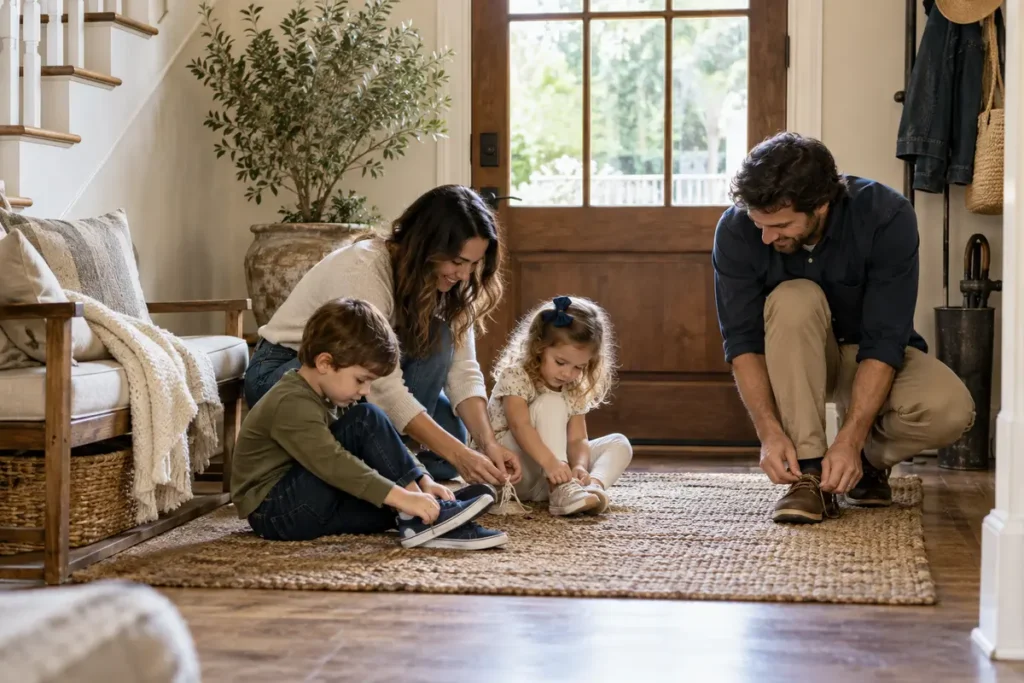
Family wellness needs to fit school mornings, work shifts, meals, caregiving and the people sharing the house. Start with the point in the day that is hardest to manage. That may be breakfast, laundry, product storage or keeping track of several people’s appointments.
A useful visit connects those practical tasks instead of handing the family an endless list of things to buy. The first plan can be small, with a few priorities that the adults understand and can maintain.
Include the adults who keep the household running
Parents, grandparents and other caregivers may handle different parts of the routine. Identify who shops, cooks, cleans, manages supplies and helps the children. Explain the preferences or instructions that affect each task, rather than expecting everyone to infer them.
A simple shared reference can identify the preferred product, its purpose and where the instructions are kept. Keep private information limited to the people who need it. A general family session should not require every adult to disclose medical details in front of the group.
Make food choices practical across different ages
A household may prefer meat, eggs, broth, fruit, honey or other simple foods while still needing different portions and age-appropriate choices. Discuss the actual meals and the qualified guidance relevant to each person. Infant feeding, allergies and therapeutic diets require individualized professional advice.
Practical support can connect the established requirements to a shopping list, preparation routine and suitable storage. The aim is fewer disconnected tasks, not an assumption that one menu or one wellness claim is right for every member of a multigenerational family.
Organize the products used most often
Choose a manageable category such as laundry, bathing products or kitchen supplies and gather the complete labels. Record who uses the item, its task and any directions that need attention. Frequently used products may be a sensible starting point for a staged comparison, but frequency is not a diagnosis or an exposure measurement.
Keep medicines and cleaning supplies secured appropriately. Product changes should preserve the function the household needs instead of replacing an effective routine with something selected only because its packaging sounds reassuring.
Support children without turning the home into a lecture
Adults can make the practical system simpler: supplies are accessible to the right person, the routine happens at a predictable time and instructions are clear. Children can participate in suitable tasks with appropriate supervision. Avoid framing every meal or product as a test they can fail.
If a child has symptoms, developmental concerns or difficulty with feeding or oral care, seek the appropriate qualified assessment. The household plan can support the recommendations you receive; it should not become a substitute diagnosis based on a parent’s product inventory.

Keep family transitions on the same planning board
A new pregnancy, a baby, a move or a grandparent needing more help can change the household’s needs. List the decisions coming next and the tasks that can be delegated. Separate ordinary purchases from questions for maternity, pediatric, dental or other healthcare professionals.
A household consultation can help organize that list and prepare the home routines around it. It does not need to settle every clinical question in order to make practical progress on meals, supplies, storage and helper responsibilities.
Use home and equipment reviews for the right questions
Air, water, furnishings and cleaning routines may all fit a broader family project, but each needs an appropriate scope. Gather the equipment model, relevant instructions and the actual concern before choosing replacements. Leaks, building defects, suspected contamination and specialized installation need qualified providers.
A product review cannot certify the whole home. Keeping those responsibilities visible protects the family from spending money on a device that does not address the underlying issue or from treating a purchase as proof that a problem is resolved.
Choose changes the budget can support
A staged plan can follow the next refill, an already planned purchase or the room with the clearest practical need. Compare ongoing cost, availability and maintenance as well as the initial price. Families should not feel required to replace everything at once to participate.
Write down what can wait and which information needs to be checked before buying. If several stores are involved in grocery shopping, consider the full route and service time so the plan remains workable alongside the family’s other responsibilities.
Make follow-through part of the appointment
Before the visit ends, identify the next actions, who will handle them and where the household reference will be kept. Try the changes during a normal week and note what remains awkward. Ongoing support can be discussed for periodic updates, shopping or product questions within an agreed scope.
To begin, text your city and the family routine you want to simplify. A brief outline is enough to discuss whether a focused visit or a broader package is appropriate; keep sensitive records out of the first message.
Related practical help
- Families and households setting
- Pregnancy and home preparation
- Children and family oral routines
- Kitchen organization
- Ongoing household support
Questions before you book
Does the whole family need to attend?
No. Include the adults relevant to the project when useful. A focused session can start with the person responsible for the routine being reviewed.
Can grandparents or other caregivers join?
Yes, by arrangement and with appropriate consent. Explain their role so the practical plan is clear without sharing unrelated private information.
Is there one diet for everyone in the family?
No. Preferences, age, allergies and clinical needs differ. Practical meal planning should respect those differences and any qualified instructions already in place.
Can you help prepare for a baby?
Yes. Household priorities, supplies, meals and helper tasks can be organized. Clinical maternity, infant-feeding and newborn-care decisions remain with the qualified care team.
Can we start with laundry or toiletries only?
Yes. A defined category can make a useful first project and provide a clear method for later decisions without requiring a whole-house purchase.
Will you diagnose a child’s symptoms?
No. Symptoms, development and clinical concerns require an appropriate healthcare professional. We can help organize household information and follow-through around their guidance.
Can you help with different work schedules?
Yes. Describe when shopping, meals, cleaning and caregiving happen. A routine that fits the actual schedule is more useful than an idealized weekly plan.
Must we replace all our products?
No. We can prioritize questions, necessary tasks and staged purchases while retaining suitable items and considering the household’s practical budget.
Can this include a multigenerational home?
Yes. Clarify the people involved, shared routines and individual requirements. The plan should not assume all ages need the same products, foods or level of help.
Is professional testing included?
Do not assume so. Water, indoor-air or building concerns may need a separately scoped qualified provider rather than an educational household review.
Can you provide ongoing family support?
A maintenance arrangement can be discussed with clear tasks, included time and responsibilities. It should not be assumed to include unlimited visits or emergency availability.
What should my first message say?
Text 504.296.9696 with your city and the routine or decision causing difficulty. We can discuss a manageable starting scope without a detailed medical history.
Tell us what you need help with.
Text 504.296.9696 with your city and a little about your goals. Prefer a form? That works too.
Need a phone conversation instead? Call 504.296.9696.
Start with the people and routines involved
For a household plan shared by partners, explore individual and couples wellness support and choose the food or home categories you want to work through together.
Read the related practical guide
Musk Ambrette & Early Puberty: What the Study Shows — useful questions to prepare before arranging a household review.