Pregnancy Wellness & Healthy Home Preparation
Prepare your food, water, air, personal-care products, nursery and everyday environment with practical education before and during pregnancy.
Pregnancy Changes the Questions You Ask
Many families begin looking more closely at food, personal care, fragrances, cleaning products, water, cookware, furniture and nursery items once pregnancy begins. We help organize that process so you can focus on priorities instead of falling into an endless internet rabbit hole.
Nutrition & Nutrient Education
We can discuss food quality, meal routines and established pregnancy nutrition topics, including nutrients commonly discussed in prenatal care such as protein, folate, iron, iodine, DHA and choline. Supplement dose decisions belong with your licensed prenatal clinician.
Home & Nursery Review
We can review air quality, water, fragrances, laundry products, bedding, mattresses, baby-care products and other household choices and help you compare practical alternatives.
Prepare Questions for Your Care Team
We help you organize questions and preferences to discuss with your obstetrician, midwife, pediatrician or pharmacist. Chemical Wellness is educational and does not replace prenatal medical care.
Planning a consultation in Greater New Orleans
Interested in pregnancy wellness & healthy home preparation? Tell us your city, your main question, and whether you prefer an in-person or remote educational conversation. Based in Harvey, Chemical Wellness discusses availability for New Orleans, the Westbank, Metairie, Kenner, and nearby communities. Scope, travel, and pricing are confirmed before booking.
Start with the decisions coming next
Pregnancy can make ordinary products and routines feel like an endless research project. Begin with a short list of decisions that have a real deadline: a question for the next prenatal appointment, meals that are becoming difficult, a nursery purchase or supplies that are running low.
Rank those before opening more shopping tabs. This service helps organize household preparation and practical questions. Prenatal monitoring, diagnosis and individualized treatment remain with your maternity clinicians; a home review does not replace those appointments.

Keep food planning connected to prenatal advice
Describe what you currently eat, what is easy to prepare and which foods you tolerate. If you prefer animal-based meals, that preference can be part of the discussion alongside fruit, squash or other foods that fit your household.
Pregnancy nutrition needs are individual, and a preference does not establish that a restricted menu is adequate. Bring relevant instructions from your prenatal clinician or qualified dietitian. Practical support can connect those instructions to shopping, storage and simpler meals without prescribing a therapeutic diet or new supplement doses.
Make nutrient questions specific
Instead of assembling a large stack of products advertised for pregnancy, record the exact prenatal product, full label and the question you have about it. Your clinician or pharmacist can address need, dose, interactions and how it fits your care.
We can help organize the information and identify unclear directions. The same approach applies to topics such as choline, iron, iodine or folate: the goal is a clear question grounded in your actual routine, not an assumption that more of every nutrient is better.
Keep food safety on the shopping checklist
Pregnancy changes the importance of some food-safety decisions. FDA advises pregnant people to avoid unpasteurized milk and products made from it because of infection risks. An organic, local or farm-direct claim does not remove that concern.
If raw milk is part of your usual preference, discuss a suitable pregnancy alternative with your qualified care team. Practical shopping support can help you find foods that fit both your preferences and the instructions you receive, without presenting sourcing language as proof that a food is safe.
Review frequently used household products
Choose a manageable category such as laundry, bathing products or cleaning supplies. Gather the complete labels and explain the actual task, frequency and place of use. We can organize disclosure questions and compare workable alternatives.
An unfamiliar ingredient name alone does not establish harm to a pregnancy, and a natural claim alone does not settle suitability. Symptoms and individual exposure concerns require appropriate clinical advice. The practical plan should preserve effective cleaning and safe storage while making product choices easier to understand.
Make nursery purchases deliberate
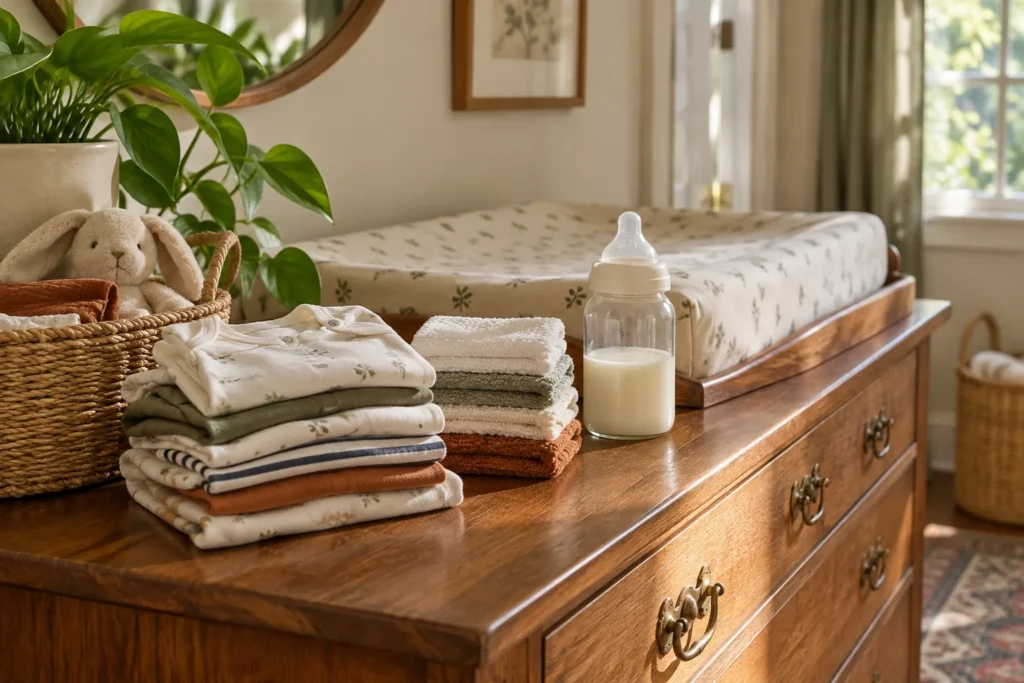
Before buying furniture, bedding or equipment, identify its purpose, current safety requirements, manufacturer instructions and space needs. A material preference should not take priority over an appropriate safe-sleep product or recall information. Keep optional decorative purchases separate from the essential function of the room.
A product review can help organize questions, return conditions and upkeep. It does not certify the nursery or guarantee an exposure-free environment. When a building or installation issue is involved, use the relevant qualified provider rather than assume another consumer product will resolve it.
Share practical expectations with helpers
Partners, relatives and other helpers can support meals, laundry, errands and preparation when the tasks are specific. Write down what you need, where supplies are kept and which household preferences matter. A concise fragrance or product request is easier to follow than a broad instruction to avoid chemicals.
Do not make helpers guess what is necessary or require them to learn every research topic first. Clinical care instructions should remain clearly identified so an ordinary household preference is not confused with an instruction from your maternity team.
Prepare for recovery as well as delivery
Plan simple food, transport, sibling care and the tasks another adult can handle after birth. Keep discharge instructions, follow-up contacts and feeding-support information accessible to the people who need them. The household plan should allow for changes in recovery and your baby’s needs.
It is not a promise that the first weeks will follow a fixed schedule. If a symptom or recovery concern arises, use the clinical contact instructions you receive instead of waiting for a wellness appointment or treating a routine product change as the answer.
Choose a focused visit with a clear outcome
A consultation can focus on meal and shopping preparation, household products, nursery questions or a list for the maternity team. Birth education and early baby-care preparation are related but distinct subjects, with their own service pages.
Explain the decision you need help making so we can discuss the appropriate format, included time and deliverables. Text your city and stage of preparation to begin. You can outline the household topic without sending medical records or a detailed pregnancy history in the first message.
Useful source information
Related practical help
- Birth preparation and informed questions
- Baby and infant preparation
- Supplement-label information
- Pregnancy and baby application
Questions before you book
Does this replace prenatal care?
No. Maternity monitoring, diagnosis, clinical nutrition and treatment remain with qualified professionals. The service helps organize practical household preparation around that care.
Can an animal-based preference be discussed?
Yes. Bring your preferences alongside the guidance from your prenatal clinician or dietitian. A household food preference does not prove that a restricted diet meets pregnancy needs.
Will you choose my prenatal supplement dose?
No. Need, dose and interactions should be addressed by your clinician or pharmacist. We can organize the exact product labels and questions.
Can raw milk be part of pregnancy food guidance?
FDA advises avoiding unpasteurized milk during pregnancy because of infection risks. Discuss a suitable alternative with your care team rather than relying on a local or organic claim.
Can we start with fragrance and laundry?
Yes. A defined product category can be a manageable first project. Bring full labels and explain actual use rather than replacing everything before the discussion.
Do you certify a nursery as safe?
No. We can organize product and preparation questions. Safety requirements, recalls, manufacturer instructions and qualified assessments still need to be followed.
Can my partner attend?
Yes. Include the people involved in shopping, meals or preparation when useful, with an agreed scope and appropriate limits on private information.
Can you help prepare questions about birth?
Yes. The separate birth-preparation service organizes informed conversations about labor, preferences and newborn topics with your qualified maternity and pediatric team.
Is postpartum household planning included?
It can be discussed within the agreed scope. Meals, helper tasks and supplies are practical topics; medical recovery assessment remains with your clinicians.
Must I replace all current products?
No. A staged review can prioritize questions and purchases while keeping suitable products and necessary household functions in place.
Can this be done before pregnancy?
Yes. Practical product inventories, purchasing priorities and household routines can be organized in advance without presenting the service as fertility treatment.
What should I text first?
Text 504.296.9696 with your city, stage of preparation and the household decision you want help with. Avoid sensitive records in the initial inquiry.
Tell us what you need help with.
Text 504.296.9696 with your city and a little about your goals. Prefer a form? That works too.
Need a phone conversation instead? Call 504.296.9696.
Read the related practical guide
Fragrance-Free Routines During Pregnancy — useful questions to prepare before arranging a household review.
Turn these questions into a practical checklist.
No approach to choose first. Answer plain questions about your situation, meals and household, then receive focused next steps and an optional support request.