
Nutrition & Clean Eating Guidance
Let’s make real food easier to buy, prepare and keep in the house—without building your life around packaged diet products.
A meal plan has to work when you are actually hungry.
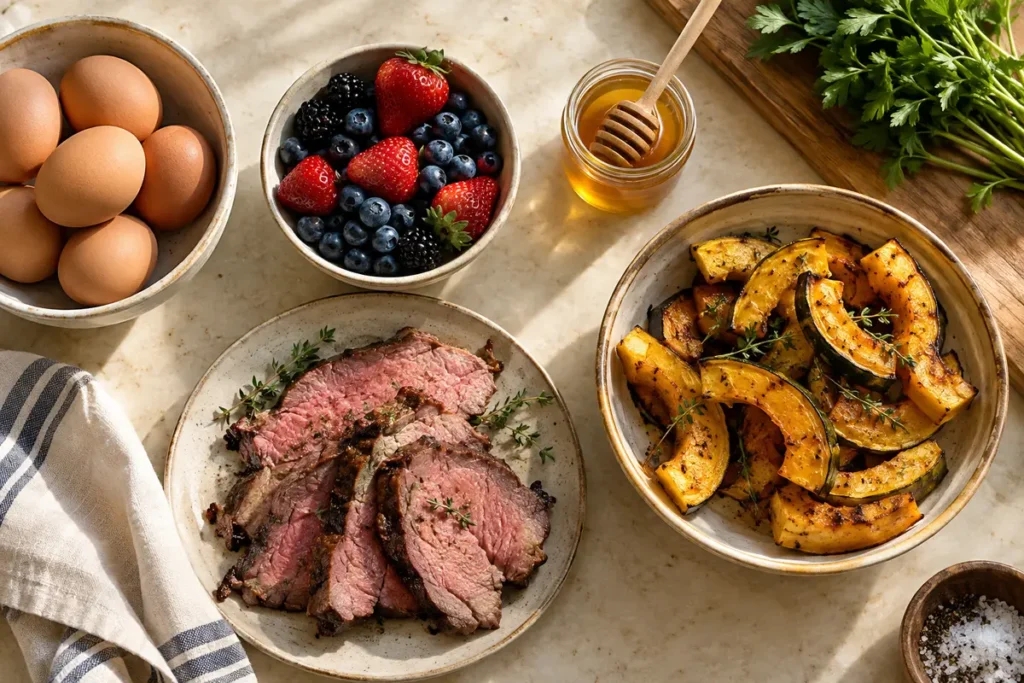
My food preference is straightforward: build meals around real ingredients you recognize and will eat. Meat, eggs, broth, fruit, honey and simple sides can fit that conversation. A steak dinner with squash is a useful meal idea. A shelf full of expensive products with wellness claims is not a meal plan by itself.
We look at what you buy now, the drinks you reach for, the ingredients you want to avoid and what happens on the days nobody has time to cook. We can compare sourcing claims, portions, unit prices, storage and preparation. If you have specific medical or dietary requirements, those need to stay part of the decision.
Shopping may take several stores. We build the route around an actual list, current availability and your budget. You can ask about grass-fed meat, eggs, lamb, broth, fruit, dairy preferences and the products used to cook and store them. No single store has to become your whole food system.
Then we make the plan repeatable: a few reliable meals, the exact items that worked, suitable backups and a way to restock. You should be able to open the refrigerator and see food you know how to use.
Start With Your Real Life
We do not hand you a generic food list and expect you to live on it. We start with your current meals, preferences, family needs, cooking habits and grocery routine, then identify practical swaps that fit the way you already live.
Ingredient Education
Learn how to evaluate labels, compare products, recognize highly processed ingredients and make more informed choices about whole foods, proteins, fats, carbohydrates, snacks, condiments and beverages.
Food Replacement & Organization
When requested, we can help remove foods you no longer want, source replacements, reorganize your pantry and refrigerator, and create a system that reduces forgotten food and unnecessary waste.
Meal Planning Without the Confusion
We can help build simple meal ideas, shopping lists and repeatable routines so that eating well becomes easier rather than another full-time job.
Nutrition guidance is educational and lifestyle-focused. Medical nutrition therapy, treatment of disease and changes to prescribed care should be handled with the appropriate licensed healthcare professional.
Planning a consultation in Greater New Orleans
Interested in nutrition & clean eating? Tell us your city, your main question, and whether you prefer an in-person or remote educational conversation. Based in Harvey, Chemical Wellness discusses availability for New Orleans, the Westbank, Metairie, Kenner, and nearby communities. Scope, travel, and pricing are confirmed before booking.
Practical whole-food education, from the label to the dinner table
Begin with a repeatable meal—not a perfect diet
Food guidance should help you make everyday decisions with less confusion. We start with what you enjoy eating, what you currently buy, how you cook, and which part of the routine is difficult. For an animal-based household, that might mean keeping a small number of meat-and-egg meals reliable instead of collecting a different recipe for every night.
Food preferences are personal. Our approach emphasizes minimally processed foods, with meat, eggs, broth, fruit, honey, and other whole foods according to your preferences. We do not prescribe a clinical diet, treat illness, or assume that one eating pattern is suitable for every person’s medical needs.
Learn what a label can—and cannot—tell you
A useful label review separates the ingredient list from front-of-package marketing. We can compare products in the category you actually buy, identify ingredients you want to understand better, and discuss whether a claim is supported by a clear definition or certification.
A shorter list may be easier to understand, but it does not replace attention to allergens, storage, preparation, or suitability.
Sourcing conversations should be specific. If a claim such as grass-fed, pasture-raised, organic, or minimally processed matters to you, we can organize questions for the seller and compare what information is available. We do not invent supplier verification or assume a marketing term answers every question.
Build the shopping and preparation system around your week
A practical meal routine considers household size, refrigerator and freezer space, cooking equipment, transport, work schedules, and the foods that get used before they spoil. Start with a few meals, a realistic list, and a plan for leftovers. Changes to the routine should be small enough that you can see whether they actually help.
For example, a simple dinner might be steak with squash or another side your household enjoys. Another day may call for ground beef and eggs. The point is not a specific menu prescription; it is deciding what you will buy, how you will prepare it safely, and what you can repeat without relying on ultraprocessed convenience products.
Choose the kind of help you need
A label conversation, grocery-shopping session, pantry review, and meal-planning discussion are related but different services. Tell us where you get stuck so we can define a useful scope. If you have food allergies, pregnancy-related nutrition questions, medication interactions, a medical condition, or a prescribed diet, involve your qualified care team in dietary decisions.
Build meals around foods you will repeat
A food plan is useful only if it fits the people eating it. We can begin with meat, eggs, fruit, broth, honey and other whole foods you prefer, then consider portions, preparation and any professional instructions you already follow.
Rather than buy a collection of diet products, choose a few breakfasts, lunches and dinners you can reliably make. List the ingredients that need a specific supplier and the ones available almost anywhere. That turns a dietary preference into a shopping and cooking routine instead of a rule book that makes every meal difficult.
Separate sourcing claims from the ingredient list
Grass-fed, pasture-raised, organic and non-GMO answer different questions. One label does not establish every detail about production, processing or nutrition. Compare the actual cut or product, the ingredient list, quantity, storage needs and price per usable serving.
A broth labeled for a particular sourcing preference may still differ substantially in protein or sodium. A cheese product may contain ingredients that matter to your preferences even when the front label looks simple. We can help create a repeatable comparison process rather than assume an entire store or brand is suitable.

Plan for workdays, leftovers and exceptions
The hardest meal is often the one you need when you are tired and have nothing prepared. Decide which foods can be cooked in batches, how leftovers will be cooled and stored, and what a realistic backup meal looks like.
Keep an acceptable substitution for an unavailable meat, egg or produce item. Eating out and travel can be handled through specific questions about ingredients and preparation, without turning an occasional change into failure.
If you have a diagnosed condition, translate the instructions from your qualified care professional into practical choices rather than use a general diet label as a replacement.
Questions before you book
Do you provide medical nutrition therapy?
No. Our service is food and product education with practical routine support. Clinical diets and treatment plans belong with appropriately qualified professionals.
Do I have to buy supplements?
No. Supplement purchases are not required. Our food guidance starts with everyday meals and the decisions you want help understanding.
Can you work with my current food preferences?
Tell us your preferences, restrictions, and the support you need. We can discuss the scope and whether the educational service is appropriate.
Can we combine food education and pantry organization?
Yes, subject to an agreed scope. Shopping, meal routines, cookware, and storage can be considered together when that is useful.
Can the plan respect an animal-based food preference?
Yes. We can work with your preferred foods and shopping priorities. If a medical condition or a clinician’s instructions limit particular foods, those individual requirements need to stay visible in the plan.
Will you prescribe a therapeutic diet?
No. This service provides food education, organization and practical shopping support. Medical nutrition therapy, diagnosis-specific restrictions and treatment decisions belong with an appropriately qualified professional.
Do I need to buy supplements?
A food-planning conversation does not automatically require a supplement purchase. We can record questions and compare labels, but whether you need a supplement or a particular dose is an individual clinical question.
Can fruit and honey fit into the discussion?
Yes. We can discuss how you actually use them, serving amounts, ingredients and shopping choices. A person managing blood sugar or another condition may need individualized instructions from their care team.
Can you help compare broth products?
Yes. Compare the ingredient list, protein and sodium per serving, package size, storage instructions and any sourcing claims. The word broth alone does not establish a product’s nutrient content.
What about food preferences shared by children?
Family meals should consider growth, age, feeding skills and each child’s needs. We can simplify household routines without putting children on restrictive weight-loss plans or treating a diet label as pediatric care.
Can we use several grocery stores?
Yes, when the route is useful and agreed in advance. We can identify which items justify a separate stop, acceptable substitutions, cold-storage needs and the total service time involved.
What do I send in the first message?
Text your city, the meals or shopping tasks you want help with, and whether you prefer remote planning or in-person support. You do not need to send medical records to ask about the service.
Tell us what you need help with.
Text 504.296.9696 with your city and a little about your goals. Prefer a form? That works too.
Need a phone conversation instead? Call 504.296.9696.
Explore related guides
Health education guides · Thyroid, Graves and food questions · Whole-food grocery shopping guides