
Keep the Thanksgiving.
Skip the unnecessary junk.
Start with fragrance. Then look at the heat, the plastic, the labels and the way you actually serve the meal.
Text Jimmy about ThanksgivingStart with the air ↓You planned a beautiful meal.
What else are you serving?
Perfume on the guests. Fragrance in the laundry. A plug-in beside the dining table. A liner in the slow cooker. A board that has seen better days. Side dishes nobody checked.
This is not a demand to throw away Thanksgiving. It is a practical way to stop letting convenience, habit and a holiday label make every choice for you. Pick the changes that fit your household, explain them kindly and keep the good part: the people.
Start with the air. Before you start the oven.
A house can look spotless and still overwhelm a guest with perfume, plug-ins, scented cleaners, candles and laundry scent. Thanksgiving brings those sources into the same crowded room. For some sensitive people, fragrance exposure can trigger asthma symptoms or other adverse reactions. You cannot tell who is affected by looking at them. Ask before adding scent, and make fragrance-free shared air the default.
Skip the plug-ins, room spray and scented candles. Ask guests to go easy on perfume. Keep smoking and vaping out of the house. Use the kitchen exhaust that vents outdoors when cooking, and ventilate when outdoor conditions allow. Fragrance does not remove cooking pollution or make a room clean.
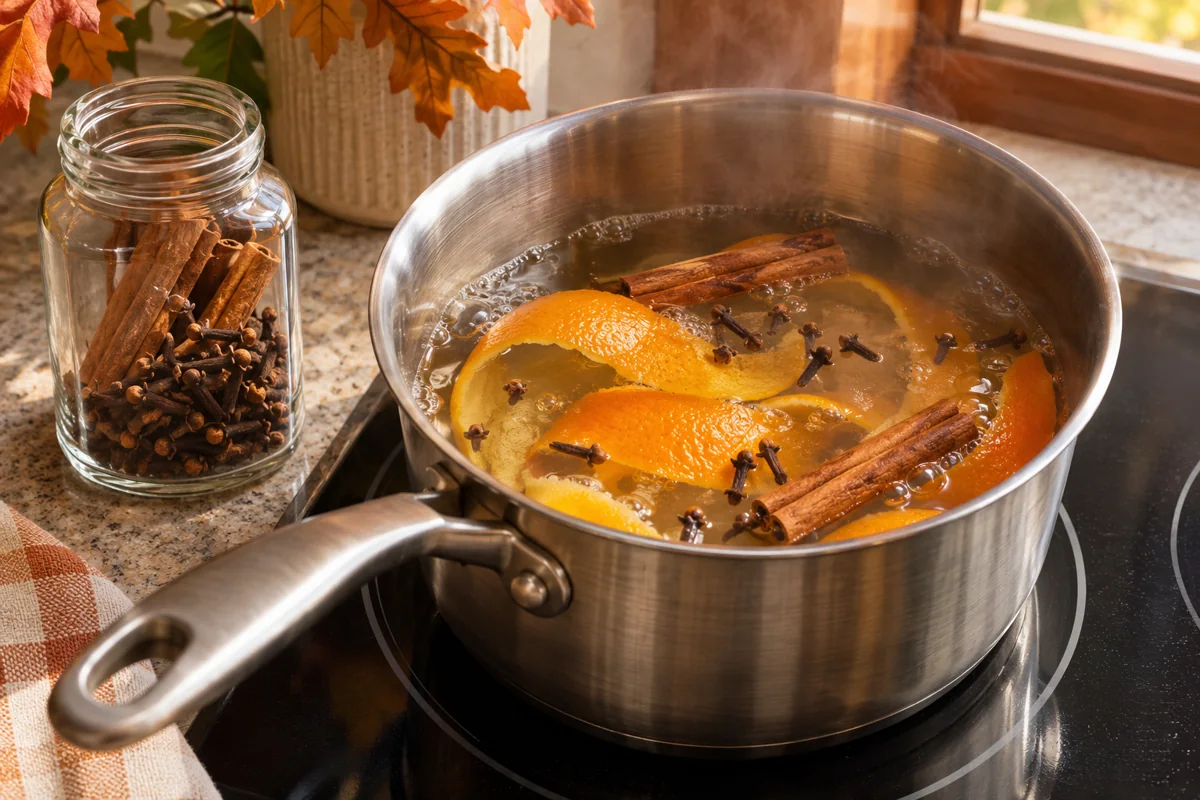
My simmer pot: simple ingredients, supervised heat.
My preferred setup is stainless steel, RO-filtered water and organic whole spices with a little citrus peel. That is a preference for a simpler holiday routine, not an air purifier or a detox treatment. A simmer pot still releases scent, moisture and heat. For someone with asthma or scent sensitivity, no added scent may be the better choice. Ask the people sharing the room first.
If scent is welcome, try a few pieces of citrus peel with a cinnamon stick or a small amount of whole cloves in water. Keep the heat gentle, handles turned inward and the pot in sight; check water and turn it off before leaving. Keep children away. I would leave concentrated essential oils out of the shared-air pot, especially around children, pets or sensitive guests. RO water does not make essential oils safe or remove risks from steam. Maintain the filter; organic spices can still irritate sensitive people.
Crock-Pot liners: convenience is not a requirement.
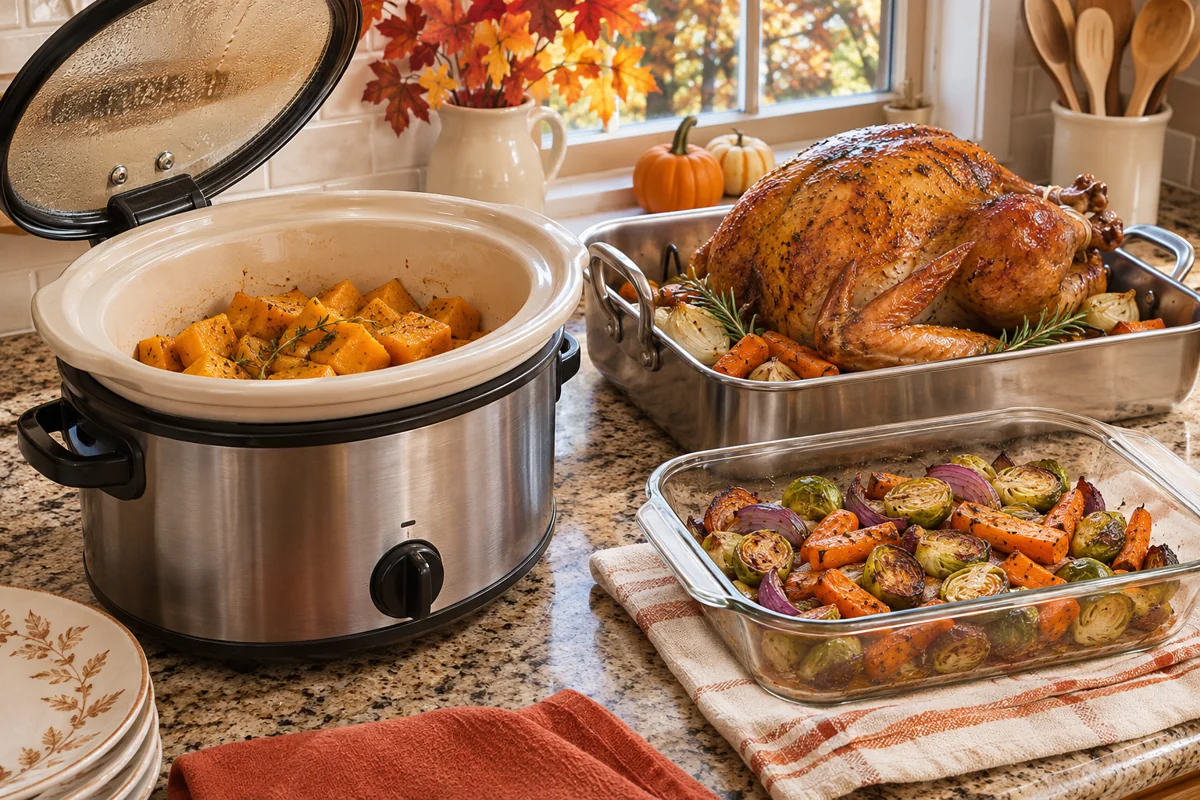
A slow-cooker liner means plastic touches warm food for hours. If your aim is to reduce unnecessary plastic contact, the straightforward swap is to use the appliance’s sound, washable insert without a liner, following its instructions. That does not establish that every approved liner poisons dinner. Purpose-made cooking liners and an ordinary plastic bag are different products, with different use limits.
Crock-Pot describes its liners as BPA-free, food-contact compliant nylon for specified cooking conditions. Those manufacturer claims are not a guarantee of zero migration or a measurement of your meal. Equally, “BPA-free” does not tell us every material or additive. If using one, follow its exact directions: no substitutions, cutting through the liner, melting against an unsuitable surface or lifting a heavy meal by the bag. My lower-plastic preference is an unlined insert and a little more washing.
Hot turkey deserves a clean, sound cutting surface.
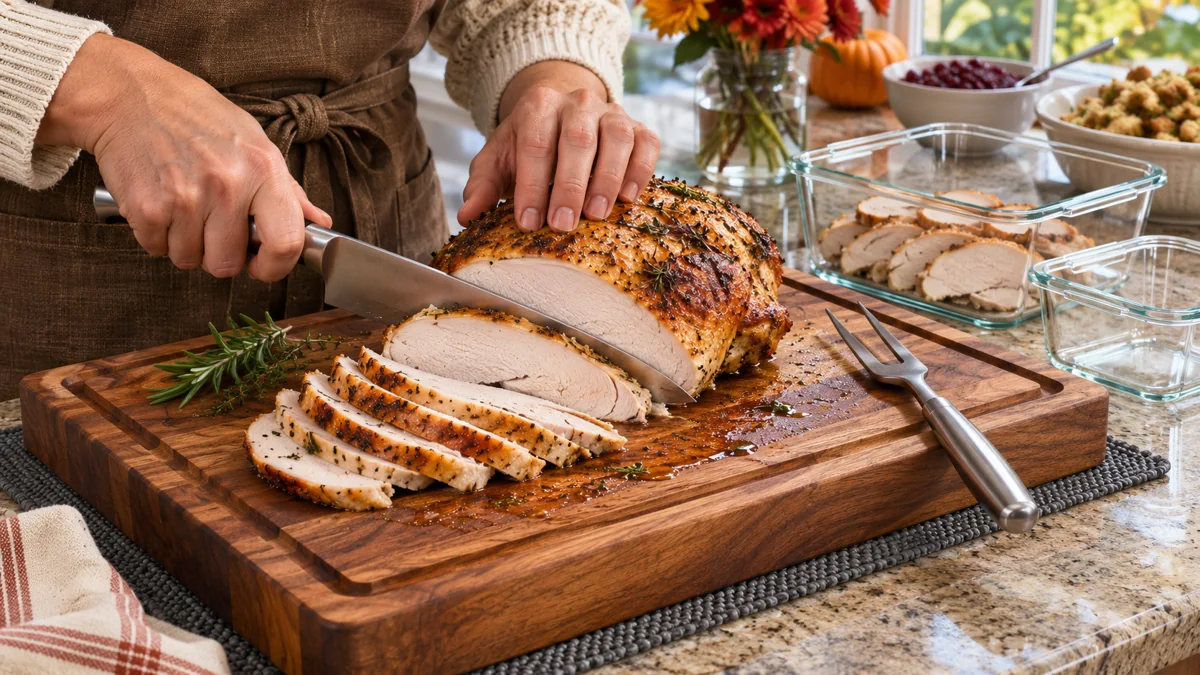
Chopping can shed particles from plastic cutting boards: a 2023 laboratory study investigated that process. It did not measure your Thanksgiving serving, prove a specific illness from one meal, or test every hot-turkey-and-electric-knife combination. Claims that one serving equals a credit card of plastic are not an honest reading of that work. You can still choose a practical lower-plastic setup without inventing an exposure number.
I prefer a sound solid-wood carving board with a juice groove, cleaned and cared for according to its maker, on a nonslip surface. Replace deeply grooved or damaged boards of any material. Keep the cooked turkey’s board separate from the raw-poultry area. Wood is not self-sanitizing, and plastic is not automatically unacceptable for food safety; cleanliness, condition and the correct use matter. Never use a board as a hot-pan trivet unless it is designed for that purpose.
Electric knives: watch the blade, the board and the cord.
The useful questions are mechanical: are the blades secure and undamaged, is the handle dry, can the cord stay away from water and a hot burner, and can you carve without sawing hard into the board? The power button does not prove a knife is poisoning the food. A motor is not evidence of a special toxic effect, and I have no electric-knife-specific dose study to quote.
Use the manufacturer’s food-contact and cleaning directions. Unplug before removing blades or clearing a jam. Keep children clear of the cutting area. Do not use damaged, flaking or loose parts. A well-maintained manual stainless carving knife may be a simpler choice if you can use it comfortably; an electric knife may be useful for another person. Either way, stabilize the food and board, protect fingers and avoid unnecessary board abrasion.
Read the turkey label, not just the front of the bag.
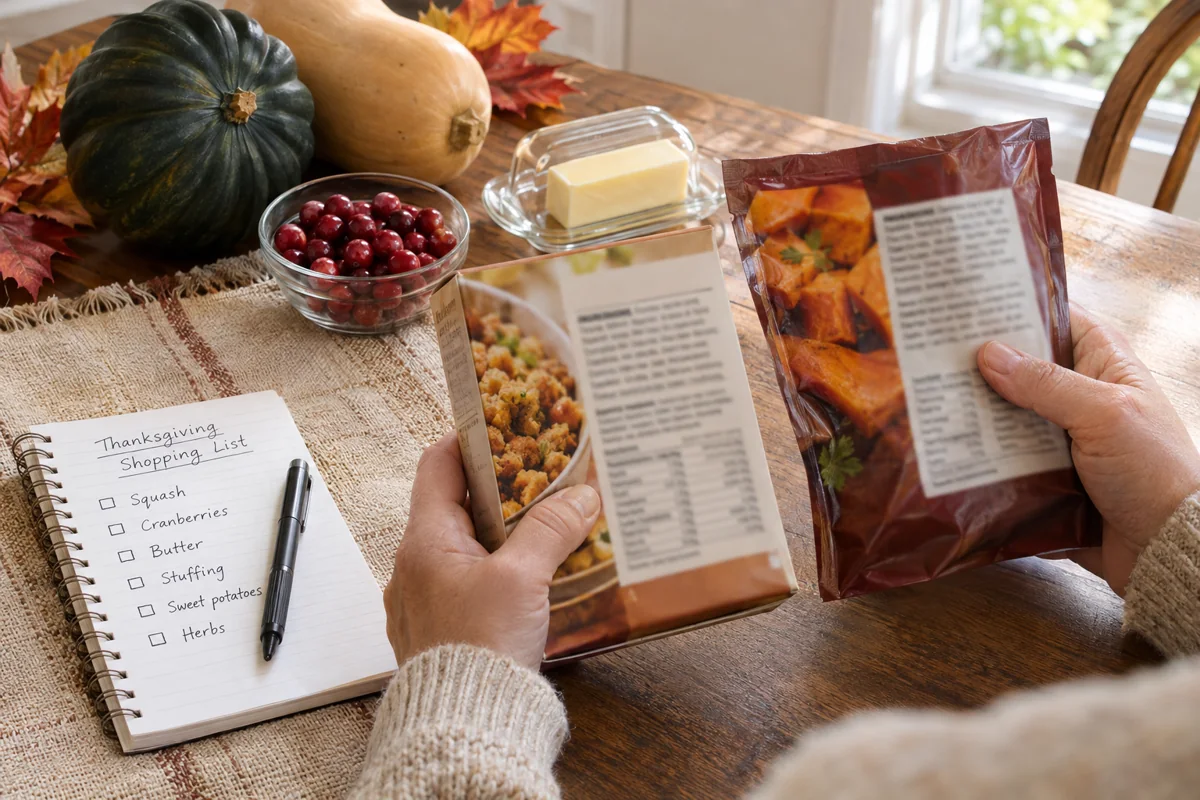
A plain turkey and an injected, seasoned or enhanced turkey can have different ingredient lists. Check the actual package for added broth, salt, flavorings, allergens and other ingredients. Do the same for stock, gravy mix, stuffing, cranberry sauce, whipped topping and bottled dressings. Do not assume that a picture of a farm or a “natural” claim answers your sourcing questions.
Start with the ingredient list, serving size, sodium and added sugars. A side that looks like one serving on the label may be several servings on your plate. Compare similar products rather than trying to pronounce an ingredient as a safety test. My preference is a shorter list I can explain and a meal I can make again. An unfamiliar ingredient is a question to investigate, not proof of poison. Write down the precise ingredient you want reviewed.
Food combinations: the pile-up matters more than food-combining myths.
There is no sound general rule that turkey plus fruit, or protein plus starch, becomes a toxic combination in the stomach. What can pile up is the total: sweet drinks, sweetened sides, several desserts, salty packaged dishes, alcohol and a larger portion than feels comfortable. Individual allergies, reflux, digestive problems and existing dietary instructions also matter.
Choose the parts of the meal you actually want. Serve a satisfying main meal, drink water, eat at a comfortable pace and pause before another helping. If a particular food bothers you repeatedly, record the food, portion and timing rather than blaming every mixed meal. Do not turn one bloated afternoon into a diagnosis or start a cleanse to “cancel out” dinner. Severe or persistent symptoms deserve appropriate assessment.
Focus on the meal. Let the extras be extras.
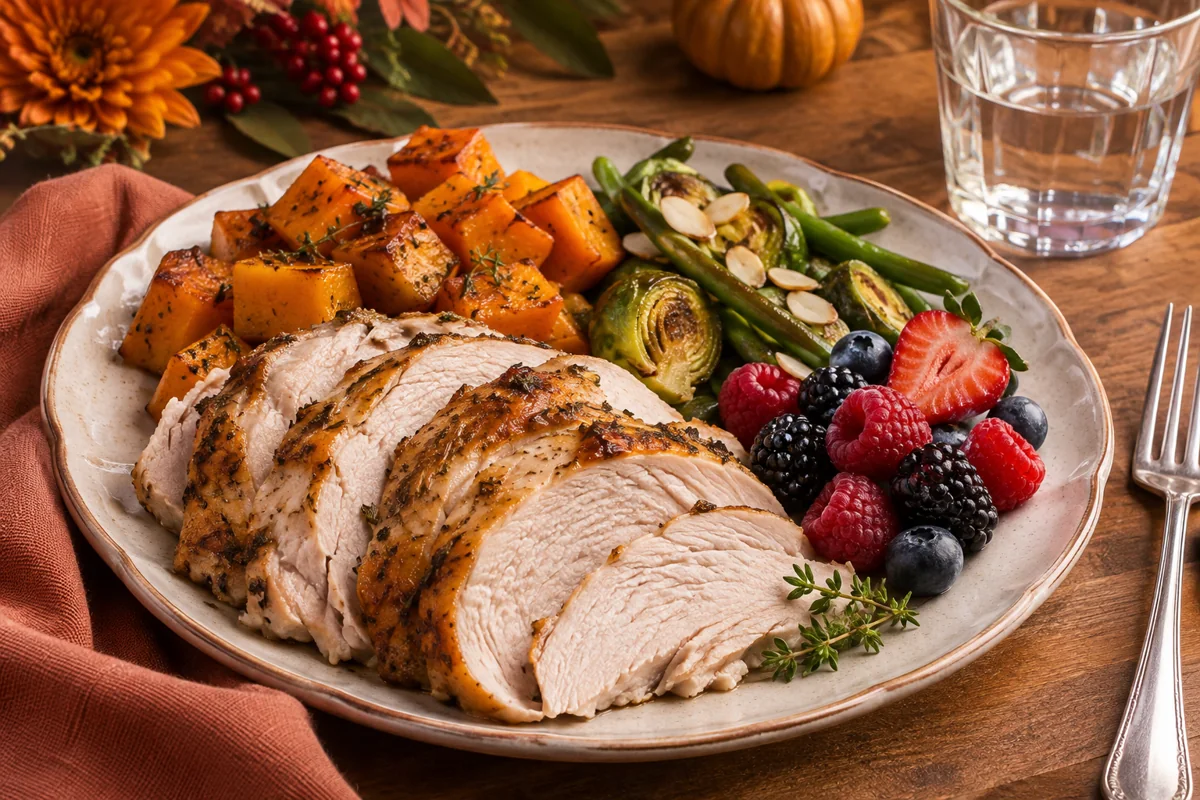
For my household, properly cooked turkey or another simply prepared animal food anchors the plate. Squash, other tolerated vegetables and fruit can round it out. Keep seasoning understandable, and choose fats according to taste, tolerance and any individual instructions. This is an animal-based preference—not a demand that every guest follow a strict diet. A person with a prescribed food plan needs their own requirements respected.
A workable example is turkey, roasted squash, a vegetable you enjoy and fruit, with water. Offer sauces on the side so people can choose. Limit the constant grazing, oversized sweet drinks and automatic second or third dessert if those are not what you actually want. Honey and maple syrup are still sources of added sugar; an organic label does not make the amount disappear. Plain coconut water is optional, not a detox or a mandatory replacement for water.
“Just one treat” is not the whole family calendar.
Your one annual party may sit between school celebrations, birthdays, travel snacks and several other holiday meals for another family. That does not make you a bad host or the children a problem. It means a family’s request can be about the pattern, not your one piece of cake. Respect a parent’s food and allergy boundaries without making a child defend them at the table.
Ask what works before shopping. Offer water, a suitable main meal and a clear choice about dessert. Do not pressure children to eat past comfort or share drinks and used utensils. A useful script is: “We’re keeping food and scents simple this year. Please ask us before offering the kids snacks, drinks or scented products.” Ingredient counts can be interesting, but counting names alone does not measure toxicity or explain a child’s symptoms.
Organic spices: understand what the label actually changes.
USDA organic rules prohibit ionizing irradiation in organic production and handling. If that processing choice matters to you, certified organic spices are one practical route. For another product, ask the supplier whether spices were steam-treated, irradiated or handled another way. Do not invent a percentage of households that do not know, or assume every seasoning has been irradiated.
Food irradiation is used to reduce microorganisms and insects; it does not make the food radioactive. Some spices used as ingredients in mixed foods do not carry an individual irradiation disclosure on the finished package. That is a useful reason to ask specific sourcing questions. Organic does not mean sterile: store spices dry, avoid cross-contamination and buy quantities you can use while quality remains good.
Simple ingredients still need safe cooking and storage.
Use a thermometer: turkey and stuffing need to reach 165°F. Keep raw poultry and its utensils away from food that is ready to eat. Do not wash raw turkey and spread splashes around the sink. These are practical foodborne-illness controls, regardless of how carefully the ingredients were sourced.
Divide leftovers into shallow containers and refrigerate within two hours—within one hour above 90°F. Keep the refrigerator at 40°F or below and use refrigerated leftovers within three to four days, or freeze them. Heat-safe glass or stainless containers are options for reducing plastic food contact, but do not leave dinner sitting out while waiting for it to become cold enough for your preferred container. Follow container and appliance instructions.
The pie is not the problem to ignore. Neither is everything around it.
Look beyond the slice: boxed crust, pudding mix, canned filling, frosting, whipped topping, sprinkles, syrup and the drink beside it. Read the actual products for added sugars, allergens and ingredients you prefer to avoid. A pumpkin dessert can be mostly pumpkin, eggs, spices and a deliberate amount of sweetener—or a much more complicated recipe. You get to choose. “Organic,” “keto” and “gluten-free” do not answer every nutrition or allergy question.
My practical approach: put a satisfying meal first, offer water and serve a dessert someone actually wants. Skip the automatic pile of pie, cookies, candy and a sweet drink just because they are all available. Honey, maple syrup and coconut sugar still count as added sugars. Swapping one sweetener for another does not erase the amount. If you use sugar alcohols, check the type and serving size: larger amounts of some can cause gas or diarrhea.
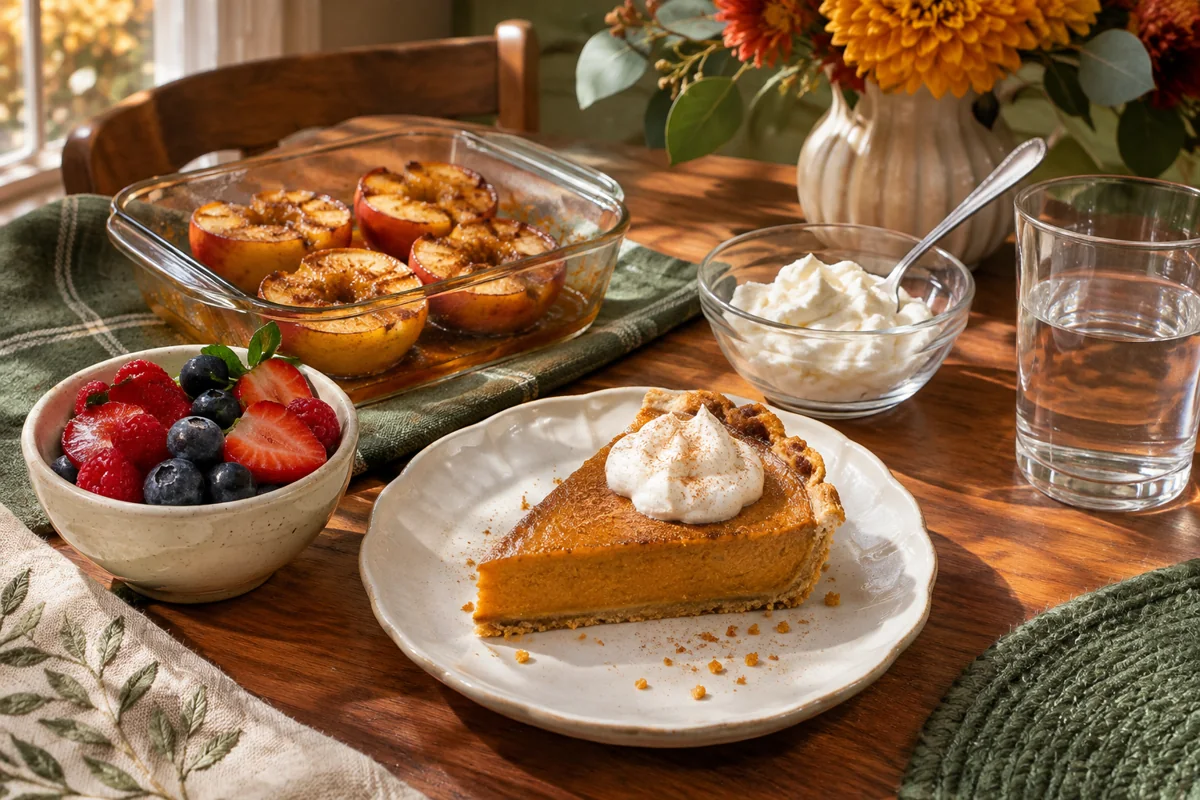
Three dessert directions that are easy to understand.
Fruit first
Offer washed berries or soft baked apples with cinnamon. Prepare fruit in an age-appropriate shape and texture for children. A fruit option is a real choice, not a punishment for skipping cake.
A simpler pumpkin dessert
Try a fully baked pumpkin custard or a small slice of pie with a recipe you can explain. Serve cream separately, use pasteurized dairy and keep milk, egg and nut allergies in mind.
One dessert, clearly labeled
Put the ingredients beside homemade dishes. Use separate serving utensils for allergy needs. Do not call a recipe “safe for everyone”; ask the person with the allergy what they need.
Before anyone licks the spoon: ordinary raw flour and raw eggs can carry harmful germs. Egg-free dough can still contain raw flour. Bake as directed, clean up flour and dough, and use pasteurized eggs for recipes served without sufficient cooking. Keep cream pies, custards and other perishable desserts refrigerated; do not leave them on the buffet all afternoon. Why raw dough needs care.
Holiday drinks and desserts: make the choice deliberate.
Water can be the easy default instead of an endless refill of juice, soda, sweet tea or a sweetened cocktail. If you want dessert, choose something you enjoy rather than collecting every option out of politeness. Read ingredients and portions in packaged toppings and mixes. A homemade dessert can still be rich in added sugar; “homemade,” “organic” and “gluten-free” are not automatic nutrition scores.
Use pasteurized dairy and eggs for drinks or recipes that will not be adequately cooked. Raw milk can carry harmful germs, with greater risk for young children, pregnant people, older adults and people with weakened immunity. For guests with medical food or fluid instructions, make those easy to follow. Keep alcohol away from children and avoid pressuring anyone to drink. Nobody needs to earn a place at the table by eating or drinking something they do not want.
Think about who is at the table—and who is still growing.
Children, a pregnant guest, a developing baby, adults managing health conditions and men thinking about fertility do not need a scare story. They need specific choices they can use. The goal is to reduce avoidable exposures and make the meal work for the people eating it.
Babies and children
Keep sweets from replacing the meal. Offer suitable food and water, respect parents’ boundaries and leave added fragrance out of shared air when possible. Children with asthma or scent sensitivity may react to strong scents. Prevent burns from the simmer pot and choking from whole nuts, whole grapes or hard foods; adapt food to the child’s age and abilities. Never give honey to a baby under 12 months.
Repeated sugary snacks and drinks matter for teeth and eating habits. One holiday dessert does not establish that a child’s hormones, development or future fertility have been damaged. Focus on the routine you can improve and the child in front of you.
Pregnancy and fetal development
Give a pregnant guest a comfortably fragrance-free place to sit, fully cooked food and drinks without alcohol. Use pasteurized dairy and properly prepared eggs in desserts. Foodborne illness can have more serious consequences during pregnancy, including risks to the developing baby. Skip raw batter and do not leave perishable food warm for hours.
Environmental exposure also deserves attention. An NIH-supported study of more than 6,000 pregnancies linked higher levels of several phthalate exposure markers with greater preterm-birth risk. It does not show that one candle or one dessert causes a pregnancy complication. A practical starting point is fewer optional scented products, appropriate food-contact materials and simpler everyday routines. Read the pregnancy research.
Adults and men’s fertility
Hormone and reproductive health belong in the conversation for men too. Research associates certain phthalates and other environmental chemicals with adverse reproductive outcomes, including poorer semen quality or reduced fertility. The chemical, exposure level and study matter; the smell of a product does not measure its phthalate content. Not every fragrance or plastic contains the same substances.
Use this holiday as a starting point for habits: reduce unnecessary fragrance, avoid tobacco smoke, use suitable cookware and make nourishing meals easier. One dessert does not diagnose low testosterone, and avoiding a liner does not guarantee a higher sperm count. If fertility is a concern, proper evaluation can identify issues a shopping checklist cannot. Environmental and reproductive health research.
Diabetes, kidney concerns, allergies or a sensitive stomach?
Ask privately what would make the meal easier. For diabetes or gestational diabetes, make portions and ingredients available and follow the person’s own food plan; a “natural” sweetener still contributes carbohydrate. For someone with kidney disease, fruit, coconut water, broth and other foods may need individual limits. Do not assume that your favorite healthy food suits every guest.
Keep portions flexible, water available and alcohol optional. Older adults and people with weakened immunity also need careful food handling. Serve food safely, refrigerate leftovers promptly and make room for a guest to decline a dish without defending a diagnosis. Jimmy can help organize ingredients and routines; holiday coaching does not replace individual medical nutrition advice.
A simpler host checklist.
Check off what is done. Nothing here sends a form or shares your answers.
Use the guides. Or let’s work through it together.
My work covers food, product choices and practical changes for your home, event or business. Start with a text about what you are planning. We agree on scope, availability and price before paid work.
Toxin-Free Home Guide on Stan
Toxin-Free Grocery List on Stan

Thanksgiving questions, answered.
What should I change first?
Start with optional added fragrance: plug-ins, room sprays and scented candles. Ask about sensitivities, keep smoke outside and ventilate cooking appropriately. Then review the tools and ingredients you will actually use.
Are all slow-cooker liners dangerous?
A universal claim is not established here. Purpose-made liners have product-specific use limits. Choosing the unlined appliance insert is a straightforward way to reduce optional plastic contact without claiming every liner causes illness.
Can I use an ordinary plastic bag instead?
No. Do not substitute an ordinary storage bag, garbage bag or packaging for a cooking liner. Use cookware and materials intended for the temperature and task, following their instructions.
Does hot turkey melt every plastic board?
That is not established. Materials and temperature ratings differ. Avoid inappropriate heat, replace damaged boards and choose a suitable carving surface. The chopping study is not a universal melting or disease study.
Is a wooden board automatically safe?
No. It still needs cleaning, appropriate care and separation from raw-poultry preparation. Deep damage and hard-to-clean grooves are reasons to replace a board, regardless of material.
Are electric knives uniquely toxic?
The page does not establish that. Focus on secure blades, controlled cutting, clean food-contact parts, a stable board and safe cord handling. Avoid grinding the blade into the board.
Will a simmer pot purify the air?
No. It adds scent and humidity. It does not remove combustion pollutants, disinfect the home or detox the family. Fragrance-free shared air may be the best choice for sensitive guests.
Can I add essential oils?
I would keep concentrated oils out of a shared-air holiday pot. Natural origin does not rule out irritation or risk to children and pets. Never add oils to food unless the specific product is intended for that use and used appropriately.
Why use RO water?
It is Jimmy’s household preference. Filtration claims depend on the system, maintenance and contaminants involved. It does not make the simmer pot a purifier or make its scent harmless.
Are organic spices irradiated?
USDA organic production and handling rules prohibit ionizing irradiation. Check certification and ask a supplier about processing when you need more detail. Organic spices still require sensible storage and handling.
Is honey a free pass for dessert?
No. Honey still contributes added sugar. Use it because you prefer its taste or sourcing, while being honest about how much you are using. Do not give honey to infants younger than one year.
Are turkey and fruit a bad combination?
There is no general rule that this pairing becomes toxic in the stomach. Individual allergies, tolerance, food safety and the overall amount eaten are more useful things to consider.
What if I eat a different diet?
You can use the fragrance, equipment, food-safety and hosting advice without adopting a specific diet. Ask for a menu that respects your preferences and any existing clinical instructions.
How can I cool leftovers without using hot plastic?
Use suitable shallow, heat-safe glass or stainless containers and refrigerate promptly. Follow the container maker’s instructions; do not leave leftovers out for hours while pursuing a particular material choice.
Can Jimmy help with a party or workplace event?
Yes—ask about ingredient and product education, shopping, fragrance-aware hosting and practical planning for a home, event or business. Scope, availability and price are agreed before paid work.
How do I get the shopping guides?
Use the guide links below to view Jimmy’s home and grocery offers on Stan. Read the current contents, price and access terms there. You can also text Jimmy for help deciding what support fits.
What is a simpler Thanksgiving dessert?
Try baked apples, berries or a fully baked pumpkin dessert made from a recipe you understand. Offer manageable portions, disclose allergens and remember that honey and maple syrup still contribute added sugars.
Can children taste egg-free cookie dough?
Ordinary raw flour can carry harmful germs even when a recipe has no eggs. Do not taste dough intended to be baked. Use a product specifically made to be eaten without cooking if that is what you want.
What should a pregnant guest watch for in desserts?
Avoid raw dough, undercooked egg recipes and unpasteurized dairy. Use properly cooked or pasteurized ingredients and keep perishable desserts refrigerated. Alcohol-free drinks and fragrance-free shared air are thoughtful options.
Does Thanksgiving fragrance cause infertility or harm a fetus?
A single holiday exposure cannot establish that outcome. Research links certain environmental chemicals, including some phthalates, with reproductive and pregnancy outcomes. Risk depends on the substance, amount, timing and other factors. Reducing unnecessary exposures is a practical precaution, not a diagnosis or a fertility treatment.
Should men think about fragrance and food-contact materials too?
Yes. Environmental and reproductive health concerns apply to men as well. Review everyday products and habits without assuming every fragrance or plastic contains the same chemicals. Persistent fertility concerns deserve an individual evaluation.
Is a honey-sweetened dessert suitable for everyone?
No. Honey is an added sugar and must not be given to infants younger than 12 months. Diabetes, allergies and other individual needs can change what fits a guest. Ask rather than guessing.
The reading behind the guide
Research findings, manufacturer instructions and personal preferences answer different questions. Use the sources to check the claim—not just the headline.
- EPA: fragrance and sensitive individuals
- Crock-Pot liner instructions and material claims
- Original cutting-board particle study
- USDA: cutting-board care
- CDC: holiday turkey
- USDA: leftovers
- FDA: Nutrition Facts
- USDA: organic rules
- FDA: irradiation and labels
- CDC: raw milk
- FDA: raw flour and dough
- FDA: dairy and eggs in pregnancy
- NIEHS: phthalates and preterm birth
- NIEHS: reproductive health and the environment
- CDC: infant and toddler foods to limit
Related: Fragrance awareness · Kitchen products · Grocery planning · Packages