
FOOD FIRST · INGREDIENTS · INFORMED CHOICES
Food-first nutrition for eye health.
You can care about your eyes and still want a meal instead of a supplement sales pitch. Food-first eye wellness starts with what you routinely buy, prepare and eat. It also leaves room for honest limits: a better grocery list does not erase refractive error, and a nutrient involved in vision is not automatically a treatment for every eye problem. Use this guide to organize real-food habits and better questions about products, not to diagnose a deficiency from a symptom.
Updated October 27, 2026 · Chemical Wellness Solutions · Educational content, not individual medical advice
Start with the meals you actually repeat
Before adding anything, list three breakfasts, three lunches and three dinners you commonly make. Include the foods that disappear from the plan on busy days. If you like an animal-based approach, write down the meat, eggs, seafood, dairy and other whole foods you actually use, alongside any fruit or vegetables you choose.
This is an inventory rather than a contest between diet labels. It helps reveal practical gaps in shopping and preparation. A plan that depends on a food you dislike or cannot afford will probably not become a useful routine.
Vitamin A is essential, and more is not automatically better
The NIH Office of Dietary Supplements describes vitamin A’s role in normal vision and distinguishes preformed vitamin A from provitamin A carotenoids. Animal foods and some supplements provide the preformed form; certain plants provide carotenoids the body can convert.
Excess preformed vitamin A can be harmful, particularly during pregnancy. Do not stack a multivitamin, cod-liver oil, organ capsules and an eye formula without checking the combined amounts. Organ meat can be nutrient-dense, but that does not make frequent large servings or concentrated capsules suitable for every person. Ask for individual advice when intake is uncertain.
Think in foods rather than miracle ingredients
A grocery list can include eggs, fish, meat, fruit and vegetables according to preference, tolerance and clinical needs. The point is a repeatable pattern, not a promise that a particular breakfast repairs your eyes.
Consider where each food fits in the week, how it is stored and what happens when plans change. Keep an easy alternative for the night you do not cook. If you remove whole food groups, discuss whether the remaining pattern meets your needs with an appropriately qualified nutrition professional.
An ingredient philosophy should still leave room for adequacy and food safety.
Lutein and zeaxanthin: useful questions before a purchase
These carotenoids appear often in eye-health marketing. Seeing them on a label does not tell you whether a product is indicated for your condition, tested at the amount supplied or useful for a child. Ask which research supports the exact claim.
Is the seller discussing normal dietary intake, a diagnosed condition or a specific supplement formula? Those are different situations. If you already take a product, bring the whole label to an appointment rather than reporting only the best-known ingredient. Serving size, other nutrients and overlapping products all affect the conversation.

Fish, omega-3s and the difference between food and treatment
The National Eye Institute includes fish and leafy greens in its healthy-vision guidance. You can work foods you enjoy into ordinary meals without treating them as a drug. Buying fish for dinner and taking a concentrated oil capsule are different choices with different practical questions.
If you choose a supplement, ask about the actual amounts, quality information and suitability alongside medications. A general link between nutrients and normal eye function does not establish that a capsule treats your dry eye, changes your glasses prescription or prevents every kind of vision loss.
AREDS2 is not a universal eyesight multivitamin
NEI’s AREDS research concerns particular stages of age-related macular degeneration, rather than all blurry vision. Its guidance says these formulas do not prevent AMD onset. Ask your eye-care professional whether the evidence applies to your diagnosis before selecting a product because the label says ‘clinically studied.’
Current and former smokers should be especially careful about older formulas containing beta-carotene. Do not interpret an adult disease-specific supplement study as a recommendation for children, pregnancy or general vision enhancement. A familiar research name on a bottle still needs the right clinical context.
A useful label review includes everything on the shelf
Put all proposed products in one list: name, serving size, frequency and nutrients per serving. Include gummies, drink powders, multivitamins, organ blends and fortified products. Photograph labels for your own records so you are not relying on a front-of-bottle slogan.
Mark the reason you started each product and who recommended it. This organized inventory can make a pharmacist or clinician visit more productive. Chemical Wellness can help with the organization and ingredient questions, but we do not prescribe doses, diagnose deficiencies or tell you to replace a medication with a supplement.
Make the kitchen support the choice
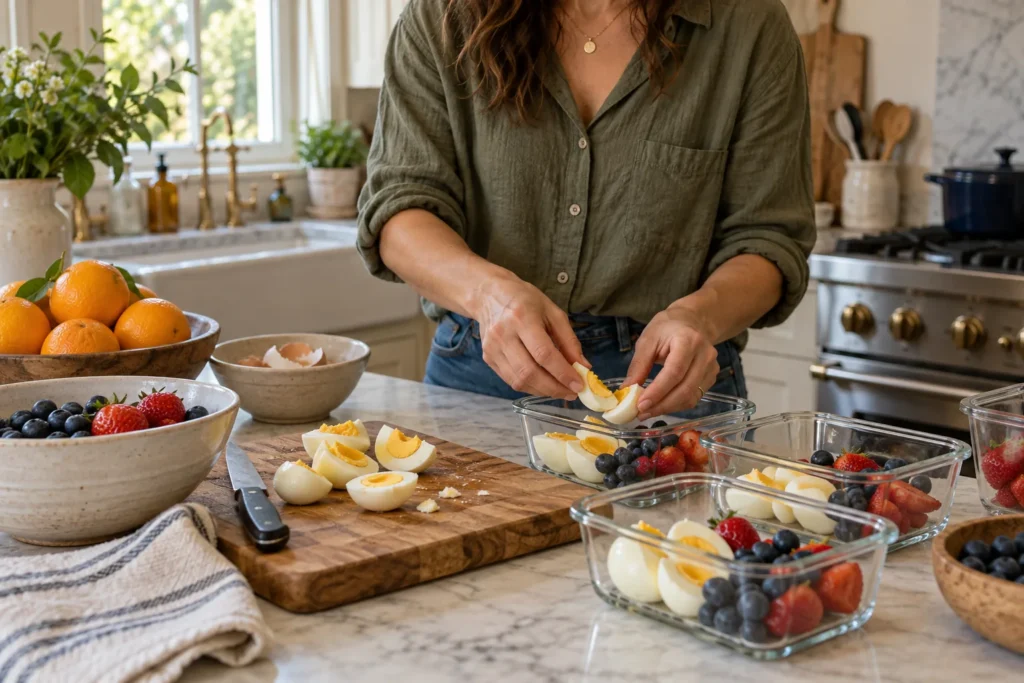
Set up a shelf, a short list and a preparation routine that match the foods you use. Keep simple proteins available, plan safe storage and decide which meal needs the easiest backup. If an ingredient preference matters to you, compare labels before the busy shopping trip.
A clear plan may save more frustration than a complicated menu. There is no need to claim a food is toxic simply because another option better matches your preferences. We can help make the shopping and organization practical while clinical dietary restrictions stay with the professionals responsible for your care.
Do not explain every visual change with nutrition
Blur, eye pain, double vision and difficulty seeing at night can have different causes. A website cannot determine which one applies, and taking a vitamin to see whether it helps can delay an examination. Tell your eye-care professional about changes, your diet pattern and any products you take.
If you have diabetes, thyroid disease, digestive disease, pregnancy or another relevant condition, mention it. The goal is a coordinated picture of your health, not choosing between food and medical care. Sudden vision loss or severe eye pain calls for urgent assessment.
Explore fragrance and household exposure questions, food and nutrition guidance and our existing eye-health and thyroid-eye guide. Return to the Eye Wellness hub for the complete collection.
Frequently asked questions
Can food improve my eyesight enough to stop glasses?
Food supports overall health and normal eye function, but ordinary food changes are not established as a way to eliminate refractive error. Continue prescribed correction and use an examination to assess changes in vision.
Are carrots the best food for vision?
No single food is a complete eye-health plan. Carrots are one source of provitamin A carotenoids. Consider the overall eating pattern, individual needs and variety rather than treating one ingredient as a cure.
Can an animal-based household use this guide?
Yes. Start with the foods you actually eat and the tasks you want help organizing. A preference for animal-based meals does not replace an individualized assessment of adequacy, medical needs or supplement safety.
Should everyone take vitamin A?
No. A nutrient being essential does not establish that everyone needs a supplement. Excess preformed vitamin A can cause harm. Ask about your own diet, health history and existing products before adding more.
Is liver always a good idea for eye health?
Liver contains concentrated preformed vitamin A. Portion, frequency and other sources matter, especially in pregnancy. Do not treat unrestricted organ-meat intake or capsules as a universal recommendation for vision.
Does AREDS2 prevent all vision loss?
No. AREDS2 evidence applies to particular AMD situations and does not make the product a general cure or prevention strategy for every eye condition. Ask whether your actual diagnosis meets the relevant criteria.
Are children’s vision gummies necessary?
A marketing claim does not show a child needs a product. Discuss diet and any concern with the child’s qualified clinician. Keep supplements safely stored and avoid applying adult eye-supplement research to children.
Can I combine cod-liver oil and an eye formula?
Have a clinician or pharmacist review the combined nutrients and doses first. Cod-liver oil may add vitamin A and vitamin D, and other products can duplicate those ingredients without that being obvious from their names.
Will a supplement treat dry eye?
Do not assume a general eye-health formula treats your symptoms. Dry eye needs an assessment of its cause and appropriate care. Ask specifically what evidence applies to the proposed product and your situation.
Does the studio help nutrients reach my eyes?
We make no such claim. Eye Comfort Studio is a recreational tool with break and blink prompts. Its animations do not measure nutrient status, blood flow or biological changes in the eyes.
Can Chemical Wellness make a clinical diet plan?
We provide practical food, shopping and household education. Medical nutrition therapy, treatment diets and individual supplement dosing belong with appropriately qualified clinicians and dietitians, particularly when disease or pregnancy changes requirements.
What is a useful first step this week?
Choose one repeated meal, write a short shopping list and collect the supplement labels you already use. Keep new or changing vision symptoms on the clinical appointment list rather than trying to solve them through shopping alone.
Sources and further reading
The references below support the medical background. Our household checklists and app instructions are practical educational suggestions, not clinical protocols. No clinician review is claimed.
Keep exploring Eye Wellness
Screen Time, Blue Light & Digital Eye Strain
A practical guide to screen comfort, digital eye strain, evening light and blue-light glasses, with clear evidence limits and free eye-break activities.
Children’s Vision, Outdoor Play & Kids Picture Mode
A parent’s guide to vision routines, outdoor play, prescribed glasses and picture-friendly Eye Comfort Studio sessions for children who do not read yet.
Do Glasses Make Eyes Worse? Vision Claims & Better Questions
Understand glasses, changing prescriptions, eye exercises and lens upgrades. Ask informed questions about vision claims without abandoning needed correction.
Vaccines & Vision: Reports, Evidence & Questions to Ask
Understand vaccine and vision concerns, published eye-event reports, VAERS limitations and how to prepare an informed clinical conversation about new symptoms.
Bring the question. We can help organize the routine.
Ask about household products, food-shopping plans and everyday routines in Harvey, Greater New Orleans or remotely by arrangement. We provide education and practical help; eye care and individual medical decisions remain with licensed professionals.