
How to Shop a Farmers Market With a Healthy-Eating Plan
Practical questions, useful comparisons and a next step you can follow.
Updated October 26, 2026 · Chemical Wellness household education
Farmers markets can make healthy eating easier, but only if the food you buy actually becomes meals. A little planning prevents the common cycle of buying beautiful produce and throwing it away a week later.
Shop for Meals, Not Just Ingredients
Before you go, think of several meals your household already enjoys. Then shop for ingredients that fit those meals instead of buying random items because they look healthy.
Ask Questions
Vendors can often explain how food was grown or raised, what is in prepared products, how items are stored and how to cook unfamiliar produce. Ask specific questions rather than relying on assumptions based on labels or appearance.
Buy Realistic Quantities
Start with what your family can actually use before the next shopping trip. More healthy food is not automatically better if it spoils before anyone eats it.
Plan Storage When You Get Home
Wash or prep foods appropriately, organize produce where it can be seen, and group ingredients by meal or category. An organized refrigerator makes it easier to use what you bought.
Chemical Wellness offers one-on-one and group healthy shopping plus farmers-market meetups and workshops.
Write a short meal plan before the market
Begin with the next few meals rather than an idea that you should buy more healthy food. Write the main protein, the other foods your household enjoys and the amount you can realistically use.
An animal-based list might prioritize eggs, a specific meat purchase and fruit, with squash or other tolerated whole foods. Check the refrigerator and freezer first. The market is one part of the shopping route, not an obligation to buy every category there.
A list makes it easier to recognize a useful product and leave an attractive but impractical purchase behind.
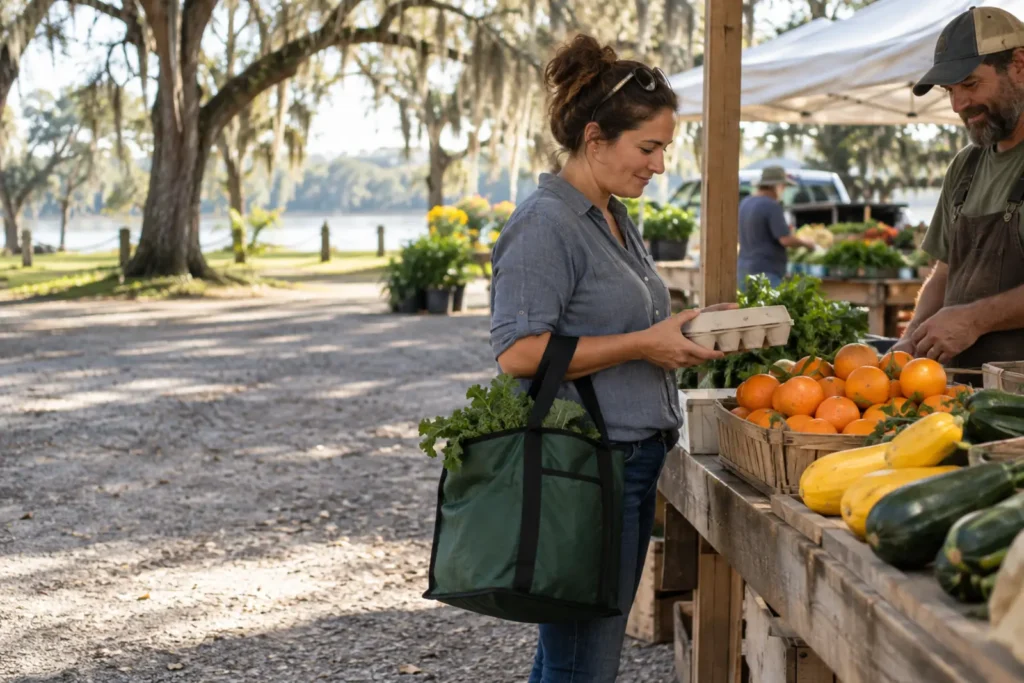
Find out who produced the item
Ask whether the vendor raised, grew, made or resells the product. That answer helps you decide what other questions to ask. For meat or eggs, you may want to understand the production claim, the actual supplier and how the item is handled.
For a prepared food, ask about ingredients and preparation rather than assume a market setting guarantees a particular recipe. A friendly conversation can provide useful detail, but it is not the same as independent verification of every claim. Record what matters to you and what remains uncertain.
Use specific sourcing questions
Instead of asking whether something is clean or healthy, identify the claim you care about. You might ask what grass-fed means for that product, whether a particular certification applies, what ingredients are in the seasoning or how a broth is packaged.
Organic and non-GMO address different questions, and neither describes every aspect of a food. Keep the discussion practical and respectful. A vendor may not have every record at the stall. You can request the information later or choose an alternative without turning an unanswered question into an accusation.
Compare the amount you will actually eat
A lower unit price is useful when the quantity fits your meals and storage. A large tray of fruit or a bulk cut of meat may create extra preparation and freezing work. Estimate the usable portion, packaging and time required rather than judge value only by the price sign.
If you are trying a new supplier, start with a manageable amount. You can make a larger purchase after you know how the product fits your household. The most economical basket is not necessarily the one with the largest total weight.
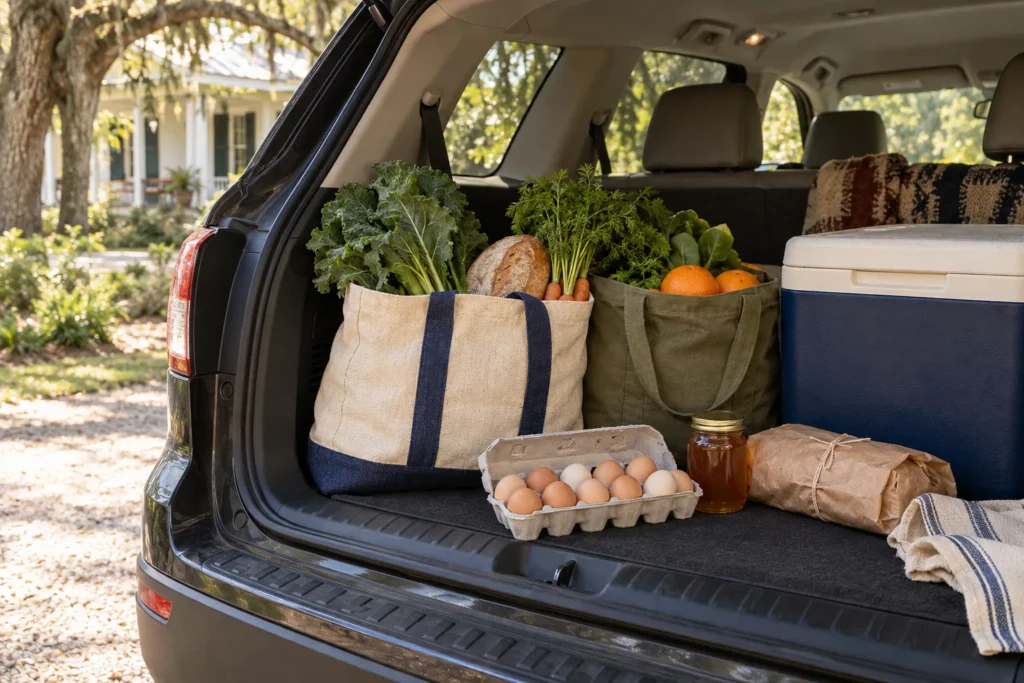
Plan chilled purchases around the trip home
Bring suitable insulated storage when your route includes foods that need refrigeration, and keep raw animal products separate from ready-to-eat foods. Do not make a long sequence of unrelated stops after buying perishables without an appropriate cooling plan.
FDA guidance says perishables should be refrigerated within two hours, or one hour when conditions are above 90 degrees Fahrenheit. That makes transport planning especially relevant during Louisiana heat. If a product’s storage needs are unclear, ask before buying rather than rely on its appearance or assume a farm origin changes the handling requirement.
Keep a short substitution list
Availability changes with weather, season, production and the particular market day. Decide which preference is essential and which foods can serve the same practical role. If a preferred egg supplier is absent, you might buy another verified option elsewhere rather than change the entire week’s meals.
If fruit is unavailable in a usable quantity, choose an alternative your household already knows how to store. A substitution list reduces pressure to buy a product solely because you made the trip. It also helps another adult shop without having to contact you about every decision.
Give the purchases a place when you get home
Before leaving for the market, make enough room in the refrigerator or freezer for the planned chilled foods. After shopping, put items away promptly and retain any storage or supplier information you need. Separate foods by their actual handling requirements rather than make the refrigerator look like a display.
Keep the ingredients for the next meal accessible and label portions when that helps the people who cook. A brief storage plan connects the shopping trip with dinner; without it, good intentions can turn into forgotten food and another unnecessary store visit.
Build a repeatable route instead of a perfect basket
After a few trips, note which suppliers and products reliably fit your preferences, budget and cooking routine. Keep a record of specific questions, usable quantities and substitutions. A market may be the right place for several items while a warehouse club or grocery store handles the rest.
Chemical Wellness can help organize that route and compare the actual labels, with consulting time and purchases clearly separated. Text your city and the shopping decisions you want help with. You can begin with one difficult category instead of paying for an elaborate tour of every store in town.
Useful source information
Related practical help
Questions about this guide
Does buying at a farmers market automatically mean organic?
No. Ask about the actual production claim and any relevant certification. A market location alone does not establish that every vendor or product follows the same growing or production standard.
Can I shop a market with an animal-based food preference?
Yes. Identify the foods the market can realistically supply, such as particular eggs, meats or fruit, and plan other purchases elsewhere. You do not have to buy every category at the same place.
What should I ask about prepared foods?
Ask about the ingredients, cooking method, storage and any sourcing detail that matters to you. If the seller does not have an answer, keep that uncertainty visible rather than assume a particular recipe.
Should I buy in bulk on the first visit?
Start with the amount you can store and use. A smaller trial purchase may be more practical while you assess the product, supplier information and how it fits your cooking routine.
How do I compare a market price with a supermarket price?
Compare the same usable quantity, cut or product type, ingredients and any verified sourcing attributes. Include storage and preparation work. Two packages that look similar may not be directly comparable.
Do eggs and meat need a transport plan?
Yes. Follow the product’s handling requirements, keep raw animal foods separate and use suitable chilled transport. A market origin does not remove ordinary food-safety requirements.
What if my preferred vendor is not there?
Use a preselected alternative or buy that category at another stop. A backup list is more useful than purchasing an unfamiliar product simply because you do not want to leave empty-handed.
Can I ask for supplier information after the market?
Yes, when the vendor provides a contact method. Write down the precise question and product so the follow-up is useful. Not every supporting record will be available at the stall.
How much produce should I buy?
Buy what fits the meals, storage and actual appetite of your household before the next shop. A product is not good value when a large share is likely to be wasted.
Can the market be one stop in a larger route?
Yes. Plan the route around the actual list and the handling of chilled foods. A consulting package should define its combined time rather than assume unlimited stops.
Does a grocery consultation include the food?
Food purchases are separate unless the written scope expressly includes them. Confirm the service time, purchase process and any additional travel before booking.
How can Chemical Wellness help with a market trip?
We can help prepare a list, identify useful questions, compare specific products and connect the trip with meals you will actually make. Text your city and the categories you want to review.
Turn the questions into a practical plan.
Tell us your city and the food or household task you want help with. We can discuss the right scope before you book.